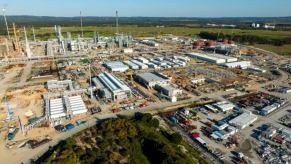
Italy’s Ravenna carbon capture and storage (CCS) project, developed by energy group Eni and infrastructure operator Snam, has been selected for funding under the European Commission’s 2025 Innovation Fund – Net-Zero Technologies programme, in the Large Scale category.
Announced on October 20, the selection marks a significant boost for the project’s second phase, which aims to expand an integrated network for collecting, transporting and permanently storing carbon dioxide from industrial facilities across Italy and Europe.
The project is positioned as a strategic asset in Europe’s drive to cut industrial emissions while strengthening its low-carbon technology supply chain.
Ravenna CCS is being developed as a major permanent CO₂ storage hub for Italy and Mediterranean Europe, with an estimated overall storage capacity of approximately 500 million tonnes. According to Eni, that represents more than 70% of the announced CO₂ storage capacity in the Mediterranean.
The second phase will build on the first phase’s operational experience, with the partners targeting an annual storage capacity of 4 million tonnes of CO₂ by 2030. The infrastructure could subsequently be expanded to handle up to 16 million tonnes a year, subject to further development.
The expansion is designed to provide industries with access to permanent carbon storage as they seek to reduce emissions from industrial processes.
A key feature of the project is its multimodal transport network, which will allow CO₂ captured from industrial emitters in Italy and elsewhere in Europe to reach the Ravenna hub by pipeline, ship, rail and road.
The carbon dioxide will then be transported for permanent storage in offshore geological reservoirs beneath the Adriatic Sea.
Under the project plan, the Eni-Snam joint venture will develop and operate the offshore storage infrastructure, compression station and multimodal CO₂ reception terminal.
Snam will be responsible for the onshore transport network, including the Ravenna-Casalborsetti and Ferrara-Casalborsetti pipelines. These connections are intended to link major Italian industrial centres with the Ravenna storage system.
The European Commission’s selection recognises the project’s industrial, technical and economic credentials, while reinforcing its role in Europe’s broader decarbonisation strategy.
By combining multiple transport options with large-scale offshore storage, Ravenna CCS aims to establish infrastructure capable of serving industrial emitters across national borders.
The next phase of development will be central to determining how quickly the hub can scale up its capacity and contribute to Europe’s industrial emissions-reduction goals.