Gallery

June 10, 2025
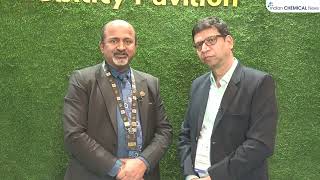
Our ambition is to take molecules from India to the world: Salil Srivastava, Co-founder, Scimplify
What inspired you to launch Scimplify, and how is your vision to simplify specialty chemical sourcing and manufacturing come to life?
India has factories. India has talent. What we needed was a bridge. Coming from a deep manufacturing background and having worked with companies like ITC and Zetwerk, both leaders in the manufacturing space, I saw firsthand how underutilized India's vast industrial and scientific potential truly was. Despite the brilliance of our R&D ecosystem, many factories were running far below capacity due to the lack of demand generation and limited R&D capability. Scimplify was born to connect these dots and unlock India's full strength in specialty chemicals.
We envisioned a full-stack platform, from R&D to manufacturing to global distribution, built to simplify and scale innovation. India does around $50 billion in specialty chemicals today, but even without adding new infrastructure, better utilization alone could double the figure. The potential is massive, we just needed a system to connect the dots.
Today, we’ve exported to 15+ countries, getting repeat orders from global players, and enabled multiple manufacturing units to reach profitable utilization levels. Our ambition is to take molecules from India to customers worldwide and showcase India as a global hub of capability, reliability, and innovation.
How has been the performance of Scimplify in 2024 and what are your expectations from 2025?
2024 was our first year and a strong one with focus on building a solid foundation. We scaled up our R&D team and onboarded experts for chemical innovation. On the manufacturing front, we partnered with 200+ factories across the country and began production at scale. A big win was substituting several China-sourced products with Indian-made ones.
2024 also reaffirmed our belief that the world is ready to trust India for innovation, quality, and reliability, not just validating our model but also highlighting the broader opportunity for India in specialty chemicals.
In 2025, we aim to deepen our global footprint, expand R&D, and strengthen our manufacturing network. Our mission is to take Indian innovation and manufacturing to the world.
How would you explain the emerging trends in specialty chemicals in India and globally?
India is fast emerging as a global powerhouse in specialty chemicals. With growing exports, strong domestic demand, and active government support, the country is stepping into a central role on the world stage. Global supply chain disruptions have prompted companies to rethink their sourcing strategies. India’s unique combination of cost-efficiency and scientific talent positions it as an ideal alternative. As international firms increasingly look to outsource production, India is becoming deeply embedded in the global value chain, offering reliability, scale, and innovation.
Scimplify emphasizes a "science-first" approach. Can you share how your R&D capabilities set you apart from other similar companies in the business?
We integrate R&D from process development to tech transfer till fulfillment. While our model remains asset-light, our capabilities are full-stack.
What truly sets us apart is that our R&D is not limited by our own lab infrastructure. Through our proprietary matchmaking platform and data intelligence, we connect the right projects with the right scientific expertise. This allows Scimplify to cover a broader base of chemistries and capabilities.
We empower India’s SME manufacturers by offering deep scientific expertise. We also co-develop with global players in the pharma and agro sectors, ensuring Indian innovation reaches the end-use markets worldwide.
This interconnected, science-led model allows us to scale faster, deliver better outcomes, and unlock value across the specialty chemical ecosystem.
Scimplify has raised $54 million, including a recent $40 million Series B round. How do you plan to deploy this capital to accelerate growth, and what does this investment say about confidence in your model?
The capital will drive three growth pillars: international expansion (particularly in the US and Europe), scaling R&D with more talent and infrastructure, and onboarding capable but underutilized SME manufacturing units.
This investment is more than a validation of our model. It’s a strong vote of confidence in the broader India opportunity: in our talent, our manufacturing depth, and India's potential to lead the next era of global specialty chemical supply chains.
What is your expansion plan? What’s your strategy for further international growth, and which markets are you most excited about?
Our expansion strategy is rooted in leveraging India’s scientific talent and manufacturing strength to serve global markets. Domestically, we’re onboarding more contract manufacturing plants, especially those with idle capacity, while our R&D team designs custom synthesis routes based on global demand.
Internationally, our goal is to scale products we’ve built offering strong value propositions for API intermediates, agro inputs, or high-performance additives. Our ability to offer quality at globally competitive prices has been well received.
We’re also entering new segments like personal care, food, Nutraceuticals and industrial downstream chemicals where India has manufacturing strength but limited global visibility. Our key focus markets include the United States, Japan, Southeast Asia, and Europe.
India is a rising star in specialty chemicals. How does Scimplify leverage the country’s manufacturing expertise and capacity to serve global demand?
India has close to 10,000 chemical plants, many operating below capacity. Scimplify taps into this latent potential by partnering with small and mid-sized manufacturing units that have solid infrastructure but limited global reach. By providing international access, quality projects, and regulatory support, Scimplify turns these units into export-ready hubs.
We offer cost-effective, high-quality manufacturing with full transparency and science-backed support. It creates mutual value for the global supply chain and for India’s manufacturing ecosystem alike.
We don’t build factories, we onboard them. It’s a win-win for both as we scale fast, and they gain visibility and growth opportunities in global markets.
Green chemistry and sustainability are buzzwords in the industry. How does Scimplify integrate these principles into its operations, and what impact do you see this having on your customers?
For us, sustainability is a responsibility, not a trend. From the beginning, we believed that science and sustainability must go hand-in-hand. We integrated green chemistry principles from the start by designing efficient routes, reducing waste, and avoiding hazardous reagents as and where it is possible.
We’ve built dedicated infrastructure for hazardous reactions to ensure safety and sustainability coexist. We prioritize responsibly produced raw materials and work only with partners who align with our sustainability values.
The specialty chemicals sector is facing supply chain disruptions and geopolitical shifts. How does Scimplify address these challenges differently from traditional manufacturers?
The past few years have made it clear that global supply chains can’t be taken for granted. From geopolitical shifts to logistics disruptions, building resilience is more important than ever.
At Scimplify, we’ve addressed this structurally by putting R&D at the center for greater process control and flexibility. We also invest in close collaboration with our manufacturing partners to improve yield, reduce costs, and enhance quality.
Importantly, our supply chain strategy is not dependent on any single country or geography. This means we are insulated from the ripple effects of tariffs, trade wars, and regulatory bottlenecks that often disrupt traditional supply chains. Instead of getting caught in global traffic jams, we ensure seamless, reliable delivery through a diversified, de-risked network.
How does Scimplify approach product development and what new products are you planning to launch in 2025?
We anticipate demand through deep market intelligence, primary research, and regulatory foresight. We proactively scout and select molecules with strong commercialization potential and initiate process development well ahead of market demand.
In 2025, we're expanding into complex pharma intermediates and sustainable agrochemical ingredients while also co-developing high-value molecules with global formulation firms rooted in green chemistry and future-ready demand.
Where do you see Scimplify in five years, and how do you plan to shape the future of the specialty chemicals industry?
In five years, we see Scimplify as the preferred innovation and manufacturing partner for pharma, agro, and specialty chemical companies worldwide. Our goal is to enable end-to-end development across 50+ chemistries, R&D, scale-up, manufacturing, and distribution through a single, integrated platform.
We envision 1,000+ enterprises across 50+ countries relying on Scimplify to deliver complex, high-value chemicals at scale. We aim to transform the way specialty chemicals are sourced and developed.
We are aspiring to go public and prove that India can create global scientific and manufacturing platforms.
May 12, 2025
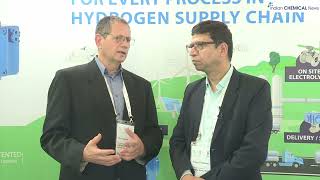
We see increasing demand for a sustainable and circular solution: Thomas Braig - EVP, Head of Business Entity Elastomers, Covestro
Thomas Braig - EVP, Head of Business Entity Elastomers, Covestro talks about his company's focus on sustainable offerings
The elastomer industry is evolving rapidly with demands for durability, flexibility, and sustainability. What trends do you see shaping the future of elastomers, and how is Covestro responding to these shifts?
We see three major trends for elastomers. There is demand for high performance, higher processing efficiency and sustainable/circular elastomers. We see increasingly rubber moving to polyurethane elastomers because of higher performance, more energy efficient processing and also lower investments needed to set up a production. Within polyurethane elastomers, we see the trend moving from hand casting to reliable and predictable machine casting. Covestro elastomers is addressing all three of them.
We are continuously investing in innovation to improve our performance. We are also improving the process ability with our machinery, making it scalable. Sustainability is the key element for us. We are offering solutions with reduced carbon footprints. For example, take some already available mass balance solution with, let’s say, around 60% reduced carbon footprint. So, we are addressing all of them: performance, process efficiency and sustainability.
You recently announced plans for a pilot plant to recycle elastomers chemically. Can you tell us more about this breakthrough and how it could redefine end-of-life solutions for elastomer products?
The pilot plant is dedicated for elastomers made of our Vulkollan product range. The parts made of Vulkollan are already outstanding in their life cycle performance because of the material’s long durability. Its product life cycle is very sustainable. We are already offering a solution with a reduced carbon footprint and the chemical recycling solution will then go even beyond to make it really fully circular. The pilot line is under construction and will be the basis for the scale up to a commercial plant subsequently. We are investing double-digit million in this pilot plant.
Vulkollan recently completed 75 years. How this product has evolved in the last 75 years and where it stands today?
Vulkollan evolved by continuously exploring because of its performance, superior performance, and more and more applications. We have continuously increased its performance. The processing of Vulkollan elastomers requires very specific handling procedures. This is why, we developed an easy- to- handle Vulkollan prepolymer Version, representing a significant process advancement for the customers. This innovation simplified the moulding of parts made of Vulkollan, enhancing efficiency and reducing investment requirements for the partners working with this unique material.
Covestro has made bold commitments to circularity and climate neutrality. How is the Elastomers division specifically contributing to these goals, and what challenges do you face in balancing performance with sustainability?
First of all, sustainability and circularity are key strategic priorities for Covestro. We see increasing demand for a sustainable and circular solution and our existing products offer these. We are offering a mass balanced version with a reduced carbon footprint of around 60%. We expect it to be about 80% or even beyond. Its the same molecule. Its the same process, just with a reduced carbon footprint and the same we are aiming for the chemical recycling and building a pilot plant.
Covestro is emphasizing on Crafting Solution for customers. How do you ensure elastomer division stays closely or with the needs of the industry like automation, renewable energy and material handling?
Being close to the customer creates opportunities to engage with customers, to develop innovations with customers, develop prototypes and help them to scale up and grow together. We have our own Technical Centers across the world. We also partner with long-term technical distribution partners who invest in dedicated Technical Centers.
How competitive is the market?
The market is quite competitive, though we see a demand for performance, efficiency and sustainability. We perceive that the market interprets competitiveness, not only in a raw material price, but the market is looking at a total cost of ownership. We can help the market with our products, processing equipment, and expertise.
May 12, 2025
Exploring digital technologies to enhance resource efficiency, recycling, and circularity: Eva Lindh-Ulmgren, VP and Head of R&D Tube Division, Alleima
India’s chemical and petrochemical industry is expected to maintain its strong demand growth, with key players focusing on technological advancements, sustainability, and foreign direct investment (FDI) inflows to boost competitiveness…
How has the global chemical and petrochemical industry performed in 2024? What are the key trends and challenges in 2025?
In 2024, the global chemical and petrochemical industry faced overcapacity, weak demand, and portfolio realignments, with utilization rates dropping due to capacity surges, particularly in China. Sustainability pressures intensified, with regulatory demands prompting a shift toward greener practices, though concerns remain about their economic impact. Financial restructuring became a priority, with a focus on cost cuts and strategic investments, while divestments and asset sales reflected industry adaptation. Moving forward, the sector needs to navigate shifting regulations, economic uncertainties, and the drive toward sustainability while balancing profitability and innovation. The global chemical and petrochemical industry is projected to experience varying growth rates from 2025 to 2035:
Chemical Industry: According to Deloitte’s 2025 Chemical Industry Outlook, global chemical production is anticipated to grow by 3.5% in 2025.
Petrochemical Industry: Boston Consulting Group (BCG) projects global petrochemicals demand to grow at approximately 3% through 2035, slightly down from the 3.3% growth observed between 2014 and 2024.
Cautious optimism means 2025 may be the year that kick-starts a longer-term recovery as the transition toward greater sustainability and decarbonization is likely to accelerate alongside technological advances.
Tighter margins will demand greater efficiencies in advanced process conditions, like higher temperatures, higher pressures, and improved chemistries. This can create more corrosive environments and the need for more corrosion-resistant materials.
For asset owners, these drivers will increase the need for advanced materials technologies to withstand the harshest applications and make their operations more efficient, profitable, and sustainable.
How has the Indian chemical and petrochemical industry performed in 2024? What are the key trends and challenges in 2025?
In 2024, India’s chemical and petrochemical industry experienced significant growth, driven by rising domestic demand across sectors such as construction, automotive, agriculture, and pharmaceuticals. The country remains a bright spot for petrochemical demand, with continued investments and expansion efforts shaping the industry’s trajectory. However, challenges persist, including import dependency, with India still relying on imports, impacting self-reliance and competitiveness. Additionally, global overcapacity, particularly from China, poses a risk by flooding the market with low-cost imports, affecting domestic producers. To counter this, India is eyeing $87 billion in investments in the petrochemical sector over the next decade, as part of its push for self-sufficiency and industrial growth, according to Reuters. (Source: Reuters)
Meanwhile, environmental regulations are becoming more stringent, requiring significant investments in cleaner, sustainable technologies. Moving into 2025, the industry is expected to maintain its strong demand growth, with key players focusing on technological advancements, sustainability, and foreign direct investment (FDI) inflows to boost competitiveness. State owned companies like BPCL are planning major refinery and petrochemical expansions, in South India, underscoring the long-term vision for the sector. However, balancing growth with regulatory compliance, sustainability, and market fluctuations will remain critical to maintaining momentum.
How do you see technological advancements in the chemical and petrochemical industry with respect to digitalization and automation?
The chemical and petrochemical sector like other industries is undergoing a major transformation, driven by digitalization and automation. As industries push for greater efficiency, sustainability, and safety, several key technologies are shaping the future:
AI & Predictive Analytics – Enhancing process efficiency, minimizing downtime, and improving yields through data-driven insights.
Smart Automation & Robotics – IoT-enabled systems, autonomous robots, improving operational precision and worker safety.
Energy Optimization & Sustainability – Digital tools driving smarter energy use, lowering emissions, and improving resource efficiency.
What’s next for 2025?
By 2025, the industry will see a broader adoption of AI-driven automation, digital supply chains, and real-time monitoring solutions. Smart energy management systems will play a critical role in sustainability efforts in the industry. Companies that embrace these innovations will gain a competitive edge, driving cost efficiency and operational resilience.
Digital tools can optimize the use of resources, supporting recycling and circularity and helping operators align with sustainability goals.
At Alleima, we are actively exploring digital technologies to enhance resource efficiency, recycling, and circularity, in line with our sustainability goals. By leveraging AI and IoT-powered monitoring, we aim to optimize processes, reduce waste, and maximize material utilization. Predictive maintenance extends the lifespan of our equipment, cutting down raw material usage, while smart recycling and material tracking improve scrap management and support closed-loop production. Additionally, digital simulations and life cycle assessments help us transition to low-carbon, energy-efficient solutions. As we integrate advanced digital innovations, we reinforce our commitment to sustainable manufacturing, ensuring a more resource-conscious and environmentally responsible future.
Technological advancements with respect to sustainable production practices? What's the plan for 2025?
At Alleima, technological innovation and sustainability goes hand in hand. Our commitment to sustainable production practices is driven by cutting-edge advancements that optimize efficiency, minimize environmental impact, and promote circularity.
Energy-Efficient Manufacturing
We continuously invest in state-of-the-art technologies to reduce energy consumption and lower carbon emissions across our production facilities. Key initiatives include:
* Transitioning to renewable energy sources such as solar and wind hybrid power.
* Implementing electrification of processes to reduce reliance on fossil fuels.
* Enhancing energy recovery systems to optimize efficiency in production.
Circular Economy and Resource Optimization
Sustainability is embedded in our material development and production processes. We actively work to maximize the use of recycled materials in our products. At Alleima, we see engineering as a force for sustainable good. Approximately 80% of our products incorporate recycled materials, and we support our customers in meeting their decarbonization targets. We provide life cycle assessments (LCA) for our bar steel to support the increasing focus on sustainability in the global petrochemical and chemical industries. We conducted an in-depth analysis for one of the Solid bar products, Sanmac 316L, which showed an 81% reduction in carbon footprint in comparison to the global average. The Sanmac 316L uses an average of 95.6% recycled materials. The remaining 4.4% accounts for 61% of the total emissions of carbon footprint. Moreover, Alleima uses renewable sources of electricity, such as wind energy and nuclear energy, for production requirements.
* Develop closed-loop recycling systems in processes to minimize waste.
* Optimise raw material dependency through optimising alloy compositions that extend product lifecycles.
Low-Emission and Eco-Friendly Processes
To align with global sustainability goals, we focus on reducing industrial emissions by:
* Improving water efficiency in production through closed-loop cooling systems and wastewater recycling.
* Exploring green manufacturing techniques that reduce chemical usage and environmental footprint.
By combining technological advancements with responsible production practices, Alleima remains a leader in sustainable innovation – helping industries transition towards a greener, more efficient, and resource-conscious future. Going forward, we plan to continue to strive to be more sustainable in our production and collaborate with our customers to find solutions so that they also can become more sustainable.
How do initiatives like "Make in India" and environmental regulations influence investment, technology adoption, and overall growth in the Chemical and Petrochemical industry?
"Make in India" and environmental regulations are helping the Indian chemical and petrochemical industries to grow by fostering investment, encouraging technology adoption, and aligning with global sustainability trends.
"Make in India" promotes domestic manufacturing by offering production linked incentives enabling infrastructure development, and 100% foreign direct investment in the chemicals sector.
This supports increased investments in production facilities, such as the Petroleum, Chemicals, and Petrochemicals Investment Regions (PCPIRs) and plastic parks. These dedicated hubs are designed to enhance domestic manufacturing, reduce import dependency, and attract global players by providing integrated facilities, policy support, and streamlined regulations.
How does international partnerships and collaborations balance knowledge exchange, technology transfer, and foster a global perspective within the Indian chemical industry while also promoting development of local expertise and capabilities?
Partnerships with international companies can provide Indian firms with access to advanced material technologies that can boost efficiency, profitability, and sustainability. They can support a greater understanding of international requirements, quality standards and sustainability regulations to increase global competitiveness while accelerating local development and expertise.
Solutions provided by Alleima to the Chemical and Petrochemical industry?
Our chemical and petrochemical offerings include application tubing products for hydraulics and instrumentation, heat exchangers, process piping, high-temperature applications, and high-pressure equipment for fertilizer production. We also offer a comprehensive range of alloys in duplex, austenitic, super austenitic, nickel alloys, titanium and zirconium alloys as composite and bimetallic tubes.
Example application areas are the manufacture of fertilizers in high-pressure parts of the urea process. Hydraulic and instrumentation tubes are used to monitor temperature, pressure, and processes in various chemical and petrochemical plants, and heat exchanger tubes are used for heat transfer between different corrosive process media in condensers, evaporators, heaters, and reheaters where safety and performance reliability are critical.
At Alleima, we are an innovative material solution provider and continuously work towards developing new materials to solve our customers' challenges. The success of Sanicro 35 in the last few years is a testimony to this. Sanicro 35 has a great value proposition due to its high performance-to-cost ratio. It has replaced nickel alloys in several applications globally.
Any new solutions that you are planning to provide in 2025 to this industry?
Building on our strong R&D legacy, we introduced SAF 3006, a high-alloy duplex (austenitic-ferritic) stainless steel designed for superior corrosion resistance in acidic and caustic environments. Engineered for heat exchangers in the chemical and petrochemical industries, it offers a cost-effective alternative to austenitic stainless steels and nickel-based alloys, ensuring enhanced durability and performance in demanding applications
This new duplex alloy, SAF 3006, will be a key focus area as we continue to push the boundaries of material innovation. With its enhanced corrosion resistance and cost-effectiveness, it is set to play a crucial role in optimizing heat exchanger performance across the chemical and petrochemical industries. As industries shift toward sustainable and efficient solutions, SAF 3006 aligns with the demand for high-performance materials that improve longevity, reliability, and operational efficiency in harsh environments.
Our materials redefine industry standards, combining cutting-edge performance with unmatched reliability. Backed by world-class R&D and integrated production capabilities, we continue to drive innovation, delivering high-performance solutions that meet the evolving demands of modern industries.