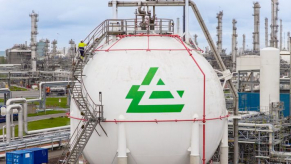
Green hydrogen currently represents a very small fraction of global hydrogen production, largely due to cost and infrastructure barriers. Bridging this gap is both a technological and policy challenge

The global energy system is at a critical inflection point, driven by escalating climate risks, rising energy demand, and the urgent need to reduce greenhouse gas emissions. This report examines the hydrogen economy as a central pillar of the energy transition, with particular emphasis on green hydrogen produced from renewable electricity. It analyses the role of hydrogen in decarbonizing hard-to-abate sectors, enabling large-scale energy storage, and facilitating carbon dioxide utilization for net-negative emissions. Integrating policy and academic perspectives, the report highlights India’s strategic advantages, identifies key technological and policy barriers, and outlines pathways for scaling hydrogen to achieve a resilient, sustainable, and inclusive low-carbon future.
Introduction: Energy, Climate and the Imperative for Transition
Energy and environment are inseparably linked. Since the pre‑industrial era (~ 1750), atmospheric CO₂ concentrations have risen from ~280 ppm to over 427 ppm in January 2026, primarily due to the large‑scale combustion of coal, oil and natural gas. The rapid expansion of industry, power generation and transport has resulted in unprecedented greenhouse gas (GHG) emissions, leading to global warming, climate instability and severe ecological stress.
The period 2020–2024 starkly illustrated this challenge. Global CO₂ emissions dipped briefly during the COVID‑19 lockdowns in 2020, only to rebound sharply thereafter, reaching record levels by 2023–24. Although renewable energy deployment accelerated during this period, it has not yet been sufficient to reverse the overall emissions trajectory. Natural carbon sinks such as forests and soils are weakening due to deforestation, droughts and wildfires, reducing their ability to offset anthropogenic emissions.
This context underscores a critical point: incremental decarbonization is no longer enough. The global discourse must move beyond net‑zero targets towards net‑negative emissions, where carbon dioxide itself becomes a feedstock for fuels, chemicals and materials. The hydrogen economy—particularly green hydrogen—emerges as a central pillar in this deeper energy transition.
Energy Transition: From Fossil Dependence to Low‑Carbon Systems
The energy transition refers to a systemic transformation of how energy is produced, stored, distributed and consumed. Globally, the power sector accounts for roughly 40% of CO₂ emissions, followed by industry (~25%), transport (~20%), buildings and other sectors. Electrification of end‑use sectors using renewable power is therefore a necessary but not sufficient condition for deep decarbonization.
Solar and wind power have become the cheapest sources of new electricity generation in many regions, including India. Rapid cost declines, technological learning and scale effects have driven this transformation. However, high penetration of variable renewables introduces challenges related to intermittency, grid stability and seasonal mismatch between supply and demand. These challenges necessitate complementary solutions such as energy storage, flexible demand, advanced grids and alternative energy carriers.
It is here that hydrogen plays a strategic role. Hydrogen is not a primary energy source but a versatile energy carrier and chemical feedstock, capable of linking electricity with industry, transport, agriculture and materials manufacturing.
The Hydrogen Economy: Concepts and Typology
Hydrogen has long been used in refineries and fertilizer production, but traditionally it has been produced from fossil fuels (grey hydrogen), emitting large quantities of CO₂. When coupled with carbon capture, this becomes blue hydrogen, which reduces but does not eliminate emissions and remains dependent on fossil infrastructure.
Green hydrogen, produced via electrolysis of water using renewable electricity, is fundamentally different. It enables:
* Zero‑carbon hydrogen production
* Large‑scale integration of renewable electricity
* Decarbonization of hard‑to‑abate sectors
* Coupling of power, fuel and chemical systems
Despite its promise, green hydrogen currently represents a very small fraction of global hydrogen production, largely due to cost and infrastructure barriers. Bridging this gap is both a technological and policy challenge.
Green Hydrogen in the Energy Transition
A. Decarbonizing Hard‑to‑Abate Sectors
Green hydrogen is uniquely suited for sectors where direct electrification is difficult or impractical:
* Iron and steel: Hydrogen‑based direct reduced iron (DRI) can replace coal‑based blast furnaces.
* Cement and lime: Hydrogen can provide high‑temperature heat and enable alternative low‑carbon pathways.
* Chemicals and fertilizers: Green hydrogen can directly substitute grey hydrogen in ammonia, methanol and downstream chemicals.
* Transport: Hydrogen and hydrogen‑derived fuels (ammonia, methanol, SAF) are promising for long‑haul shipping, aviation and heavy‑duty transport.
B. Green Ammonia and Hydrogen‑Derived Fuels
Green ammonia is emerging as a cornerstone of the hydrogen economy. It is easier to store and transport than hydrogen and leverages existing global infrastructure. Beyond fertilizers, green ammonia has potential as a shipping fuel, long‑duration energy storage medium and even for co‑firing in power plants.
Similarly, hydrogen‑derived synthetic fuels—such as green methanol, DME and sustainable aviation fuels—enable decarbonization of sectors that cannot rely on batteries alone.
Hydrogen, Storage and Grid Integration
A critical question in fully renewable energy systems is optimal storage. Short‑duration batteries are well suited for diurnal balancing, while long‑duration and seasonal storage require alternative solutions. Studies comparing battery storage and hydrogen storage indicate that:
* Batteries are more efficient and cost‑effective for short‑term grid balancing.
* Hydrogen is valuable for long‑duration and seasonal storage, and when integrated with industrial demand.
* Hybrid systems combining batteries, hydrogen and pumped hydro offer the most robust and economical solutions.
Thus, hydrogen should not be viewed as a competitor to batteries, but as a complementary component of a diversified energy storage portfolio.
Carbon Dioxide as a Resource: Beyond Net Zero
A defining feature of the next phase of the energy transition is the shift from carbon avoidance to carbon utilization. Captured CO₂ can be catalytically converted into fuels, chemicals and materials using green hydrogen as a reducing agent.
This concept of CO₂ refineries transforms carbon dioxide into methanol, synthetic hydrocarbons, polymers and specialty chemicals. Such pathways:
Catalytic CO₂ valorization, while still facing challenges related to efficiency, selectivity and scale, represents a strategic opportunity for countries with strong chemical engineering capabilities.
India’s Strategic Advantage in the Hydrogen Economy
India is uniquely positioned to become a global leader in green hydrogen due to:
The National Green Hydrogen Mission reflects this strategic intent. However, current incentives, while welcome, are insufficient to rapidly scale green hydrogen to global competitiveness. Stronger support mechanisms, long‑term offtake guarantees and integration with industrial policy are required.
India must also align hydrogen deployment with broader goals such as energy security, rural development, job creation and technological self‑reliance.
Policy Gaps and Structural Barriers
Despite ambitious net‑zero announcements by many countries, a significant implementation gap persists. Fossil fuel subsidies remain high, carbon pricing covers only a fraction of global emissions, and new fossil infrastructure continues to be built.
For hydrogen specifically, key barriers include:
Addressing these barriers requires coherent, long‑term policy frameworks rather than short‑term pilot‑driven approaches.
Socio‑Economic Dimensions and a Just Transition
The hydrogen economy is not merely a technological shift; it is a socio‑economic transformation. Renewable energy and hydrogen value chains have the potential to create millions of jobs, often more distributed and resilient than fossil‑fuel‑based employment.
A just transition requires:
Public participation, decentralized energy systems and community‑level engagement will be essential for long‑term social acceptance.
The Decisive Decade: 2025–2035
Scientific evidence is unequivocal that the next decade will determine whether global warming can be limited to manageable levels. Delayed action will lock in irreversible climate damage and economic risk.
Hydrogen must therefore be scaled not as a niche solution, but as a core element of national and global energy strategies, tightly integrated with renewables, storage, industrial decarbonization and CO₂ utilization.
Conclusion
The hydrogen economy offers a powerful pathway to reimagine the global energy system—one that is cleaner, more resilient and more equitable. However, realizing this vision requires moving beyond rhetoric to decisive policy action, sustained investment and systems‑level thinking.
The transition from fossil fuels to renewables, and from net zero to net negative emissions, is not optional; it is an existential imperative. Green hydrogen, coupled with CO₂ valorization and renewable energy, can enable this transformation. The choices made in this decade will determine whether hydrogen becomes a transformative solution or a missed opportunity.
For India and the world, the message is clear: the future energy economy must be hydrogen‑enabled, renewable‑powered and sustainability‑driven.
Subscribe to our newsletter & stay updated.