Expanding role of engineering in Indian agriculture as scientists, engineers, and youth collaborate to develop cost-reducing sowing and harvesting machinery alongside affordable, sensor-based and AI-equipped tools that provide precise data to even the smallest cultivators
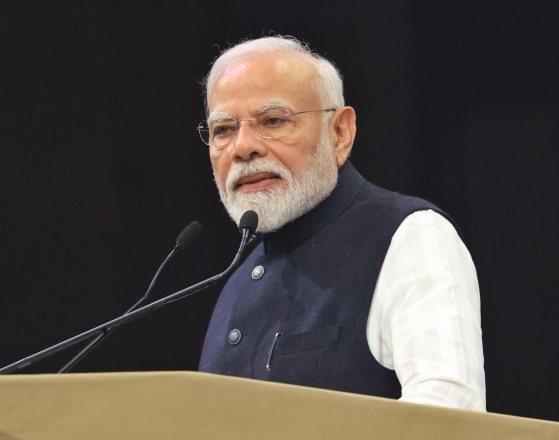
Speaking at Kisan Tak Agriculture Conference 2026, Prime Minister Narendra Modi said, “The building of a Viksit Bharat is simply not possible without developing agriculture, without making farming smarter, and without empowering the farmer.”
Observing that farmers and agricultural experts understand the necessity of continuous policy and methodological evolution, the Prime Minister pointed out that as global markets, dietary habits, weather patterns, and technologies evolved over time, farmers needed to be empowered afresh. “Merely filling the granaries of food grains is not enough,” asserted Modi.
Highlighting the steps taken over the past decade to match the pace of global agricultural change and boost farm incomes through annual agricultural exports exceeding Rs. 4 lakh crore, the Prime Minister noted that India now ranks first globally in the production of milk, pulses, jute, rice, and millets, and second globally in wheat, cotton, fruits, vegetables, and fish production. “These are not merely a few figures, they show how much the capability of India's farmers has increased,” observed Modi.
Emphasizing that farmer prosperity requires moving beyond traditional reliance on wheat, rice, and sugarcane, the Prime Minister stated that the government is actively promoting crop diversification and allied agricultural activities.
Tracing India's agricultural trajectory from achieving food grain self-reliance through the Green Revolution and becoming the world's top milk producer through the White Revolution, the Prime Minister detailed the past decade's rapid expansion across multiple sectors, including a nearly 70 percent rise in milk output, a nearly 90 percent surge in egg production, a more than two-fold increase in fish production under the Blue Revolution, a jump in honey output from around 80,000 tonnes to 1.5 lakh tonnes under the Sweet Revolution, and horticulture production rising from 280 million tonnes to over 350 million tonnes.
Challenging the outdated mindset that rural India cannot adopt advanced technology, the Prime Minister pointed out that Namo Drone Didis have proven skeptics wrong by skillfully operating drones to spray fertilizers and pesticides. “Now the scope of its use is also being expanded,” observed PM Modi.
Highlighting the expanding role of engineering in Indian agriculture as scientists, engineers, and youth collaborate to develop cost-reducing sowing and harvesting machinery alongside affordable, sensor-based and AI-equipped tools that provide precise data to even the smallest cultivators, the Prime Minister emphasized the push toward farm-level value addition and converting Annadatas into agri-preneurs across a thriving ecosystem of agri-engineering and agri-startups. “In recent years, small farmers together with the government have built a massive network of 10,000 FPOs, which is making groups of small farmers into value creators and connecting them with food processing and export markets,” noted Modi.
Stressing that the government's clear policy and intent is to ensure farming does not burden cultivators, the Prime Minister pointed out that India has spent 16 lakh crore rupees over the past 12 years to provide affordable fertilizers despite international price spikes caused by the ongoing war in Iran and the Gulf region. “A bag of DAP fertilizer which costs Rs. 5,000 is being made available to the farmers of India for Rs. 1,300 and a bag of urea which costs Rs. 3,000 in the international market is being given for less than Rs. 300,” observed Modi.
Concluding his address by acknowledging the monumental achievements of Indian farmers in recent years and calling for even greater efforts to build a Viksit Bharat with prosperous farmers, thriving villages, and modern, profitable agriculture, the Prime Minister expressed confidence that the deliberations at the conclave would benefit the nation before extending his best wishes. “The better suggestions and solutions that have emerged from here, the government will also work on them,” affirmed Modi.
Subscribe to our newsletter & stay updated.