voestalpine and energy group VERBUND are expanding their H2FUTURE hydrogen pilot plant in Linz in a €16.4 million project designed to move green hydrogen research beyond production and into storage, purification, compression and industrial use.
The expanded facility, which has operated since 2019, will add a compression and purification unit and five hydrogen storage tanks. The upgrade is aimed at testing how green hydrogen can be processed and supplied to industrial users at the required pressure and purity.
The project marks the next phase of H2FUTURE, which began as the world’s largest hydrogen pilot plant and is now being positioned as a broader test bed for the emerging green hydrogen economy.
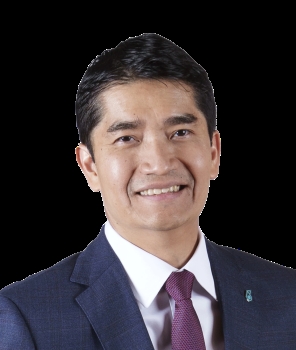
"With greentec steel we have a clear strategy to transform our steel production. In the first half of 2027, one green electricity-powered electric arc furnace at each of the Linz and Donawitz sites will go into operation, enabling us to save up to 30% of our CO2 emissions by 2029 as a first step. In the long term, we aim to achieve net-zero CO2 emissions in steel production by 2050.
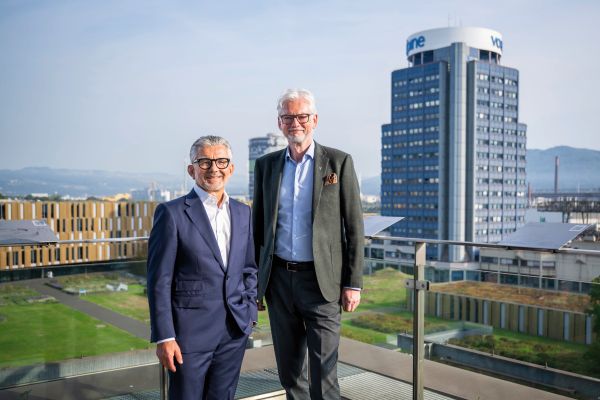
"Hydrogen will play an important role in this process. Together with our partner VERBUND, we will gain further crucial insights thanks to this research infrastructure, the only one of its kind in Europe," said Herbert Eibensteiner, CEO of voestalpine AG.
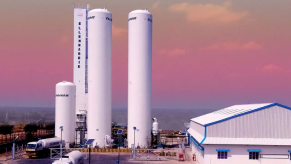
The expanded plant will compress hydrogen produced through electrolysis, purify it and store it temporarily. Four of the five new tanks will help balance fluctuations between hydrogen production and consumption, improving supply reliability.
The fifth tank, designed for shipping, is expected to supply the HY4SMELT industrial-scale demonstration plant from the end of 2027. Hydrogen will be transported through a roughly one-kilometre pipeline to the facility, which voestalpine describes as Austria’s largest climate-protection research project.
The upgraded plant will also be able to compress hydrogen to as much as 500 bar and load it into road trailers. That will allow the hydrogen to be supplied to external customers and other research and industrial projects, including voestalpine’s SuSteel project in Donawitz.
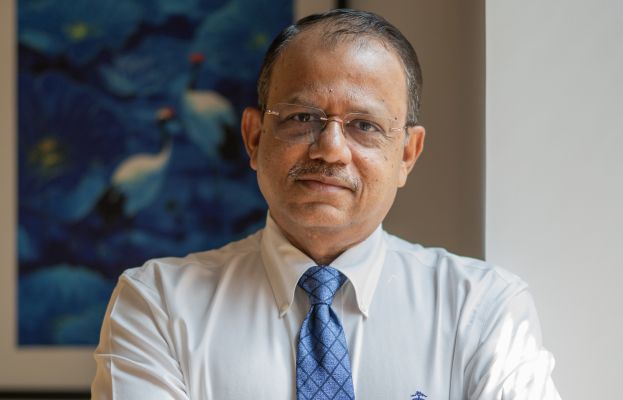
“With H2FUTURE, together with our long-standing partner voestalpine we are implementing an important reference project for the development of a green hydrogen economy. On an industrial scale, the project shows how renewable electricity can be converted into green hydrogen and harnessed for specific industrial applications.
"Thus, H2FUTURE directly supports our role as a leading producer of renewable energy and as a partner for decarbonizing energy-intensive industries,” says Michael Strugl, CEO of VERBUND AG.
First functional tests under the follow-up project are already under way, with initial research results expected by the end of 2026. The project is scheduled to run until December 2030 and will receive funding from Austria’s Federal Ministry of Economy, Energy and Tourism.
The H2FUTURE facility is among the world’s longest-running proton exchange membrane (PEM) electrolysis plants. Its 12 stacks contain 50 electrolysis cells each, with a connected load of six megawatts.
The plant can produce up to 1,200 cubic metres of green hydrogen per hour. Since its launch in 2019, it has produced almost 2,000 tonnes of green hydrogen and completed numerous testing programmes.
A previous stress test demonstrated the plant’s ability to operate continuously and respond rapidly to major changes in load. The facility is also used to help balance power-grid frequency fluctuations caused by variable renewable generation and changing electricity demand.
The expansion gives the project a broader industrial focus: not just making green hydrogen, but testing the infrastructure needed to deliver it reliably where industry needs it.
For voestalpine, the project is part of its wider greentec steel strategy to cut emissions from steelmaking, while VERBUND sees H2FUTURE as a demonstration of how renewable electricity can be converted into hydrogen for hard-to-decarbonize industrial applications.