India remain a key market and manufacturing base for Croda. Its next phase of growth will be shaped by innovation, technical capability, and closer customer collaboration
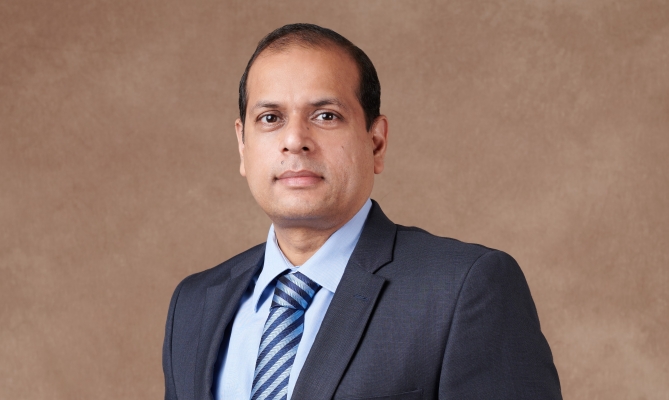
Murali Duvvuri, Sr. Managing Director, Life Sciences, Asia & India Region, Croda
With the recent commissioning of Croda’s Dahej facility, how do you see India’s role evolving within Croda’s global footprint over the next 5 to 10 years?
India is playing an increasingly strategic role in Croda’s global growth journey. The commissioning of our Dahej facility marks an important step in strengthening our long-term presence in the country. Over the coming years, we see India evolving from a demand-led market into a broader capability hub for Croda. Manufacturing will remain an important foundation but the larger opportunity lies in building India as a platform for innovation, application science, product development, process engineering, and customer-centric solutions.
Dahej strengthens our ability to serve domestic and regional customers within Asia with greater reliability, speed, and flexibility. More importantly, it reflects Croda’s confidence in India as a market, a manufacturing base, and a source of future-ready capability for the Group.
Croda is known for “Smart Science.” How are you tailoring this global innovation pipeline to meet the unique cost and performance demands of the Indian Personal/Beauty Care and Life Sciences sectors?
“Smart Science” at Croda is about translating global innovation into locally relevant, sustainable, and commercially viable solutions.
In India, this means balancing high performance with cost efficiency while addressing specific customer and market needs. For example, in Personal Care, we are developing methodologies, applications, and product solutions tailored to Indian consumers and formulation requirements.
In Life Sciences, the focus is on reliable, high-quality, science-led solutions that support performance, consistency, and regulatory confidence. With India’s strong technical talent, application expertise, and close customer understanding, we see the country contributing not only to local innovation, but also to solutions with relevance beyond India.
Croda has an ambitious sustainability goal. How is the Group advancing sustainability in India and what are the key enablers for progress?
Sustainability is central to Croda’s Purpose of using Smart Science to Improve lives. In India, our approach is practical, science-led, and focused on reducing environmental impact across operations, products, and the wider value chain. The sustainability conversation in the chemical industry has evolved. While bio-based raw materials remain significant, the focus today is broader and more rigorous, with greater emphasis on carbon footprint reduction, energy efficiency, responsible sourcing, and value chain collaboration.
Our Dahej facility reflects this approach. Built around the theme “Built Green. Built Smart. Built for the Future,”, the site has sustainability embedded from the outset. It has been designed to significantly reduce Scope 1 and 2 emissions, supported by renewable electricity and fuel sources. The site also incorporates responsible manufacturing practices, including the use of RSPO-certified oleochemicals and alignment with Extended Producer Responsibility plastic recycling requirements.
Importantly, sustainability is not just about the infrastructure. It requires strong collaboration and alignment across suppliers, customers, technology partners, and the broader ecosystem. For Croda, the opportunity in India is to combine sustainable operations, innovation capability, and stronger customer collaboration to deliver high-quality solutions with greater speed, reliability, and responsibility.
How is Croda India using digitalisation and automation to build safer, smarter, and more responsive operations?
Digitalisation is an important enabler of Croda’s future-ready operations in India. For us, it goes beyond automation and efficiency to include safety, responsiveness, quality, and better decision-making.
Across our Navi Mumbai site and the new Dahej facility, we are adopting digital technologies that enhance operational visibility, strengthen process control, and support safer ways of working. At Dahej, as a greenfield site, we have embedded advanced systems from the outset, including a SIL 3-rated Central Control Room, which enables real-time monitoring and control of critical operations, reducing process risks and enhancing response readiness.
Emerging technologies, including AI-led use cases, will further support predictive insights and continuous improvement, helping us build smarter, safer, and more resilient operations.
As a leader, what initiatives are being taken to increase female representation in STEM, manufacturing, and operations roles in India?
Croda’s Sustainability goals are aligned with the United Nations SDG goals. In line with this, one of our Hero Targets for 2030 as part of our commitment is around gender balance. Women’s representation in India’s manufacturing sector remains relatively low and uneven due to a mix of structural, social, and workplace-specific barriers. At our manufacturing facility in Dahej, 18% of the employees are women. This is definitely a significant milestone for an industrial location often seen as remote, male-dominated, and traditional.
This milestone was never easy to achieve, given the cultural and social barriers as well. This is where empathy, meticulous planning and commitment to the vision helped us. We understood that most of these women we were hiring are the first in her family to pursue higher education and/or work outside the home. Our “Know Your Company” session for potential hire’s families helped to engage with the family of the women to explain them about Croda, what we do, how we do and also showcase our safety culture. During the session, Croda’s management personally engaged with the families, addressed their concerns, and assured them of a safe and supportive workplace.
When the leadership walks the talk. Winning confidence is never difficult and that is what worked for us. Supported by safe transport facilities, inclusive policies, and an empowering work culture, we are on course to build towards 30 per cent female representation on the shop floor. For us, this is not only about diversity, but about breaking barriers and creating long-term opportunities for women in manufacturing and operations.
With changing regulations around chemical safety, sustainability, and ingredient claims, how does Croda stay ahead of regulatory shifts in India?
Croda takes a proactive and forward-looking approach to regulatory readiness. We closely track regulatory developments in India as well as evolving global standards related to chemical safety, sustainability, ingredient claims, and product stewardship. Customers are not only asking whether a product performs, but also whether it is safe, compliant, responsibly sourced, and aligned with future sustainability expectations.
Our data driven approach helps to ensure accurate product safety assessment, ingredient claim substantiation, regulatory approvals allowing global markets access and sustainability governance. This allows reliable, consistent and trusted information flow to customers.
Through our global expertise, local knowledge, strong internal governance systems, product stewardship practices, and active engagement with industry bodies, we prepare early, implement proactively, and guide customers with confidence. Our objective is not only to meet current regulatory requirements, but also to anticipate future shifts in standards and ensure that our products and processes remain future-ready.
What is your five-year vision for expanding Croda’s presence in India’s fast-evolving Life Sciences sector?
India’s Life Sciences sector offers significant long-term potential, supported by strong scientific capability, manufacturing strength, and an expanding healthcare ecosystem. Our five-year vision is to strengthen Croda’s role as a trusted innovation and solutions partner for customers in this sector, by supporting them with high-quality ingredients, formulation expertise, reliable supply and deeper technical collaboration.
A key part of this vision will be building stronger local capability. The expansion of our Global Technical Centre lab in Hyderabad will help us enhance application support, technical problem-solving and customer collaboration for Life Sciences customers in India. Alongside this, our new Dahej manufacturing facility strengthens Croda’s local supply platform and improves our ability to respond to customer needs with greater agility, quality, and confidence.
As in other sectors, innovation will remain central to our approach. India has the talent and technical capability to contribute meaningfully to product development, formulation problem-solving and process innovation. Our ambition is to build India as a stronger contributor to Croda’s Life Sciences growth, supported by local capability, global expertise and closer customer partnerships.
What are the top three strategic priorities for Croda India over the next 18 months?
Our priorities over the next 18 months are focused on building a stronger, safer, and more future-ready Croda India. First, we will continue strengthening India as a safe, sustainable, and reliable manufacturing and supply platform. The commissioning of Dahej is an important step in this journey. Second, we will accelerate customer-centric innovation by staying closer to customers, understanding their evolving needs, and bringing together technical, commercial, manufacturing, and marketing capabilities to deliver faster and more relevant solutions. Third, we will continue investing in people and talent. India’s future role in Croda will be shaped not only by infrastructure but by the capability of our teams. Building technical depth, leadership capability, inclusive opportunities, and a strong performance culture will be critical to our next phase of growth.
How will Croda differentiate its premium, sustainable ingredients from lower-cost competitors?
Our differentiation lies in the value we create beyond product price. Croda brings together high-performance ingredients, strong technical support, regulatory knowledge, sustainability expertise, reliable supply, and deep customer collaboration. One relevant example is Procapil, where we are further reinforcing its positioning as a differentiated, science-backed hair growth solution. In a market where lower-cost alternatives are increasingly present, our focus is on clearly demonstrating its clinically supported, multi-mechanism efficacy and consistent performance across formats. Croda’s strength is our ability to combine global science with local application insight. We do not compete only on cost. We compete by helping customers create better, more differentiated, and more sustainable products.
How do you see Croda India driving innovation across sectors to meet evolving customer demands?
Innovation in India must be holistic and cross-sectoral. While Consumer Care remains an important area, the opportunity for Croda India extends across Personal Care, Life Sciences, Industrial Specialties, and other customer segments where science-led solutions can create value.
Modern customers demand solutions that merge performance, sustainability, compliance, and commercial value. Delivering this requires seamless collaboration across R&D, manufacturing, commercial, regulatory, technical, and marketing teams. Marketing bridges the gap by turning consumer insights into distinct innovation priorities, focusing on sustainability claims, formulation efficiency, enhanced performance, or local market demands. Croda India unites these capabilities to actively drive Croda’s global innovation agenda.
What steps are being taken to ensure new product developments are aligned with climate-conscious and responsible design principles?
Sustainability is increasingly being embedded into product development from early stages. The focus is not only on the final product, but also on how it is designed, sourced, manufactured, used, and positioned across its lifecycle.
Croda’s approach is guided by responsible product design, green chemistry principles, and customer application needs. This includes critically evaluating raw material choices, process efficiency, safety, environmental impact, also ensuring regulatory requirements while delivering high product performance. The products are also evaluated on extrinsic parameters, and how they can support customers’ sustainability goals.
India can contribute strongly to this agenda through its available biodiversity, technical talent, formulation expertise, and ability to develop solutions for demanding and diverse market conditions.
How do you plan to deepen R&D collaborations with local partners, academic institutions, and customers?
Collaboration will be an important driver of Croda’s next phase of innovation in India. We are looking to deepen partnerships with customers, academic institutions, research organisations, and industry bodies to accelerate relevant and science-led innovation. The goal is to create a more focused framework for collaboration, where we can identify priority areas, bring the right expertise together, and move from ideas to practical solutions more quickly.
We have already seen early successes where work in India in collaboration with institutes like CSIR-NCL, Pune, ICT – Mumbai and others and recognise that this has the potential to create broader impact. Going forward, a more structured approach to R&D collaboration can help us address local market challenges while also contributing to Croda’s global innovation pipeline.
Subscribe to our newsletter & stay updated.