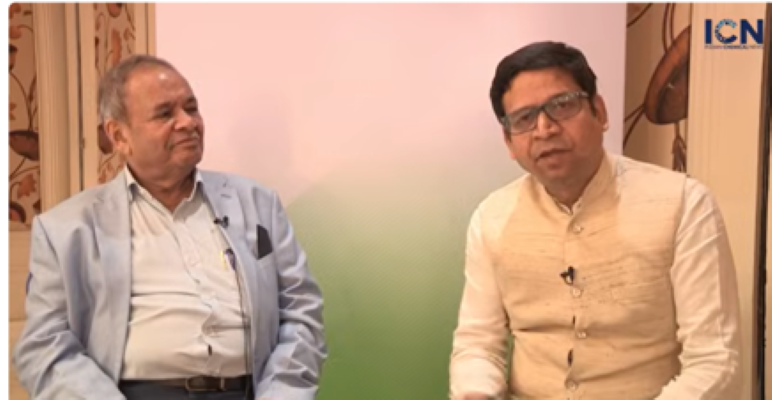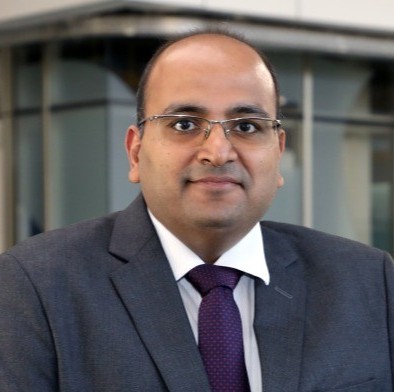
Expansion of Vadodara facility is a strategic investment aimed at strengthening our global supply chain. By doubling capacity, we significantly increase local manufacturing, assembly, and testing capabilities
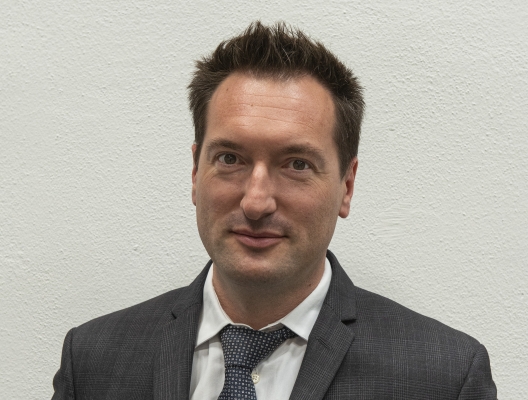
Alberto Ghezzi,VP Sales Industrial Pumps, Maag Italy
MAAG pioneered gear pump technology for polymers. How is the company adapting to this core competence to support sustainability and closed-loop recycling?
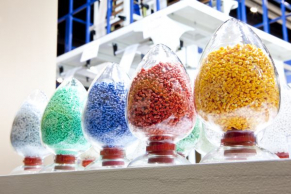
Sustainability and circularity are fundamentally changing polymer and chemical processing, especially with the increased use of recycled and bio-based materials. These materials are often more sensitive to shear and temperature and can show wider variability. MAAG addresses this by optimizing gear geometry, internal clearances, and surface treatments to minimize mechanical and thermal stress. Innovations such as low-compression toothing help preserve polymer integrity, reduce degradation, and ensure stable, repeatable processes, which are essential for closed-loop recycling systems.
MAAG has announced plans to expand Vadodara facility. What impact does this have on global supply capabilities?
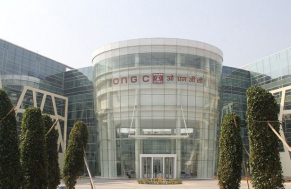
Expansion of Vadodara facility is a strategic investment aimed at strengthening our global supply chain. By doubling capacity, we significantly increase local manufacturing, assembly, and testing capabilities. This reduces lead times, improves flexibility, and enhances supply reliability for both industrial and extrusion pump lines worldwide, particularly for fast-growing markets, while maintaining MAAG’s global quality standards.
Emerging economies are investing heavily in chemical manufacturing. How is MAAG positioning itself to capture these opportunities?
Our approach combines global engineering excellence with strong local presence. We invest in regional application engineering, service, and manufacturing capabilities and work closely with local OEMs and EPCs. This allows us to adapt proven MAAG technologies to local standards and process requirements without compromising performance or reliability, enabling long-term partnerships and sustainable market growth.
For viscous or corrosive chemicals, why are gear pumps often preferred over centrifugal pumps?
Gear pumps operate on a positive displacement principle which means the flow rate is largely independent of pressure. This makes them extremely reliable for high-viscosity or corrosive media. Compared to centrifugal pumps, gear pumps offer precise flow control, minimal internal recirculation, and lower shear stress. MAAG series such as dosix and flexinox are specifically engineered to maintain efficiency and durability in applications where centrifugal pumps would quickly reach their limitations.
Specialty chemicals often require very low and precise flow rates. How does MAAG ensure accuracy in these conditions?
In specialty chemical production, precision is critical. MAAG’s dosix dosing gear pumps are designed with very small internal volumes, tight manufacturing tolerances, and controlled low-speed operation. This combination enables extremely stable and accurate dosing even at very low throughput, ensuring consistent product quality for additives, catalysts, and other high-value chemicals.
How do flexinox pumps address highly corrosive chemical applications?
flexinox pumps are specifically designed for aggressive media. Wetted parts are manufactured from corrosion-resistant alloys, and the internal design avoids dead zones where corrosion typically accelerates. The overall construction is also maintenance-friendly, making inspection and servicing easier. Compared to conventional industrial pumps, this results in longer service life and reduced maintenance effort.
Can you explain role of low-compression toothing in sensitive polymer manufacturing?
Low-compression toothing is a key innovation for processing sensitive polymers, including recycled and medical-grade materials. Reducing internal compression and pressure peaks inside the pump, minimizes temperature rise and mechanical stress on the polymer melt. This helps preserve molecular structure and material properties while improving overall process stability.
How does additive manufacturing support MAAG’s pump development?
At MAAG, additive manufacturing is primarily used as a development tool. It allows us to rapidly prototype gear profiles, internal flow channels, and application-specific components. This accelerates testing and validation, shortens development cycles, and enables highly customized solutions for demanding customer applications.
MAAG pumps handle challenging media like molten sulfur or spandex. What safety considerations are involved?
These applications require precise temperature control, robust sealing systems, and careful material selection. MAAG integrates heating systems, specialized seals, and conservative design margins to ensure safe operation. Continuous monitoring further enhances safety when handling media with high thermal or chemical risk.
How do MAAG gear pumps perform in refinery environments with high pressures and temperatures?
MAAG pumps designed for refinery and heavy industrial applications feature rigid housings, oversized bearings, and controlled lubrication systems. This robust design enables continuous operation at full potential, ensuring reliable performance even under extreme pressure and temperature conditions.
Customers often report extremely long service life from MAAG pumps. What enables this longevity?
Longevity is achieved through premium materials, precision manufacturing, optimized load distribution, and conservative mechanical design. Many MAAG pumps operate for decades with minimal intervention. Service-friendly designs further reduce downtime, resulting in very low total cost of ownership.
What role do MAAG’s Center of Excellence play in customer support?
The Center of Excellence provide advanced application engineering, customized pump skid assembly, commissioning support, and aftermarket services. This global network enables fast, competent technical support and highly tailored solutions, giving customers confidence throughout the pump lifecycle.
How does MAAG help prevent cavitation and overheating in industrial applications?
Preventive monitoring is essential. MAAG recommends the use of pressure, temperature, and vibration sensors integrated into plant control systems. These measures allow early detection of abnormal operating conditions and help prevent equipment damage.
Is MAAG integrating AI and digital tools into pump systems?
Yes, MAAG is increasingly leveraging AI-supported analytics to analyze operating data and performance trends. This enables predictive maintenance strategies, allowing customers to address potential issues before failures occur and significantly improving plant uptime.
How do MAAG pumps contribute to energy efficiency in industrial plants?
Gear pumps inherently offer high volumetric efficiency and low internal losses. By delivering exact flow rates without throttling or recirculation, MAAG pumps help reduce energy consumption per ton of product. Optimized integration with drive systems further enhances efficiency.
What steps is MAAG taking to reduce the carbon footprint of its manufacturing operations?
MAAG is actively optimizing production processes, reducing material waste, improving logistics efficiency, and increasing local sourcing. Sustainability is becoming an integral part of both product design and manufacturing strategy.
Finally, what major innovations can we expect from MAAG in the next few years?
Over the next three to five years, MAAG’s innovation roadmap is strongly focused on the combination of intelligent pump technology, digital integration, and portfolio harmonization across the group. A key milestone in this direction has already been reached this year with the launch of a new pump series dedicated specifically to chemical applications: the chemX series. This new platform includes three models—CD, CC, and CV—designed to cover a wide range of chemical process requirements while offering a unified technical concept.
The flagship model, chemX C (CC), combines the best-performing features of the previous FX and CHEM pump models, integrating proven hydraulic performance, robust mechanical design, and improved serviceability into a single, modern solution. With chemX, MAAG aims to standardize and harmonize its chemical pump offering across the global market, simplifying selection, operation, and maintenance for customers.
Importantly, the entire chemX series has been developed to be fully compatible with legacy pump models, allowing existing customers to upgrade seamlessly without changes to piping, interfaces, or process layouts. Looking ahead, this approach—combining mechanical excellence with digital readiness and portfolio consistency—will define MAAG’s next generation of pump solutions, supporting higher efficiency, reliability, and easier integration into increasingly digitalized chemical plants.
Subscribe to our newsletter & stay updated.