India’s next clean energy challenge is no longer simply about adding renewable capacity — it is about storing and deploying that power reliably at scale.
With the country already crossing 283 GW of installed renewable energy capacity and its power demand continuing to rise, industry leaders are calling for an urgent push to develop and manufacture battery energy storage technologies domestically. India is projected to require 888 GWh of energy storage capacity by 2035-36, making indigenous technology, manufacturing and supply chains critical to the country’s energy security.
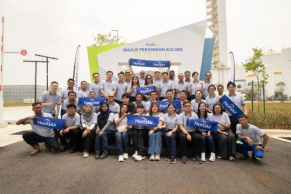
The call took centre stage at the recently concluded India Energy Storage Alliance (IESA) Chennai Connect 2026, where industry experts urged the government and private sector to accelerate research, manufacturing and deployment of home-grown battery energy storage systems (BESS).
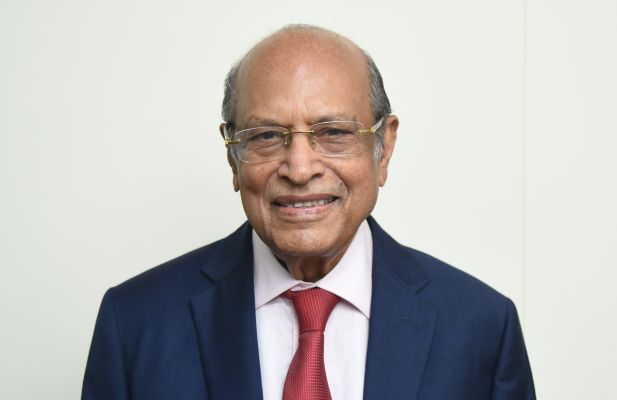
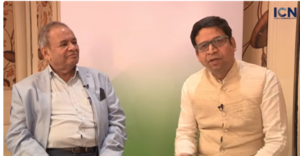
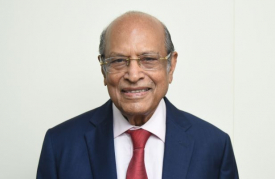
“Energy storage will be one of the defining technologies of India’s energy transition. Renewable energy must stay at the forefront, but it needs to be supported by storage to build a stronger, more reliable, and increasingly affordable power system,” said Prof. Ashok Jhunjhunwala, Institute Professor at IIT Madras.
“In the next 5-7 years, technologies like sodium-ion and long-duration solutions, including iron-air batteries, will play a key role in renewable integration and grid flexibility. We must focus on domestic manufacturing across battery technologies, power electronics, and the clean-energy supply chain to ensure long-term energy security. The next phase is about building a stronger, smarter, and more resilient electricity system, not just adding renewable capacity.”
The discussions at IESA Chennai Connect highlighted a fundamental shift in India’s energy strategy: storage can no longer be treated as an optional complement to renewable generation.
Bindu Madhavi, Senior Director-Policy and Regulatory, India Energy Storage Alliance, said, “The question now is whether we can build the technology, manufacturing capacity, grid infrastructure and market ecosystem fast enough to keep pace with our renewable energy ambition. Storage must no longer be viewed as an add-on to renewable energy, but as an integral part of how India plans, builds and operates its future power system.
"Our ambition must go beyond batteries to build a globally competitive energy storage ecosystem spanning materials and cells, BMS, PCS, system integration, long-duration storage, grid technologies, recycling and second-life applications. The next decade will determine whether India becomes simply a major storage market or a global hub for storage technology, manufacturing and innovation.”
Sessions spanning technology, business and policy underscored the need for a complete indigenous battery value chain — from cells, battery management systems and power conversion systems to system integration, recycling and second-life applications.
The push is also being driven by growing demand from commercial and industrial consumers seeking greater energy resilience and lower power costs.
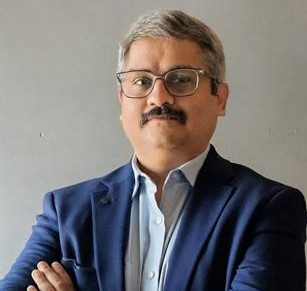
“Tailored power procurement strategies, incorporating renewables, open access, and energy storage, are key to maximising value, resilience, and sustainability for Indian businesses,” said Bittu Singh, Manager, Power Trading and Sustainability at Customized Energy Solutions (CES).
The rapid deployment of energy storage is creating opportunities well beyond the traditional power sector, with electric mobility, logistics and data centres emerging as major demand drivers.
Smisty Sharma, Senior Manager-BESS, Waaree Energy Storage, said, “Modular and containerised battery energy storage systems are rapidly expanding across industries, from data centres and hotels to hospitals, helping reduce diesel dependence and enhance power reliability.”
At the same time, the industry is turning its attention to what happens when batteries reach the end of their first life.
Yashwanth Mahadevan, Chief Business Officer, Bridge Green Upcycle, said, “By using AI-based health assessment, we can repurpose EV batteries for second-life applications like cold storage and peak demand management, and recycle those that reach end-of-life, creating a more sustainable battery ecosystem.”
Recycling and second-life applications could become an important part of India’s emerging storage economy, helping reduce environmental impacts while creating new business opportunities around battery recovery, refurbishment and reuse.
Industry experts also stressed that India should avoid becoming overly dependent on a single battery chemistry.
While lithium-ion technology currently dominates the market, emerging chemistries could become increasingly important as India seeks solutions tailored to different applications, from mobility and distributed storage to long-duration grid storage.
Prof. Nitin Muralidharan, Assistant Professor, Department of Chemical Engineering, IIT Madras, said, “While lithium-ion leads today, technologies like sodium-ion, iron-air, zinc-based batteries, and vanadium redox flow batteries will play vital roles in specific applications. India must remain technology-agnostic and focus on building strong domestic manufacturing capabilities.”
A diversified technology base could also strengthen India’s position in global supply chains and create opportunities for Indian manufacturers to compete in export markets.
With policy support, expanding research and development infrastructure and rising private-sector participation, the industry sees a significant opportunity for India to emerge not only as one of the world’s largest energy storage markets, but also as a technology and manufacturing hub.
Adityan Devia, ESS Sales & Business Development, IMEA, said, “Advanced battery energy storage systems are now essential for grid flexibility, industrial optimisation, and decarbonisation, delivering tangible benefits such as reduced costs, improved reliability, and greater renewable energy use.”
The message emerging from IESA Chennai Connect 2026 was clear: India’s clean energy transition cannot be powered by renewable generation alone.