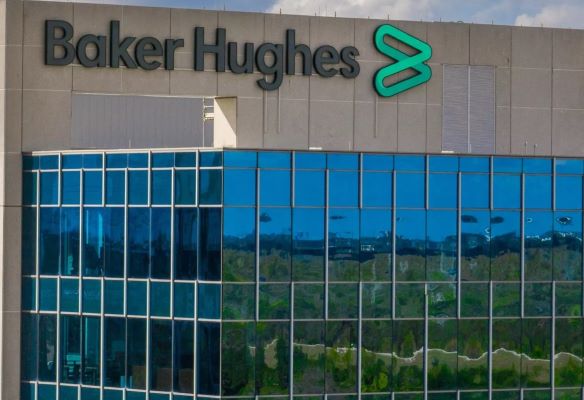
Baker Hughes has reported a strong third-quarter performance, with revenue climbing 14% year-on-year to $8.025 billion and orders surging 31% to $10.8 billion, as booming demand for artificial intelligence infrastructure, liquefied natural gas (LNG) and gas technology strengthens its growth outlook.
The energy technology company also posted a record $46.4 billion in remaining performance obligations (RPO), including an all-time high of $39.4 billion for its Industrial & Energy Technology (IET) business, providing greater visibility into future revenues.
Adjusted EBITDA rose 14% year-on-year to $1.415 billion, while adjusted diluted earnings per share increased 2% to $0.70. Adjusted net income attributable to Baker Hughes reached $695 million, up 2% from the same quarter last year.
The company generated $1.005 billion in cash from operating activities and $769 million in free cash flow during the quarter.
"Baker Hughes delivered another strong quarter, reflecting disciplined operational execution and broad-based commercial momentum across the company. Performance across IET, OFSE and Chart highlights the strength of our expanded portfolio and the growing value of our complementary capabilities as we build a more industrialized energy solutions company positioned across attractive energy and industrial markets."
The standout performance came from Baker Hughes' IET division, which recorded $5.9 billion in third-quarter orders, its second-largest quarterly order intake on record. IET orders increased 42% year-on-year, while its revenue grew 3% to $3.477 billion.
The company said demand across data centres, space, LNG and gas infrastructure, alongside capacity expansions, was driving its growth momentum.
The strength of the order pipeline has prompted Baker Hughes to raise its full-year IET order guidance and its Horizon 2 (2026-2028) order outlook to more than $50 billion.
Among the quarter's major wins was an order to supply 1.1 gigawatts of power generation capacity to a major US technology company. The contract includes 43 NovaLT and Frame 5 gas turbine packages, gearboxes and BRUSH Power Generation generators to support advanced computing infrastructure and AI workloads.
Baker Hughes also secured an approximately 500-megawatt power generation equipment order involving 18 Frame 5 gas turbine generator packages for data centre projects being developed by a US energy company.
In the LNG segment, Venture Global awarded the company a major contract for its Plaquemines expansion, involving equipment across four liquefaction blocks comprising eight modules, along with Chart cold boxes.
Another significant award from Venture Global covers 13 Frame 5/2E gas turbine-driven compression systems for the Cloud Connector Pipeline project, supporting LNG feed gas transportation in the United States.
Baker Hughes' Oilfield Services & Equipment (OFSE) division also delivered a solid quarter, with orders rising 19% sequentially to $4.047 billion and revenue increasing 6% to $3.66 billion.
Segment EBITDA reached $659 million, up 9% sequentially, although it remained 2% below the year-ago quarter.
International markets were a key growth driver. Revenue from Europe, the Commonwealth of Independent States and Sub-Saharan Africa surged 29% year-on-year, while Latin America recorded 12% growth.
The Middle East and Asia region, however, saw revenue decline 13% year-on-year, partly reflecting the disposition of Baker Hughes' Surface Pressure Control business.
The company secured several major international contracts during the quarter.
In Pakistan, it signed a multi-year agreement with Oil & Gas Development Company (OGDC) to improve production and recovery across more than 120 wells in mature oil and gas fields.
In Indonesia, Searah North Ganal Limited awarded Baker Hughes a substantial subsea systems contract for the integrated development of the Geng North and Gehem fields. The scope includes 17 deepwater horizontal tree systems, manifolds, connections and subsea controls.
In the UK North Sea, Baker Hughes secured an award from bp for integrated offshore production enhancement and stimulation services using its vessel-based StimFORCE technology.
The company also won an integrated subsea systems contract from Eni for the deepwater Cronos gas development offshore Cyprus.
Additional awards included drilling technology contracts from Kuwait Oil Company, geothermal drilling orders in Türkiye and a multi-year agreement with KOC to deploy production, digital and AI-enabled solutions.
The acquisition of Chart Industries, completed on July 16, is already contributing to Baker Hughes' financial performance and expanding its reach across industrial and energy markets.
Chart generated $888 million in revenue and $831 million in orders during the third quarter, with segment EBITDA of $156 million. The results reflect business activity from the acquisition date through September 30.
The acquisition has strengthened Baker Hughes' capabilities in cryogenic technology, industrial cooling and LNG infrastructure while creating opportunities to combine the companies' technologies, customer relationships and installed bases.
Chart also secured new business in the commercial space sector, LNG and marine industries.
Among the highlights were launch-pad equipment and specialised tank orders from three commercial space customers, cryogenic cold boxes and steam turbines for Golar LNG's fourth floating LNG project, and air coolers for a Gulf Coast LNG export facility expansion.
Despite strong growth in revenue and adjusted earnings, Baker Hughes' GAAP net income attributable to the company declined 33% year-on-year to $411 million from $609 million.
Diluted earnings per share fell to $0.41 from $0.61 in the corresponding quarter last year.
The company attributed the stronger adjusted performance primarily to the Chart acquisition, improved pricing, higher volumes and cost-reduction initiatives, partly offset by inflation, changes in business mix and lower productivity benefits.
Adjusted net income of $695 million included $284 million in adjustments, while adjusted EBITDA of $1.415 billion excluded $214 million in adjustments.
The company's total book-to-bill ratio stood at 1.3, while IET posted a particularly strong ratio of 1.7, indicating that new orders continued to outpace revenue.
RPO increased by $6.4 billion sequentially to $46.4 billion. IET accounted for the bulk of the backlog at $39.4 billion, including $16.5 billion in Gas Technology Equipment and $16.8 billion in Gas Technology Services.
OFSE RPO stood at $3.4 billion, while Chart contributed $3.6 billion.
Baker Hughes is positioning its expanded portfolio to capitalise on rising electricity demand, energy security priorities and investment in industrial infrastructure.
The company's growing exposure to AI-related power generation, LNG infrastructure, offshore production and industrial technology is reinforcing its long-term growth prospects.
The third-quarter results underline Baker Hughes' expanding role beyond traditional oilfield services, with its technology portfolio increasingly positioned to benefit from the convergence of energy infrastructure, digitalisation, AI-driven power demand and industrial growth.