General
Canberra wastewater plant set to become Australia’s largest MBR facility
The project will add a new secondary treatment process built around advanced membrane technology.
-
By ICN Bureau | August 16, 2026
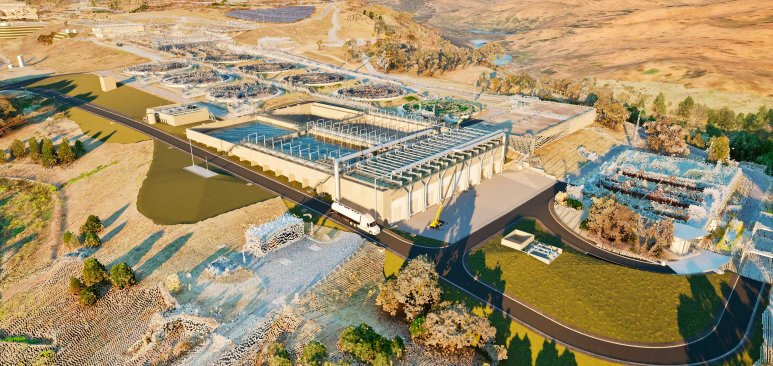
A major expansion of Canberra’s Lower Molonglo Water Quality Control Centre will make it Australia’s largest membrane bioreactor (MBR) wastewater treatment plant, with a new DuPont MemCor system set to add about 97 million litres of treatment capacity per day.
The upgrade is being driven by rising demand as Canberra’s population grows. Owned and operated by Icon Water, the Lower Molonglo facility is the primary wastewater treatment plant serving the Australian Capital Territory and has operated since the late 1970s.
The project, being delivered in collaboration with Seymour Whyte and VINCI Construction Grands Projects, will add a new secondary treatment process built around advanced membrane technology. The MemCor MBR system will expand the plant’s capacity while producing high-quality effluent for safe discharge.
The expansion is designed not only to meet immediate demand but also to strengthen Canberra’s wastewater infrastructure for decades to come.
"We're proud to support this landmark project with a MemCor MBR system that is manufactured here in Australia," said Matthew Dick, Business Development & Sales Manager at DuPont Water Solutions. "It illustrates how DuPont combines its global innovation capabilities with local expertise to provide reliable and scalable wastewater treatment solutions for growing communities."
DuPont said MemCor MBR systems, paired with MemPulse™ modules, have been used for more than 30 years across hundreds of municipal and industrial installations worldwide, with a focus on efficiency, reliability and lower operating costs.
The company said its water technologies are currently helping purify more than 50 million gallons of water every minute across 112 countries.
The Lower Molonglo expansion marks a significant step in Canberra’s effort to keep its essential water infrastructure ahead of population growth, while increasing the plant’s capacity and long-term resilience.