Rising demand for high-performance materials across aerospace, chemical processing, marine engineering and energy infrastructure is creating fresh opportunities for titanium manufacturers.
Against this backdrop, TSM Technology is positioning itself to strengthen its presence in the global titanium market, with a manufacturing portfolio spanning titanium tubes, plates, bars, forgings and other specialty metal products.
Titanium's combination of high strength, relatively low weight and exceptional corrosion resistance has made it an increasingly important material for industries operating in demanding environments. From seawater-exposed marine equipment to chemical processing plants and industrial heat exchangers, titanium components are valued for their ability to withstand conditions that can challenge conventional metals.
TSM Technology is seeking to capitalise on these requirements through its range of titanium products, manufacturing infrastructure and customised supply capabilities.
The company's manufacturing infrastructure is a key part of its positioning in the international market.
According to TSM Technology, it operates three specialised manufacturing facilities, eight dedicated production lines and more than 100 precision machines. Its reported annual production capacity stands at approximately 1,200 tonnes.
The company manufactures titanium products through multiple processing stages, including forging, rolling, welding, heat treatment, straightening, cutting and surface finishing.
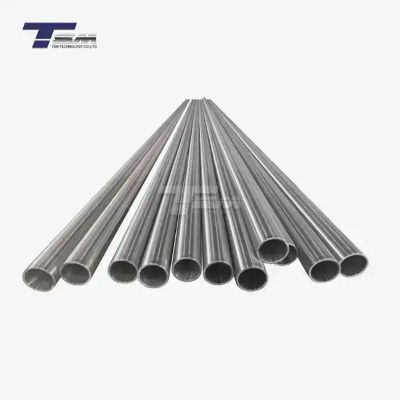
Its titanium tube portfolio includes seamless and welded tubes, tube coils, square tubes and heat exchanger tubes. Products are available in different grades, dimensions and configurations, with customised manufacturing offered to meet specific industrial requirements.
The distinction between seamless and welded tubing is particularly important for industrial buyers. Seamless tubes are produced without a longitudinal weld seam, while welded tubes are manufactured by forming and joining titanium material. The choice depends on engineering specifications, operating conditions and applicable industry standards.
Titanium tubing has become an important option for equipment manufacturers and industrial operators seeking materials that can withstand corrosion, pressure-related demands and challenging operating environments.
In chemical processing facilities, titanium tubes are considered for equipment exposed to aggressive chemical media. Marine operators use titanium components in applications involving prolonged seawater exposure, while heat exchangers and condensers require tubing that delivers dimensional consistency and dependable material performance.
Material selection is critical
Commercially pure titanium grades such as Grade 1 and Grade 2 are widely used where corrosion resistance and formability are priorities. Grade 5, or Ti-6Al-4V, is selected for applications requiring higher mechanical strength. Other grades, including Grade 7, Grade 9, Grade 12 and Grade 23, address more specialised engineering requirements.
TSM Technology offers multiple titanium grades and product configurations, allowing customers to specify outside diameter, wall thickness, length, tolerances and finishing requirements according to project needs.
The company also provides technical support to help customers evaluate material grades and product specifications before placing orders.
For industrial buyers, manufacturing capacity alone is not enough. Material consistency, inspection procedures and traceability are equally important, particularly when titanium components are destined for critical equipment and infrastructure.
TSM Technology says its quality management process covers raw material verification, production monitoring and final product inspection.
Titanium plates are used in fabricated structures, chemical processing equipment, marine applications and heat exchanger components. Their strength, corrosion resistance and relatively low weight make them suitable for industrial applications where material durability is a priority.
Depending on the project, buyers can specify grade, thickness, width, length, surface finish and mechanical properties.
Titanium bars, meanwhile, serve machining and component manufacturing operations. They are used as raw materials for turning, milling, forging and other production processes, supporting the manufacture of shafts, fasteners, fittings and precision-engineered components.
By supplying tubes, plates and bars alongside forgings, flanges, fittings and fasteners, TSM Technology aims to offer customers a broader procurement solution for titanium-based projects.
This integrated product approach could prove particularly useful for engineering contractors and equipment manufacturers managing complex material requirements.
Titanium's industrial appeal extends across several high-performance sectors
Aerospace manufacturers rely on titanium alloys where strength-to-weight performance is critical. Chemical processing companies use titanium for selected equipment exposed to corrosive substances. Marine and offshore operators value its resistance to seawater corrosion.
The energy sector also presents opportunities, particularly in heat exchangers, condensers and specialised industrial equipment.
In medical manufacturing, selected titanium grades are valued for their biocompatibility and mechanical properties, although applications must meet stringent material and regulatory requirements.
TSM Technology identifies aerospace, medical, marine, chemical processing and energy as key industries served by its product portfolio.
Production schedules, inventory, packaging and transportation are additional considerations for international procurement. TSM Technology says its manufacturing and supply arrangements are designed to support both standard and customised orders.
Titanium market outlook: Quality and manufacturing consistency become key differentiators
The continued development of aerospace, marine engineering, chemical processing and energy infrastructure is expected to support demand for specialised titanium products.
However, manufacturers face growing expectations beyond simply supplying raw materials. Buyers increasingly require consistent production quality, reliable inspection systems, documented traceability and the flexibility to meet project-specific specifications.
For titanium manufacturers, maintaining competitiveness will depend on controlling the entire production chain, from raw material selection and processing to final inspection and shipment.
TSM Technology is seeking to build on these requirements through its manufacturing infrastructure, broad product portfolio and technical support capabilities.
With titanium tubes at the centre of its offering, supported by titanium plates, bars, forgings and other specialty products, the company is targeting industrial customers looking for customised material solutions and coordinated supply capabilities.