A breakthrough from Spain could redefine the race for sustainable hydrogen.
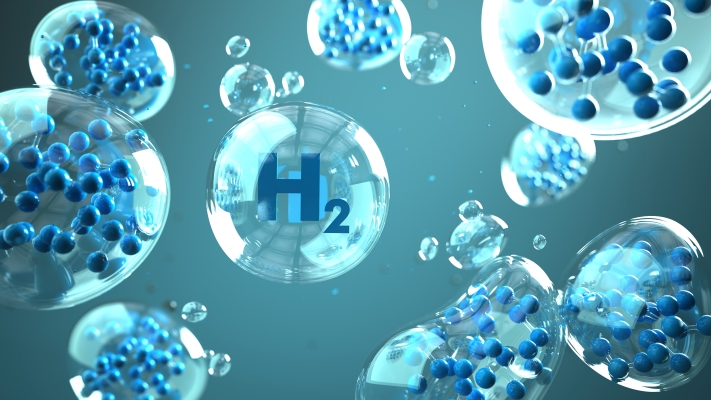
Scientists at the Singular Center for Research in Biological Chemistry and Molecular Materials (CiQUS), led by María Giménez-López, have developed a single molecular compound that can toggle between producing oxygen and hydrogen—a potential game-changer for clean energy. Their findings were published in the journal Advanced Materials.
Hydrogen production through water electrolysis is central to the clean energy transition, but it currently relies on precious metals like iridium and platinum. The CiQUS team’s innovation, a hybrid material combining a vanadium cluster with carbon nanotubes, offers an earth-abundant alternative.
“The 'switch' is not in the metal cluster itself, but in how the organic cations around it are arranged,” Giménez-López explains.
“When the material is physically mixed with the nanotubes, these cations—called TRIS⁺—remain locked in the crystal structure. This steers the reaction toward oxygen production through a special oxidation mechanism. However, when we let it assemble in a directed way, the same TRIS⁺ cations are released, orient toward the surface, and act as a 'proton sponge'. This simple change in molecular architecture turns the system into an exceptional catalyst for hydrogen.”
At the molecular level, the vanadium cluster acts as a stable, reversible electron reservoir. The TRIS⁺ cations determine the final function—oxygen or hydrogen—by controlling the local electrochemical microenvironment. “When blocked, they promote water activation for oxygen release. When free and exposed, they capture protons and facilitate their reduction to hydrogen,” the report notes.
Electrochemical tests confirm the material’s potential. In its oxygen-producing configuration, it rivals commercial iridium; in its hydrogen-producing setup, its efficiency approaches platinum standards. Giménez-López’s team emphasizes that carbon nanotubes play a critical role as “smart supports” in guiding this behavior.
“This work establishes that the catalytic switch is topological and microenvironmental, not compositional,” Giménez-López stresses.
The study not only highlights a promising candidate for more sustainable electrolyzers but also introduces a new paradigm: programming molecular catalysts through controlled assembly to create multifunctional, durable, and earth-abundant materials.