The recent visit of President Vladimir Putin, along with nine ministers, shows Russia’s strong interest in engaging with India’s economy
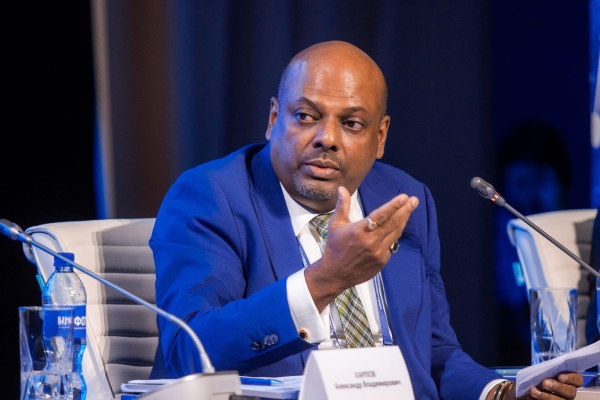
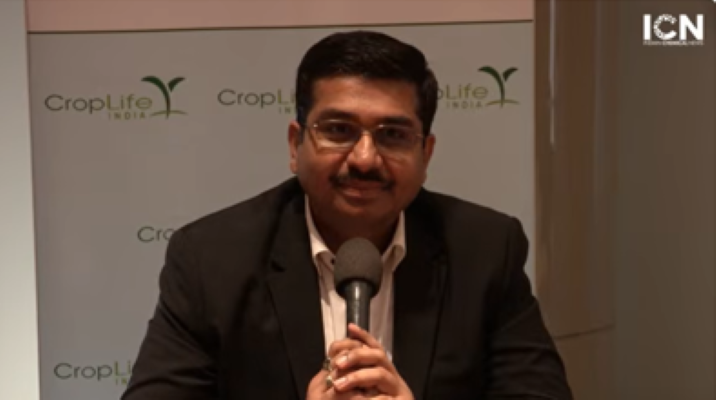
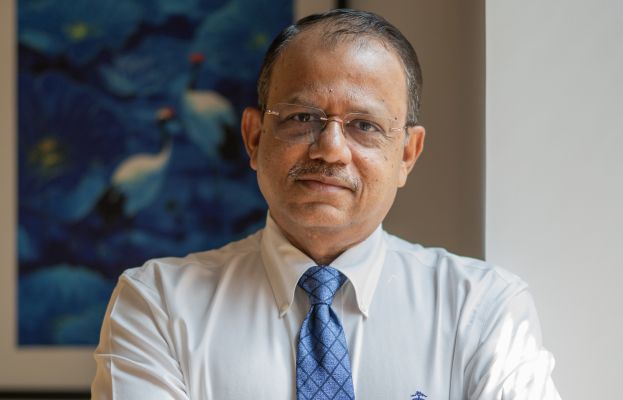
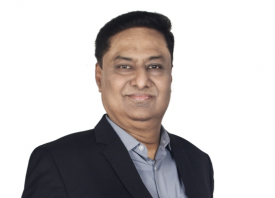
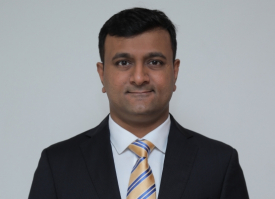
In an exclusive interview with Pravin Prashant, Executive Editor, Indian Chemical News, Manish Kumar, Vice-Chairman, Moscow Chamber of Commerce, Indian Commission; and President, Soltex Group shared insights on Indo-Russian trade imbalance, deeper collaboration, fertilizer MoU, untapped opportunities, hydrogen, ports & shipping, and skilled manpower. Excerpts of the interview:
India and Russia have set a target of US $100 billion in annual bilateral trade by 2030. Given the current imbalance, India’s imports from Russia stand at US $63.8 billion whereas exports stand at US $4.9 billion. How realistic is this goal and how can we achieve it?
Earlier, we wondered how we would ever reach US $20 or $30 billion in trade, but the geopolitical landscape has changed rapidly. Today, the target has shifted to US $100 billion. The real challenge, however, is the trade imbalance as India exports only about US $5 billion to Russia. To realistically move towards US $100 billion, the Indian business community must take a proactive approach and actively explore emerging opportunities.
The recent visit of President Vladimir Putin, along with nine ministers, shows Russia’s strong interest in engaging with India’s economy. Now it is India’s turn. Our businesses must decide whether they want to stay hesitant because of sanctions or actively engage with Russia. Without the participation of the Indian industry, this target cannot be achieved. Increasing crude oil imports alone will not solve the problem. India must expand its exports in organic chemicals, speciality chemicals, technical textiles, food products, processed food, and many more. Services and skilled manpower should also be considered. If Indian companies look seriously at all these areas, achieving the US $100 billion target becomes possible.
Keeping in view the US sanctions on Russia, how do you see the current situation for India?
There is information circulating that the US has now softened or toned down certain aspects of the sanctions, that’s today’s news. Ultimately, this comes down to political will, and our leadership has made it clear that India’s national interest comes first. With a population of 1.5 billion, energy security is absolutely critical for us. We understand the geopolitical dynamics but India cannot be singled out. If Europe is buying more oil and if the US itself is indirectly sourcing Russian oil, why should India be pressured? It feels discriminatory that barriers are being created to dissuade India from doing business, especially in oil, gas, and petrochemicals. There are many opportunities in this sector, as I have explained earlier, and I don’t think India should reduce oil imports from Russia.
But beyond oil, there are many other industries such as lubricants, base oils, and numerous products, where Indian companies can engage with Russia. What’s needed is stronger communication between the two governments and industry bodies to ease the processes on both sides. At this point, one cannot complain about lack of finance or logistics; the real gap has been communication.
A common question arises is why did it take so long for India and Russia to expand their economic relationship, given the long-standing friendship between the two countries?
India and Russia have been close friends for a long time but the cooperation remained largely in the defence and nuclear sectors. On the business side, despite ideological alignment, Indian companies did not adapt well to Russian business norms and work culture. That is why Indian companies lagged behind, even as American and European companies, large and mid-sized, were successfully doing business in Russia. To succeed, we must understand their culture, their systems, and adapt accordingly.
How can the Indian chemical fraternity benefit from deeper collaboration with Russia?
The chemical industry must recognize that Russia is extremely rich in petrochemical resources such as crude, natural gas, ethylene, and other key feedstocks. There are many intermediates and molecules where Indian companies can collaborate with Russian producers. So far, the main example is the Reliance–SIBUR joint venture for elastomers. But there is room for many more collaborations. Russia can supply raw materials for Indian refineries and polymer producers for products like hexane derivatives, phenol, maleic anhydride, methyl acrylate, glycerine, butanol, methyl ethyl ketone, and many others. These can be sourced at competitive prices, especially since Russia’s exposure to European markets has reduced.
Indian companies can consider setting up projects in Russia, establishing joint ventures, or sourcing basic raw materials for value addition in India and then re-exporting to global markets. Even in pharmaceuticals, Russia can supply certain bulk drugs, for example, HSN hydroxy methyl compounds. There are many avenues for collaboration.
What is stopping Indian companies, whether in chemicals, pharmaceuticals, or petrochemicals from engaging with Russian companies in a big way?
The main issue is lack of accurate information. Perceptions have been created, especially by Western media, about Russia’s systems, stability, logistics, and finance. But the reality is different. Everything is functioning smoothly. After the recent visit, it is even clearer: three to four major Russian banks are already operating in India, enabling direct trade in rupees and ruble. There is no dependence on SWIFT or the US dollar. Logistics are working efficiently, shipments from Indian ports to Western Russian ports take about 20 days. Regular services operate between Saint Petersburg/Vladivostok and Indian ports like Nhava Sheva and Mundra.
Insurance is available and end-to-end logistics services exist. There are no technical obstacles related to finance or transport. The real question is whether Indian companies are willing to engage, or whether they are unnecessarily worried about sanctions. The fact is, China is doing business with Russia. Turkey is doing business with Russia. Many others are too. So why not India?
Following the recent MoU on joint ventures in the fertilizer sector, what commitments and timelines have been set for establishing fertilizer production units in Russia by Indian companies to ensure long-term supply security for India?
The recent MoU and the joint declaration clearly indicate that major Russian companies are ready to partner with Indian firms. This means the projects will certainly move forward, but establishing fertilizer units requires detailed assessments and groundwork. Realistically, it may take one to two years for these projects to materialize on the ground.
Beyond this MoU, several Russian regions have also approached us with offers involving existing fertilizer plants seeking Indian investors, particularly because they prefer Indian partners over Chinese investors. They want Indian companies to invest, modernize the assets, and secure long-term offtake agreements. India depends heavily on imports of fertilizers such as NPK, urea, and other nutrients. The opportunity is significant, and if any Indian company is interested, we can connect them with the right authorities and stakeholders in Russia.
On sustainable fuel, how can India and Russia collaborate on hydrogen which is currently one of the hottest verticals?
The world is clearly moving toward green technology and reducing carbon footprint is a global priority. Green hydrogen is a major focus area. Russia has strong technological know-how in green hydrogen and there are many areas where their expertise can help India fast track progress. With collaboration, both countries can shorten R&D cycles and accelerate deployment. It makes perfect sense.
How can the Indian ports and shipping sector leverage MoU signed between India’s Ministry of Ports, Shipping and Waterways and the Maritime Board of the Russian Federation?
Russia has a strong shipbuilding ecosystem across several regions. They have numerous shipbuilding units and decades of experience, India itself has earlier procured vessels from Russia. They possess valuable knowledge and technology that can support India’s efforts to expand port infrastructure and strengthen shipbuilding. The government’s focus on developing more ports aligns well with Russian expertise. With the MoU in place, Russian companies are ready to share their knowledge base, creating a win-win situation for both nations.
How do you view the agreement of cooperation between the University of Mumbai, Lomonosov Moscow State University, and the Russian Direct Investment Fund (RDIF)? How will it help both countries?
RDIF is one of Russia’s largest sovereign funds and played a key role in investments for the Sputnik vaccine. They are well-funded, have strong fundamentals, and are keen to work with Indian companies. Lomonosov Moscow State University has a tremendous scientific knowledge base, decades of research, innovation, and patents across carbon fibres, molecules, technical textiles, and more. Such institutional-level collaborations are extremely beneficial. However, I believe one such partnership is not enough. We need more collaborations across petrochemicals, defence, composites, metallurgy, and other sectors.
Lastly, there is a labour shortage in Russia. How can India help in utilising these opportunities?
India has strong capabilities in the services sector and in training skilled manpower. With initiatives like Skill India, the talent pool is growing. During the summit, Russia eased several migration norms. Earlier, migrant workers were required to know Russian language and history, which was unrealistic for short-term contracts. These norms have now been relaxed for Indian citizens. The quota system has also been expanded and more announcements are expected.
Our group has already created a joint institute with a Russian organisation to train Indian professionals such as welders, for example, using Russian curriculum, standards, and even Russian welding machines are imported here for training. The same model will be used for robotics, drones, and other sectors where Russia needs skilled professionals. We train them in India and then facilitate their employment in Russia. So there are huge opportunities for skilled Indian manpower.
In a nutshell, how do you see the India–Russia partnership moving forward?
It is a win for both nations. We need deeper collaboration, more communication, and consistent engagement. As these efforts take shape, we will see concrete developments on the ground. This will not only strengthen bilateral relations but also help reduce the trade deficit and move us towards the target of US $100 billion in trade by 2030.
Subscribe to our newsletter & stay updated.