No single recycling technology can handle the growing challenge of engineering plastics.
This is according to BASF researchers who argue that a combination of complementary processes will be essential to keep high-performance materials in circulation and reduce reliance on fossil-based raw materials.
In a paper published in the U.S. academic journal Accounts of Materials Research, the researchers conclude that the future of plastics circularity depends on matching recycling technologies to the composition of increasingly complex waste streams rather than relying on a one-size-fits-all solution.
Engineering plastics—including compounded polyolefins, polyurethanes and polyamides—are widely used in demanding applications such as automotive manufacturing, where standard plastics often cannot meet required performance standards. Their complexity, however, makes them significantly harder to recycle than commodity plastics used in packaging.
According to the researchers, achieving circularity for these materials requires scalable sorting systems alongside multiple recycling technologies capable of processing different waste streams.
“There is not one single standard technology for recycling engineering plastics,” emphasized lead author Bernhard von Vacano, head of the Plastics Circularity Research Program at BASF.
"Instead, it is crucial to have an intelligent mix of various complementary technologies adapted to particular plastic waste streams. The aim is to produce high-quality recycled materials and achieve a closed loop for engineering plastics.”
Mechanical recycling remains the most widely used process, involving sorting, shredding and remelting plastics. While energy-efficient, it performs best with clean, homogeneous waste streams and is primarily suited to high-volume packaging materials containing relatively pure polymers and limited additives. Quality and hygiene requirements can also restrict the use of mechanically recycled plastics in new packaging.
For more complex materials, solvent-based recycling offers another route by selectively dissolving and purifying individual polymers. BASF says this approach can recover materials such as polyamides from end-of-life vehicles for use in new components.
Depolymerization represents another emerging technology, breaking plastics down into their chemical building blocks before reconstructing them into new materials. BASF highlighted its loopamid process, which enables textile-to-textile recycling of polyamide 6.
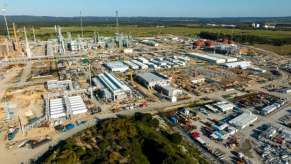
The company began commercial production at its first loopamid facility in Caojing, Shanghai, in early 2025.
For highly mixed or contaminated waste streams that would otherwise be incinerated, thermochemical processes such as pyrolysis and gasification provide additional recycling options. Although energy-intensive, pyrolysis converts plastics into hydrocarbon-based pyrolysis oil, while gasification produces synthesis gas that can be used as a chemical feedstock.
BASF said pilot projects have demonstrated that recycling technologies for polyurethanes and polyamides can produce virgin-quality feedstocks. However, commercial deployment will depend on stronger waste management systems and supportive regulation.
“However, two key conditions must be met before these technologies can be deployed at scale and to enable business cases for large scale investments. First, we need effective waste management systems that keep plastics in the loop over the long term.
"Second, policymakers need to provide clear and reliable regulatory frameworks that support recycling,” said Jens Hamprecht, co-author of the publication and Vice President in BASF’s Performance Materials division.
The company argues that recycling is central to reducing dependence on fossil resources, conserving raw materials and supporting the transition to a more sustainable economy.
BASF said predictable regulatory frameworks could strengthen Germany's and Europe's competitiveness in circular economy technologies while encouraging investment and innovation across the chemical and manufacturing sectors.
BASF said it continues to invest in research across the plastics value chain to improve recycling technologies and help close material loops for engineering plastics.