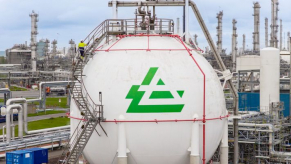
As Europe faces mounting pressure to strengthen industrial competitiveness and strategic autonomy, French chemicals group Arkema has inaugurated a next-generation acrylic acid purification unit at its Carling site, backed by an investment of €150 million.
The move is aimed at cutting emissions, improving energy efficiency and strengthening Europe’s chemical manufacturing base.
The new facility deploys an innovative purification process that improves energy efficiency by 25% and reduces the carbon intensity of the site’s operations by 20%. It also cuts solvent consumption and improves resource and waste management.
The project is one of Arkema’s largest industrial investments in France and forms part of its wider decarbonization strategy, which could see cumulative investment reach €400 million between 2022 and 2030.
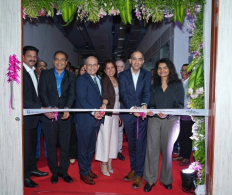
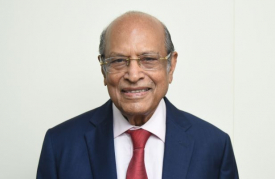
The inauguration brought together Arkema Chairman and Chief Executive Officer Thierry Le Hénaff and Stéphane Séjourné, Executive Vice-President of the European Commission for Prosperity and Industrial Strategy.
The event coincided with the General Assembly of the Critical Chemicals Alliance, where European industrial leaders and policymakers discussed the challenges of industrial sovereignty, competitiveness and decarbonization.
“With an investment of nearly €150 million, this new unit represents one of Arkema’s largest industrial projects in France. It will contribute to the Group’s ambitious climate plan, underpinned by a dedicated investment program supporting Arkema’s decarbonization, with a cumulative amount that could reach €400 million over the 2022-2030 period," said Thierry Le Hénaff, Chairman and Chief Executive Officer of Arkema.
The investment comes as Europe confronts growing pressure to preserve its industrial capacity while accelerating the transition to lower-carbon production.
Séjourné said the Carling project demonstrated how investment in cleaner industrial processes could help Europe retain strategically important manufacturing capabilities.
“Europe must keep its chemical industry. There can be neither industrial sovereignty nor strategic autonomy if we allow the essential building blocks of our economy to leave. Carling is showing the way forward: nearly €150 million invested to produce in Europe, using less energy and generating less carbon, while building on decades of industrial know-how.
"This is exactly the model we want to promote: decarbonizing without deindustrializing, investing in our regions, and making our industrial hubs the driving forces of our future," said Stéphane Séjourné, Executive Vice-President of the European Commission for Prosperity and Industrial Strategy.
Arkema’s Carling site is one of Europe’s leading acrylic production facilities. It manufactures acrylic monomers used in performance coatings, adhesives, water treatment and other advanced materials.
The new unit is designed to bring the facility in line with high operational and environmental standards while strengthening Arkema’s position in the low-carbon acrylic materials market.
By reducing energy consumption, carbon intensity and solvent use, the technology is intended to improve both the environmental performance and operational efficiency of the production process.
The project was approved in 2023 and received partial funding from the French State under the France 2030 programme, operated by ADEME, with funding from the European Union’s NextGenerationEU initiative.