Speciality chemicals major Cabot Corporation is expanding its global sustainability footprint, announcing it can now produce its circular reinforcing carbons in Asia Pacific — a move that gives the company full-scale production capability across every major region worldwide.
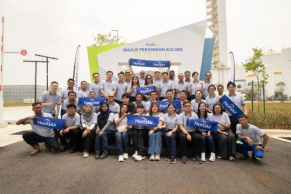
The breakthrough follows successful validation at Cabot’s manufacturing sites in Cilegon, Indonesia and Tianjin, China, where the company confirmed its ability to produce circular reinforcing carbons using tire pyrolysis oil (TPO) derived from end-of-life tires.
The products are manufactured using an International Sustainability & Carbon Certification (ISCC) PLUS mass balance approach.
With Asia Pacific now online, Cabot has established circular reinforcing carbon production across Asia, Europe and the Americas — a major step in accelerating tire circularity and strengthening global supply chains.
The timing is significant. Tire manufacturers worldwide are racing toward aggressive sustainability targets, with many aiming to use 40% sustainable materials in tire production by 2030 and reach 100% by 2050. That urgency is fueling demand for alternatives like Cabot’s TPO-based circular reinforcing carbons, which serve as a drop-in replacement for traditional carbon black — enabling manufacturers to increase sustainable content without sacrificing performance.
The expansion also reinforces Cabot’s “make-in-region, sell-in-region” strategy, designed to enhance supply chain efficiency while reducing environmental impact across the tire value chain.
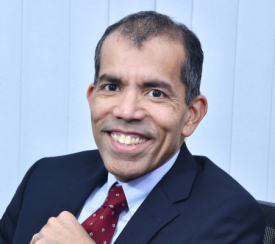
“This achievement reflects our deep commitment to delivering sustainable solutions across Asia Pacific and globally,” said Aatif Misbah, vice president and general manager, Sustainable Solutions, Reinforcement Materials segment.
“Scaling our circular reinforcing carbon capabilities helps strengthen our role as a trusted partner to the tire industry, while helping to drive meaningful sustainability progress. Looking ahead, we remain focused on supporting our customers’ evolving needs and helping enable a more sustainable future.”
The Asia validation builds on earlier milestones in Ville Platte, Louisiana; Mauá, Brazil; and Valasske Mezirici (Valmez), Czech Republic, where Cabot has already demonstrated circular reinforcing carbon production capabilities.