Northern Graphite Corporation and a consortium of leading German industrial and academic partners have launched a three-year, €1.7 million research program aimed at transforming how battery-grade graphite is processed in Europe — and breaking the continent’s dependence on China.
The project, known as USE-G: Environmentally Friendly and Safe Graphite Extraction for Europe’s Battery Industry, is funded largely by the German Federal Ministry for Economic Affairs and Energy, which is contributing €1.14 million. Partners include Rain Carbon Germany GmbH, H.C. Starck Tungsten GmbH and Friedrich Schiller University Jena.
USE-G targets one of Europe’s most critical clean-energy vulnerabilities: graphite, which can account for up to 40 percent of the active material in lithium-ion battery anodes. While Europe consumes growing volumes of graphite, it remains almost entirely reliant on China for the purification, coating and shaping processes required to make the material battery-ready.
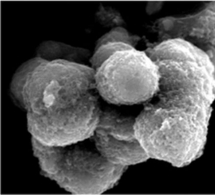
The initiative seeks to establish a fully European-controlled processing route by developing cleaner, less energy-intensive technologies. These include purification methods that avoid hydrofluoric acid, safer and more sustainable carbon coating materials, and — for the first time at scale — recovery and reuse of graphite from recycled battery “black mass.”
Northern Graphite will supply natural graphite from its producing Lac des Iles mine in Quebec and, subject to restart, its fully permitted Okanjande mine in Namibia, currently on care and maintenance. Both sources produce graphite certified for battery applications. The company will also carry out milling, shaping and final battery testing at its German laboratory.
HC Starck Tungsten will apply its proprietary technology to extract graphite from spent lithium-ion batteries, material that is typically destroyed in conventional recycling processes. The recovered graphite will be purified, coated and reintroduced into the supply chain, supporting a circular battery economy.
Friedrich Schiller University Jena will lead development of a chlorine-gas purification process — a significantly cleaner alternative to hydrofluoric acid and less energy-intensive than high-temperature thermal purification. While chlorine-based purification is proven in other industries, USE-G will provide the first systematic evaluation of its use for both natural and recycled graphite.
Rain Carbon Germany will develop new carbon coating materials and processes using alternative carbon raw materials with improved availability and lower environmental impact than traditional coal-tar-based inputs.
Over the course of the project, natural and recycled graphite will initially be processed separately to establish baseline purity and performance. Later stages will evaluate blending both streams into a unified anode material designed for commercial qualification by battery manufacturers. All work will be carried out in Germany, with raw graphite supplied from Northern’s overseas operations.
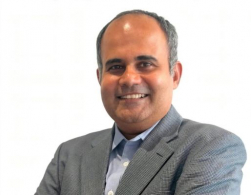
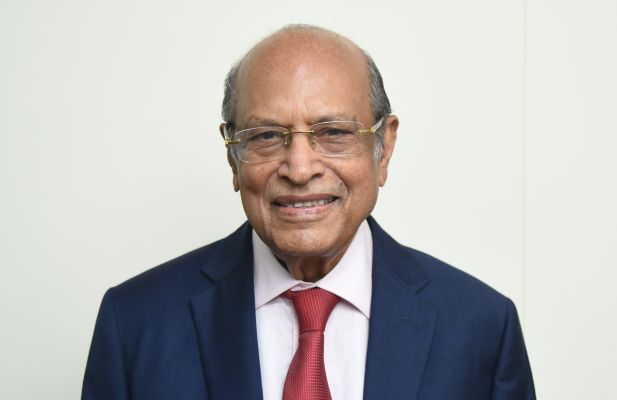
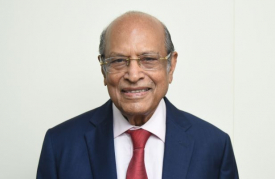
Announcing the launch of USE-G, Northern Chief Executive Officer Hugues Jacquemin said: "Europe’s energy transition depends on secure, sustainable and independent graphite supply chains. USE-G brings together the best of European research and industrial capability to develop technology that is cleaner, less energy-intensive and grounded in circular-economy principles. For Northern Graphite, this project demonstrates how the natural graphite we produce in Canada and Namibia can be transformed in Europe into next-generation battery materials.”
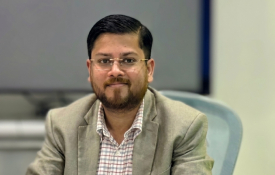
Alexander Zeugner, Project Manager Technology & Innovation Global at HC Starck Tungsten GmbH, emphasized the recycling potential: "Although graphite accounts for a substantial share of battery black mass, it has scarcely been re-used to date. The USE-G research project, which builds largely on our proprietary black-mass recycling process, aims to close that gap. If successful, it would make a significant contribution to establishing a true circular economy for lithium-ion batteries in Europe.”
Dr. Martin Oschatz, Professor at the Center for Energy and Environmental Chemistry at Friedrich Schiller University Jena, highlighted the environmental gains: "Our focus is to explore chlorine-gas purification at elevated temperatures as a cleaner alternative to hydrofluoric acid and a less energy-intensive option than thermal purification. This research may enable Europe to adopt new purification routes that improve environmental performance without compromising material quality.”
USE-G began on January 1, 2026 and will run through December 31, 2029. By completion, the partners aim to demonstrate a fully integrated, European-controlled graphite processing flow sheet — covering purification, coating, shaping, recycling and performance testing — to support Europe’s energy transition and long-term supply-chain independence.