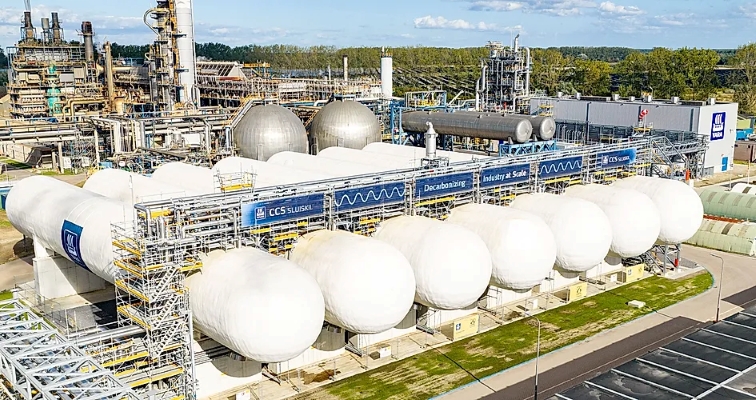
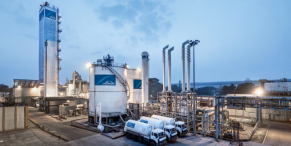
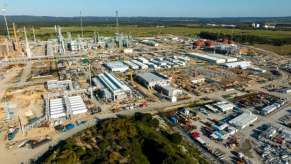
Europe’s largest industrial carbon capture facility has officially opened at Yara’s Sluiskil plant, launching what the company describes as the continent’s first complete cross-border chain for capturing, transporting and permanently storing carbon dioxide.
The facility can capture and liquefy up to 800,000 tonnes of CO₂ a year from ammonia production at Yara Sluiskil, Europe’s largest ammonia and fertilizer plant. The liquefied CO₂ will be shipped to Norway and permanently stored 2,600 metres beneath the seabed by Northern Lights.
With the necessary framework conditions in place, the project is expected to capture and permanently store about 12 million tonnes of CO₂ over 15 years, positioning the facility as a major test of whether carbon capture and storage can help Europe cut industrial emissions without driving production and jobs offshore.
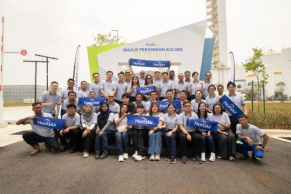
The inauguration on September 7 was attended by Norwegian Prime Minister Jonas Gahr Støre, Dutch Prime Minister Rob Jetten, European Commissioner for Climate, Net Zero and Clean Growth Wopke Hoekstra, and Yara International President and CEO Svein Tore Holsether.
“This is an important day for Yara and for European industry. The carbon capture facility in Sluiskil proves that large-scale industrial decarbonization is possible today. As global competition intensifies, Europe must find ways to cut emissions while keeping industry, jobs and critical value chains in Europe. That is exactly what this project is about,” says Svein Tore Holsether, President and CEO of Yara International.
The project links industrial carbon capture in the Netherlands with transport and permanent geological storage in Norway.
CO₂ captured at Sluiskil will be temporarily stored and liquefied at the plant before being transported by Northern Lights vessels to Øygarden, Norway. There, it will be injected for permanent storage beneath the seabed.
The model is designed to demonstrate how shared infrastructure and cooperation across national borders can make permanent CO₂ storage available to European industries that cannot easily eliminate all of their emissions through other means.
“Europe needs practical climate solutions that deliver real emissions reductions while strengthening industrial competitiveness. The carbon capture and storage project at Sluiskil shows what is possible when innovation and cross-border cooperation come together. This is exactly the kind of project Europe needs to combine climate ambition with a strong and resilient industrial base,” says Wopke Hoekstra, European Commissioner for Climate, Net Zero and Clean Growth.
CCS is being positioned as a key technology for emissions-intensive sectors including fertilizer and ammonia production, cement and waste management, where eliminating emissions entirely can be difficult while maintaining industrial output.
Northern Lights Managing Director Tim Heijn said the project marks a major step toward establishing a European carbon management market.
“This is a milestone we have been looking forward to. We are proud to start operations together with Yara and to see the agreement signed in 2023 become reality. Together, we are demonstrating that capture and cross-border CO₂ transport and storage is a viable solution for European industry. This is an important step in the development of Europe’s carbon management market and shows what is possible when industry and governments work together to build the infrastructure needed for Europe’s transition."
Yara says the project will also help reduce the carbon footprint of its products and enable lower-carbon value chains spanning agriculture, industry, energy and shipping.
The company aims to use its lower-carbon production to support: low-carbon fertilizers for more sustainable food production. Low-carbon ammonia for industrial applications and clean-energy solutions. Low-carbon fuels for the maritime sector.
At full capacity, the Sluiskil facility will capture up to 800,000 tonnes of CO₂ annually. Over 15 years, that could amount to roughly 12 million tonnes of captured and permanently stored emissions.
The project therefore goes beyond a single industrial facility: it is a demonstration of a cross-border carbon management system intended to help Europe pursue decarbonization while retaining energy-intensive manufacturing, jobs and strategic supply chains on the continent.