Earnings rise compared with prior-year quarter in nearly all segments
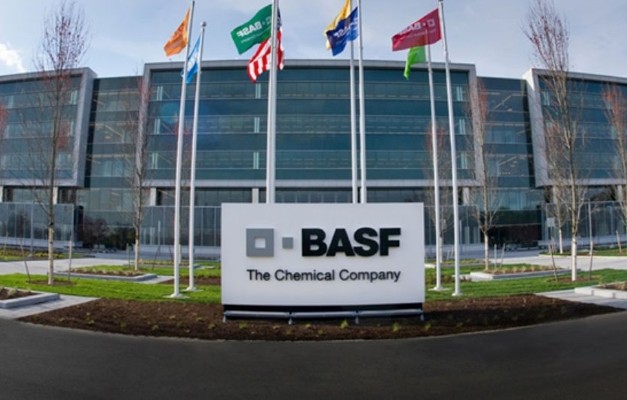
BASF Group reported strong financial performance for the second quarter of 2026, significantly beating analyst expectations, driving a guidance upgrade for the full year. The surge in net income was primarily driven by a massive €3.5 billion after-tax disposal gain from the finalized sale of its Coatings business to Carlyle on June 30, 2026.
The Group’s Q2 2026 revenue surged 16% year-over-year to €17.2 billion, outperforming the previous year's quarter by €2.4 billion. This substantial growth was primarily driven by a robust 11.5% increase in pricing alongside a strong 7.3% expansion in sales volumes.
Higher prices in Chemicals, Surface Technologies, Materials, and Industrial Solutions drove overall price increases, offsetting declines in Agricultural Solutions and Nutrition & Care. While sales volumes grew across nearly every segment, Surface Technologies experienced a minor dip. Additionally, unfavorable currency conversion rates weighed down revenue performance across the entire company.
Income from operations before depreciation, amortization and special items (EBITDA before special items) improved by €854 million compared with the prior-year quarter to €2.4 billion.
EBITDA increased to €2.0 billion, compared with €1.3 billion in the prior-year period. EBITDA included special items in the amount of minus €484 million in the second quarter of 2026.
“We further strengthened BASF’s position in the market and achieved major progress with our restructuring as well as portfolio measures,” said BASF CEO Dr. Markus Kamieth when presenting the company’s half-year results, together with CFO Dr. Dirk Elvermann.
BASF Group’s business development in the first half of 2026
Compared with the first half of 2025, BASF Group’s sales rose by €1.9 billion to €33.2 billion, in particular as a result of positive volume and price effects. Volumes increased by 5.7% compared with the prior-year period, while prices were up by 4.8%. Currency effects had a dampening impact on sales in all segments.
The BASF Group’s EBITDA before special items improved in the first half of 2026 by €715 million to €4.8 billion. EBITDA improved to €4.2 billion, compared with €3.4 billion in the prior-year period. At €2.2 billion, EBIT was up by €644 million from the level of the prior-year period. Income before income taxes in the first half of 2026 increased by €645 million compared with the prior-year period to €1.9 billion.
Income after taxes increased significantly to €5.1 billion, compared with €945 million in the prior-year period. This contained a disposal gain after taxes of €3.5 billion from the divestiture of the Coatings business to Carlyle. Net income was €5.1 billion, compared with €887 million in the prior-year period.
Major progress on “Winning Ways” strategy achieved
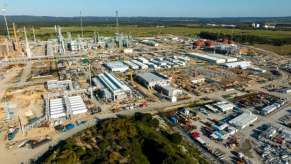
In February, BASF presented the priorities for 2026. “We are making very good progress and are successfully implementing our ‘Winning Ways’ strategy,” said Kamieth. “We have reduced our costs, brought down our capital expenditures and increased capacity utilization at our plants. Our team in Zhanjiang successfully ramped up the new Verbund site. And the sale of our Coatings activities marks an important step forward in our value-enhancing portfolio measures.”
BASF is consistently strengthening its competitiveness. Kamieth: “We have once again accelerated efforts to streamline our organization and make it more efficient. In the first half of 2026, we already reduced more positions than in the prior two years combined.” From January 2024 until the end of June 2026, BASF reduced the number of employees worldwide by around 7,000. This figure excludes both the reductions resulting from divestitures and the workforce buildup associated with the Zhanjiang Verbund site. Moreover, in May 2026, the number of full-time equivalents at BASF SE in Ludwigshafen was brought below 30,000 – for the first time since 1954. “This is an important and necessary step toward restoring the site’s competitiveness,” Kamieth said.
The company has also made significant progress with the necessary asset restructuring in Ludwigshafen. Since 2024, the share of highly competitive production units at the site has increased from 78% to 88%. In addition, plant utilization rates improved amid the supply disruptions caused by the Middle East conflict.
BASF Group outlook for 2026
BASF has adjusted its assumptions regarding the global economic environment for 2026 as follows (previous assumptions from the BASF Report 2025 are in parentheses):
Growth in gross domestic product: 2.5 percent (2.7 percent)
Growth in industrial production: 2.0 percent (2.3 percent)
Growth in chemical production: 1.8 percent (2.4 percent)
Average euro/dollar exchange rate of $1.17 per euro ($1.20 per euro)
Average annual oil price (Brent crude) of $80 per barrel ($65 per barrel)
In light of the better-than-expected business development, the BASF Group’s outlook for EBITDA before special items for the 2026 business year published in the BASF Report 2025 has been adjusted (previous forecast from the BASF Report 2025 in parentheses):
EBITDA before special items of between €6.9 billion and €7.7 billion (€6.2 billion to €7.0 billion)
Free cash flow of between €1.5 billion and €2.3 billion (unchanged)
CO2 emissions of between 17.2 million metric tons and 18.2 million metric tons (unchanged)
Subscribe to our newsletter & stay updated.