Carbon2Chem is marking its tenth anniversary with a clear ambition: turn carbon dioxide and other components of steelmaking gases from industrial waste into valuable raw materials for the chemical industry.
Launched in 2016, the initiative has grown from a research project at thyssenkrupp’s Duisburg site into a cross-industry platform involving more than 20 industrial and academic partners. Its core mission is to connect steelmaking, renewable energy and chemical production to close carbon cycles and cut industrial emissions.
Matthias Kammel, Managing Director thyssenkrupp Carbon2Chem, says: “We started with a shared vision: We view CO₂ and other components of blast furnace gases not as waste, but as raw materials. We use these raw materials to close carbon cycles and systematically link steel production, the energy sector, and the chemical industry. In this way, we can help reduce industrial emissions.”
The project brings together thyssenkrupp companies, research institutions including the Max-Planck-Institute for Chemical Energy Conversion and the Fraunhofer Institute for Environmental, Safety, and Energy Technology UMSICHT, and other partners. Carbon2Chem® is funded by the Federal Ministry of Research, Technology, and Aerospace.
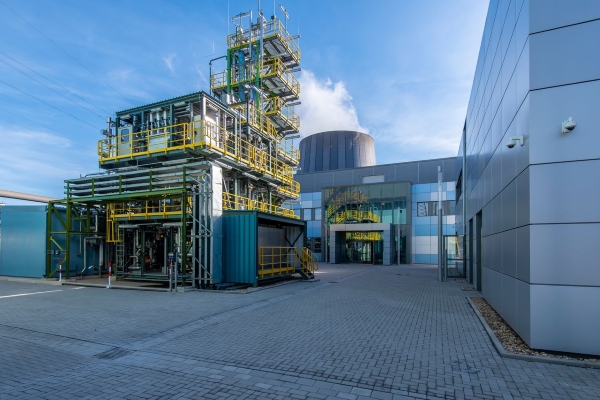
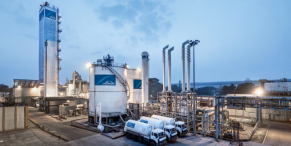
The initiative began with the 2016 groundbreaking ceremony for its technical centre, or “Technikum”, in Duisburg. Since then, the facility has become a critical link between laboratory research and industrial application.
The concept is straightforward but potentially far-reaching: metallurgical gases contain carbon, hydrogen and nitrogen that can be recovered and used to produce chemicals and fuels including methanol, ammonia and synthetic fuels.
For a decade, the Technikum has enabled researchers and industry to test key process steps under real-world conditions, refine technologies and generate the data needed to move promising solutions toward industrial deployment.
Nadja Håkansson, COO of thyssenkrupp Decarbon Technologies and CEO of thyssenkrupp Uhde, says: “Carbon2Chem is a demonstration of a strong willingness to break new technological ground, by bringing industries and academia together to solve critical challenges for a sustainable climate, in the heart of industrial processes. Through the integration and value chains of multiple systems, CO2 is utilized to create new value chains of sustainable chemicals and fuels, while reducing harmful emissions.”
The approach could also help industry manage the growing share of renewable power entering energy systems.
Robert Schlögl, project coordinator for basic research: “The integration of steel, energy, and chemicals not only opens up avenues for reducing emissions but also helps stabilize energy systems: Renewable energy can thus be flexibly integrated into industrial processes—a contribution to system stability that extends beyond the individual site.”
With the technology becoming more mature, the focus is shifting from proving the concept to scaling it up.
The processes developed through Carbon2Chem are intended to provide the foundation for large-scale industrial applications and new business models built around sustainable value chains. At the same time, the project is refining its product portfolio to respond to growing demand for climate-friendly chemicals and energy sources.
Markus Oles, project coordinator for the participating industrial companies, explains: “Interest in carbon recycling applications is evident across all industries today. By establishing carbon as a raw material, we are sustainably strengthening economic resilience. In addition to large-scale industrial applications, innovative SMEs are also showing increasing interest in these technologies to keep carbon in the cycle in a flexible manner.”
Görge Deerberg, project coordinator for applied research: “The experience gained over ten years with Carbon2Chem confirms that the transformation of energy-intensive industries is feasible – when technology, partnership, and perseverance come together to shape the ongoing transformation process. This experience, bases on close collaboration between basic research, applied research, and industry, also serves as an offer to the business community and the scientific community: as guidance and encouragement for similar projects."
The next phase is already taking shape in Duisburg.
An existing electrolysis hall houses thyssenkrupp nucera’s pilot electrolyzer for producing green hydrogen. A second electrolysis hall is planned, with handover to thyssenkrupp nucera scheduled for next year. The expansion is expected to strengthen hydrogen supply at the site and provide key infrastructure for continuous industrial operation.
Werner Ponikwar, CEO of thyssenkrupp nucera, says: “Carbon2Chem has been and remains invaluable for the further development of our electrolysis technology. The site offers a unique industrial environment where new technologies can be tested under real-world conditions in practical operation and produce hydrogen. Ten years of Carbon2Chem demonstrate how important such industrial testing and development environments are for advancing technologies toward application and scaling.”