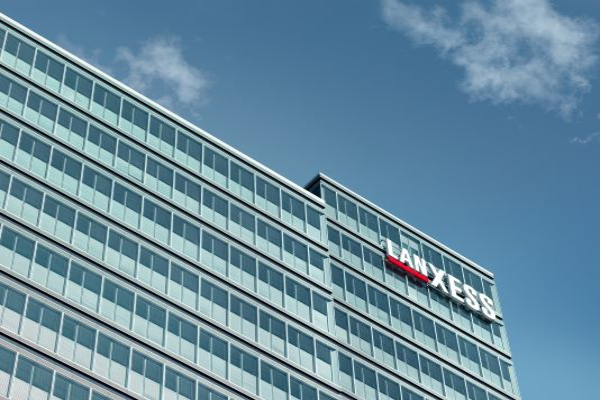
LANXESS is replacing natural gas with hydrogen at its Krefeld-Uerdingen site, cutting the carbon footprint of its iron oxide pigment production by around 6,000 metric tons a year.
The specialty chemicals company has converted its spray dryer to run on hydrogen, making it one of the first large-scale industrial plants in Germany designed to use hydrogen as a fuel in continuous operation.
The hydrogen is produced next door at Covestro’s chlorine electrolysis plant and delivered directly to LANXESS through a dedicated pipeline, turning the neighboring Verbund operations into a key advantage in the site’s decarbonization drive.
“Switching from a natural gas burner to a hydrogen burner is a significant technological step towards low-greenhouse-gas processes,” says Michael Ertl, Head of the Inorganic Pigments business unit at LANXESS. “We are proving that decarbonizing industry works not only in pilot projects, but also in the day-to-day operation of large production facilities.”
LANXESS installed the hydrogen burner at the end of 2025 and has gradually brought it online. The system is designed to operate entirely on hydrogen and required a dedicated hydrogen line, an adapted burner, upgraded measurement and control technology, and additional safety systems.
The project highlights how tightly integrated industrial sites can accelerate the shift to lower-carbon production.
“The project shows that industrial partners at a Verbund site can particularly successfully shape the transition to climate-friendly production,” says Rob Eek, Production Manager at Covestro in Krefeld-Uerdingen.
Short pipeline routes, shared infrastructure and established safety systems provide LANXESS with a reliable hydrogen supply while minimizing the need for new infrastructure.
The companies have worked together at Krefeld-Uerdingen for decades. Covestro supplies nitrobenzene for LANXESS’ iron oxide pigment production. The process generates aniline as a byproduct, which is returned to Covestro as an important raw material for plastics production.
The hydrogen project adds a new climate-focused dimension to that established production network.
LANXESS’ Inorganic Pigments business is among the world’s leading producers of inorganic pigments, supplying iron oxide and chromium oxide pigments to the construction, paints and coatings, plastics and specialty industries.
Krefeld-Uerdingen is home to the world’s largest iron oxide pigment production facility, where the pigments have been manufactured for 100 years.
The site already benefits from a comparatively low carbon footprint. A major factor is the Laux process, which produces virtually no waste and uses energy particularly efficiently compared with alternative production methods.
With the switch from natural gas to hydrogen, LANXESS is now pushing that efficiency further—bringing hydrogen from the pilot stage into the continuous operation of a major industrial production facility.