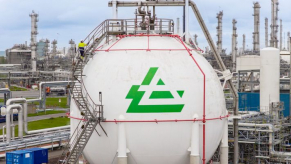
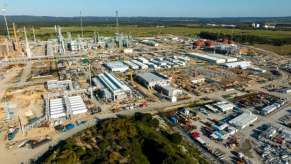
A catastrophic 2024 chemical fire that sent toxic smoke across the Atlanta region was triggered by a chain of preventable failures at the KIK Consumer Products Bio-Lab facility in Conyers, Georgia.
This is according to the final investigation report recently released by the U.S. Chemical Safety and Hazard Investigation Board (CSB).
The September 29, 2024, disaster began when water from a corroded sprinkler system leaked onto highly reactive pool-treatment chemicals stored inside the company’s Plant 12 warehouse.
The contact sparked a chemical reaction that produced intense heat, toxic gases, and a massive plume of smoke containing chlorine, hydrogen chloride, bromine, and other hazardous substances.
The incident forced the evacuation of approximately 17,000 nearby residents and prompted shelter-in-place warnings for about 90,000 people across the Atlanta metropolitan area, according to local media reports. Emergency warnings continued for residents within a two-mile radius for 17 days, and schools were closed for nearly two weeks.
CSB Chairperson Steve Owens said, “The conditions and circumstances at the Bio-Lab Conyers warehouse were completely unacceptable. There were nearly 14 million pounds of reactive chemicals stored in the warehouse without proper safeguards in place.
"These hazardous chemicals were packaged in roughly 5,000 giant sacks, each weighing more than a ton, and some of them were stacked in such a way in the warehouse that responders were not able to keep the initial situation from developing into a catastrophic fire and massive plume of toxic smoke that put thousands of people potentially at risk.”
Bio-Lab, Inc., a subsidiary of KIK Consumer Products, manufactures water-treatment products for swimming pools and spas. The Plant 12 warehouse was built in 2019, and documents submitted to local authorities before construction indicated the facility was expected to store an average inventory of about 6.2 million pounds of raw materials, including oxidizers.
But when the fire occurred in September 2024, investigators found nearly 14 million pounds of chlorinated isocyanurates and other reactive chemicals inside the warehouse — more than twice the amount initially reported to local officials.
The chemicals, commonly used as pool and spa sanitizers, contain high levels of available chlorine. While effective for water treatment, they can become extremely hazardous if exposed to heat or moisture. Under the wrong conditions, they can release toxic vapors, generate intense heat, and contribute to fires or explosions.
Investigators found that roughly 5,000 “super sacks” containing between 2,205 and 2,805 pounds of chlorinated isocyanurates each were stored inside Plant 12. The polypropylene bags were not waterproof, allowing moisture to reach the chemicals.
The warehouse also lacked air conditioning, and its ventilation system was unable to adequately control humidity levels given the volume of reactive materials stored inside.
The CSB investigation found that sprinkler system components inside Plant 12 had been corroding and leaking since shortly after the facility began storing chlorinated isocyanurates in 2019.
The chemicals naturally released chlorine fumes, which combined with humidity inside the warehouse and condensed into hydrochloric acid droplets on metal surfaces, accelerating corrosion.
During a December 2023 annual sprinkler inspection — nine months before the fire — more than 1,100 sprinkler heads in the warehouse were observed to be corroded.
Investigators determined that at approximately 5:00 a.m. on the day of the incident, a failed sprinkler component released water onto stored chemicals, initiating a decomposition reaction.
The reaction produced enough heat to activate additional sprinkler heads, causing more chemicals — including cyanuric acid, aluminum sulfate, and sodium bromide — to become wet and react. The cascading chemical reactions intensified the fire and produced toxic smoke and vapors throughout the facility.