The Global Hydrogen Compass 2026 tracks over US$ 130 billion committed to 570+ clean hydrogen projects, with 90% active or under construction, while outlining steps for future deployment

Clean hydrogen is a reality today, not a future bet.
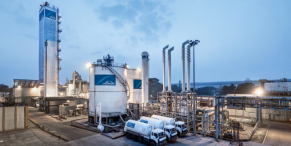
The Hydrogen Council’s Global Hydrogen Compass 2026 reports that committed global investment has topped US$ 130 billion. This funds over 570 projects representing 6.9 mtpa of capacity, with 90% already operational or under construction.
The new report, co-authored with McKinsey & Company and informed by the perspectives of some 70 global CEOs, highlights continued industry progress alongside a changing strategic context. Over the past year, global operational capacity has nearly doubled and is expected to double again next year as projects under construction come online.
Shifting geopolitical priorities are positioning hydrogen as a strategic resilience lever. Beyond deep decarbonization, governments are prioritizing hydrogen to strengthen energy security, build resilient economies, and support long-term industrial growth. This complements expanding electrification and renewable energy sources.
China leads the global renewable hydrogen market, holding over half of committed capacity and 90% of new operational capacity since 2025. Europe ranks second, leading in total project count with a 35% investment growth rate. The United States dominates low-carbon hydrogen, accounting for roughly 75% of global committed low-carbon hydrogen and ammonia capacity.
The experience of these leading markets also points to the industry’s next challenge: projects move forward where policy and infrastructure are the most robust. Of the 11 mpta of potential 2030 clean hydrogen demand that existing policies could unlock by 2030, around 6 mtpa is firmed today by policies that have been enacted and enforced. Unlocking the remaining 5 mpta now requires urgent action from governments to deliver on existing policy commitments.
For policymakers, the top priority is to implement enabling incentives and mandates, as well as robust carbon pricing instruments providing demand signals. For industry, the focus is to serve that demand cost effectively, which requires strong push to reduce cost and build the necessary infrastructure.
Combining comprehensive industry data with CEO perspectives and lessons learned from some of the world’s most significant clean hydrogen projects, Global Hydrogen Compass 2026 provides a fact-based assessment of the industry’s progress and the practical actions needed to accelerate deployment. The report was launched today for the first time through a dedicated global virtual event, featuring the Hydrogen Council Co-Chairs alongside CEOs from Baker Hughes, CF Industries, Port of Rotterdam and Sinopec, with its findings also presented at today’s Hydrogen Energy Ministerial in Japan.
Jaehoon Chang, Vice-Chair of Hyundai Motor Group and Co-Chair of the Hydrogen Council, said: “The debate has shifted from whether hydrogen can deliver to how fast countries choose to build. While the pace varies by market, the principle is the same: identify where hydrogen creates the most value, build the ecosystem around it and prove it works. This year’s Compass highlights a clear lesson: wherever countries deploy hydrogen solutions suited to their context and support them with policy, competitive hydrogen ecosystems are taking hold. By learning from those examples, we can build on that momentum faster and with greater confidence.”
François Jackow, CEO of Air Liquide and Co-Chair of the Hydrogen Council, said: “Hydrogen is not only a decarbonization solution; it is also the indispensable partner to renewable electricity. Through their synergies, hydrogen strengthens the resilience and improves the efficiency and affordability of the overall energy system. As countries accelerate electrification, recognizing hydrogen’s systemic role will be essential to building secure, competitive and affordable energy systems for the future.”
Ivana Jemelkova, CEO of the Hydrogen Council, said: “Decision-makers need both robust market data and practical experience from those delivering projects on the ground. Global Hydrogen Compass 2026 complements the IEA’s Global Hydrogen Review by bringing together the collective perspective of industry leaders. Together, they provide a more complete picture of where the industry stands today and the practical actions needed to accelerate deployment.”
Subscribe to our newsletter & stay updated.