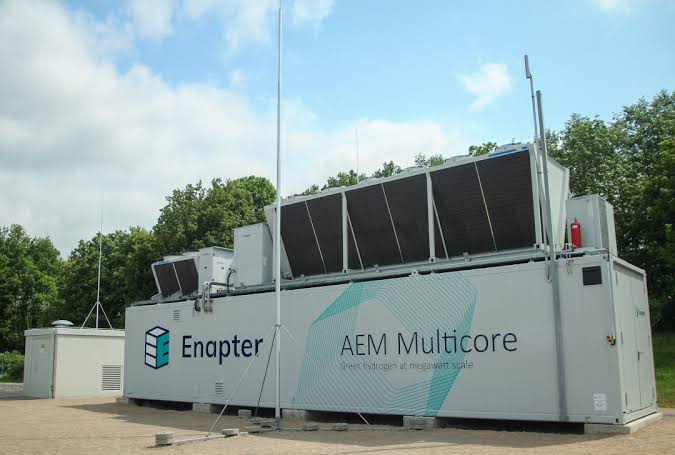
Enapter AG has begun production of its AEM electrolysis stacks in Shenzhen, China, marking a key step in the company’s shift to a more asset-light business model and opening the door to more flexible, scalable manufacturing.
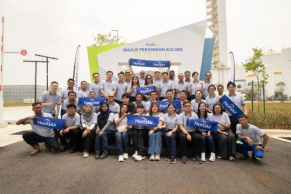
The first stacks for Enapter’s megawatt-scale electrolysers have already been assembled and are ready for delivery at new production partner Runqing Hydrogen Technology Co., Ltd. The dedicated production line is now in its ramp-up phase, with full intended output expected within weeks.
The partnership gives Enapter access to scalable manufacturing capacity that can be adjusted to match demand, allowing the company to increase production without taking on the same level of fixed costs associated with expanding its own manufacturing footprint.
Runqing is part of the Runshihua Group, a Chinese cleantech company with expertise in hydrogen and industrial decarbonisation. Its automated production facilities will manufacture Enapter’s AEM stacks to the required quality and at volumes that can be scaled as needed.
Enapter expects the shift toward partner manufacturing in China to reduce its fixed-cost base, with the company forecasting a noticeable positive impact on earnings from 2027.
Jürgen Laakmann, CEO of Enapter AG, said: “The production start in Shenzhen is an important milestone in the implementation of our asset-light business model. Together with our partner Runshihua, we have created the conditions for scalable series production in a short space of time.
"Thanks to the modern production facilities, we will be able to manufacture the AEM stack, the core component of our electrolysers, cost-efficiently, reliably and in high volumes. This enables us to respond flexibly to rising market demand and to supply our customers quickly and dependably.”
The move comes as Enapter seeks to scale production of its anion exchange membrane (AEM) electrolysers, which produce green hydrogen and are designed to avoid expensive and scarce materials such as iridium.
The company says its modular AEM technology is suited to scalable hydrogen production and can operate efficiently even when renewable power supplies from solar and wind fluctuate.