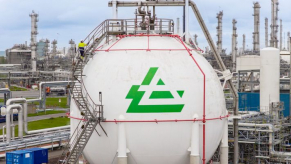
German energy company EWE has awarded industrial services provider Bilfinger a contract to engineer and install a hydrogen treatment facility at its Huntorf storage site, marking a major step toward converting an existing natural gas cavern into a large-scale hydrogen storage facility.
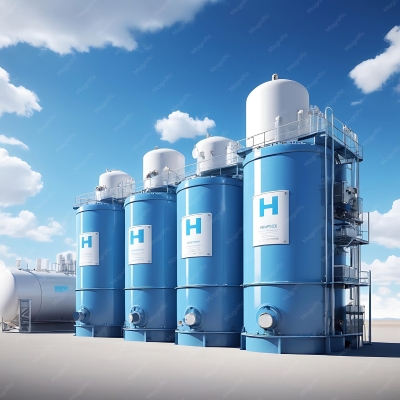
The project will see one of seven underground salt caverns at EWE’s Huntorf site in Germany’s Wesermarsch region repurposed for hydrogen storage. Once operational, the cavern is expected to provide around 16 million standard cubic metres (Nm³) of working gas capacity.
Bilfinger will handle the engineering, installation and commissioning of the hydrogen treatment plant, with its H2Dry technology being deployed commercially for the first time.
The Huntorf facility is scheduled to connect to Germany’s hydrogen core network and begin operations in 2028, creating a flexible link between hydrogen production, transport and consumption.
The role of the facility will extend beyond simply storing hydrogen. Production and imports are expected to depend heavily on the availability of renewable energy, while industrial users, energy suppliers and power generators will require hydrogen according to their own demand.
Storage can bridge that gap, allowing hydrogen to be held when supplies are available and released when demand rises. EWE says this flexibility will help balance fluctuations in the emerging hydrogen system while strengthening security of supply and system resilience.
“Hydrogen storage facilities are essential for a secure and reliable energy supply. They create a buffer between production, import and consumption, ensuring that hydrogen is available whenever it is needed – no matter when it is produced or supplied. With our storage project in Huntorf, we are creating vital infrastructure and, through this contract award to Bilfinger, taking another important step forward,” says Peter Schmidt, Managing Director of EWE GASSPEICHER GmbH.
“For hydrogen storage to fulfil its role in the future energy system and for investments in the required infrastructure to materialize, reliable regulatory and economic framework conditions are just as important as the timely development of the hydrogen core network.”
Bilfinger has worked with EWE for several years on hydrogen production and storage projects at multiple locations. At Huntorf, its role will centre on the hydrogen drying system, including engineering, installation and commissioning.
The project will be the first commercial-scale deployment of Bilfinger’s H2Dry technology, designed to provide hydrogen treatment while reducing costs and supporting the integration of green hydrogen into the market.
“Hydrogen storage requires efficient and cost-effective treatment solutions. With H2Dry, we provide exactly that while helping our customers bring green hydrogen to market competitively,” says Ulrich Trebbe, Product Manager Hydrogen at Bilfinger.
“EWE and Bilfinger have built a strong partnership over many years, and we are delighted to further strengthen this collaboration as we contribute to developing a sustainable energy supply for Germany.”
The storage project forms part of EWE’s Clean Hydrogen Coastline initiative, which brings together hydrogen production, storage, transport and utilisation across north-west Germany.
The four-part project received funding approvals from the German federal government and the State of Lower Saxony in summer 2024 under the European IPCEI (Important Project of Common European Interest) programme.
EWE is now carrying out the phased conversion of the Huntorf natural gas cavern. The hydrogen treatment plant will be a key component of the new storage infrastructure, with the completed facility expected to act as a buffer across the hydrogen value chain.
The Huntorf project builds on EWE’s earlier research into underground hydrogen storage. At its gas storage site in Rüdersdorf near Berlin, the company demonstrated the safe storage of hydrogen in salt caverns using a 500-cubic-metre test cavern.
EWE says the knowledge gained from that project is now being applied to larger-scale developments such as Huntorf.
With 37 salt caverns in its portfolio, the company is drawing on its existing underground energy-storage expertise as Germany develops the infrastructure needed for a future hydrogen economy.