Thakur urged the farming community and industry stakeholders to embrace a modern, digitalized approach to agriculture
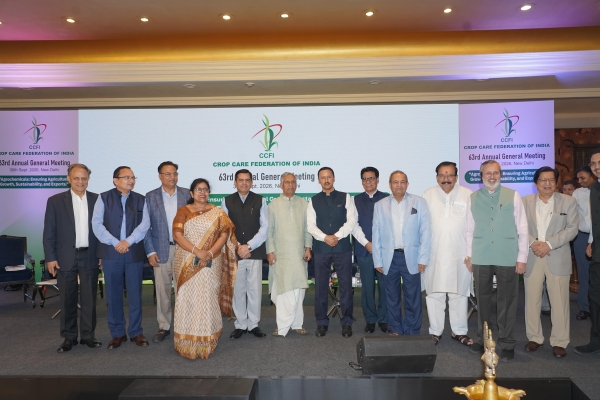
The 63rd Annual General Meeting of the Crop Care Federation of India (CCFI) underscored the urgent necessity of balancing rising agricultural productivity with robust soil health and long-term environmental sustainability. The convention united top policymakers, scientific experts, and industry leaders to discuss climate challenges, innovation, product quality and export opportunities.
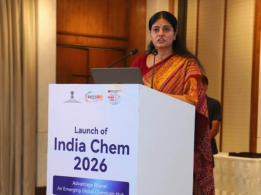
Addressing the gathering, Union Minister of State for Agriculture and Farmers Welfare Ram Nath Thakur emphasized the urgent need to revolutionize current agricultural practices. The Minister issued a stark warning against the excessive application of chemical inputs, highlighting how over-reliance on synthetic fertilizers and pesticides severely degrades both human health and soil vitality.
To counteract these ecological and public health challenges, Thakur urged the farming community and industry stakeholders to embrace a modern, digitalized approach to agriculture. By integrating smart technologies—such as precision farming tools, data-driven soil analysis, and automated drone spraying—the agricultural sector can transition to a more sustainable model. This tech-forward evolution guarantees responsible pesticide usage, ensuring chemicals are applied only where and when absolutely necessary. Ultimately, this strategic shift aims to protect ecosystem biodiversity, preserve long-term land quality, and safeguard consumer well-being while maintaining high crop yields.
Former Union Environment Minister Prakash Javadekar highlighted that climate change poses a severe risk to global agriculture, threatening food security and rural livelihoods. To combat these shifting weather patterns, he strongly advocated for immediate technological innovation and the widespread adoption of resilient, adaptive farming techniques. Furthermore, he emphasized that establishing a robust, supportive regulatory environment is absolutely essential to empower farmers and safeguard the future of sustainable food production.
Agriculture Commissioner Dr. P. K. Singh strongly advocated for transforming modern farming through robust research and development. He emphasized the urgent need to breed climate-resilient crop varieties to safeguard global food security against erratic weather patterns. Alongside adopting safer crop protection solutions, Dr. Singh highlighted the critical challenge of combating rising pest resistance, which threatens yields worldwide. To build a more transparent and dependable supply chain, he called for a rigorous overhaul of product traceability and quality standards.
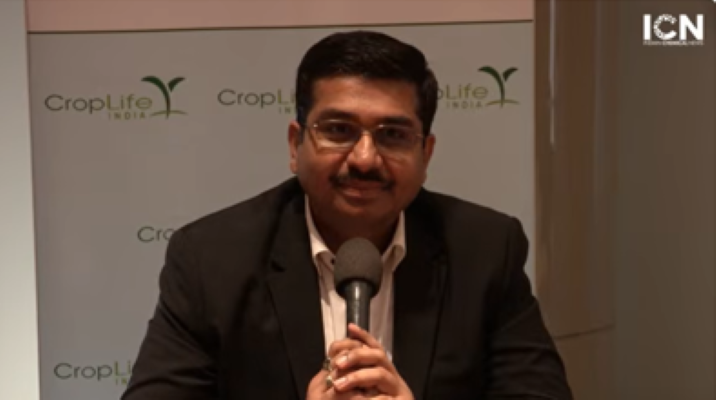
Commenting on the industry's future, Shivraj Anand, Director & CEO – International Business, Parijat Industries (India) Limited, said “Growth, sustainability and exports cannot be pursued in silos. India must move beyond volume-driven competition towards strategic co-development with global innovators, leading to safer, lower-dose molecules and biologicals. Domestic synthesis of proprietary chemistries can equip farmers with modern, climate-resilient crop protection solutions while strengthening backward integration and export competitiveness. Predictable registration timelines, OECD-GLP data harmonisation and green chemistry incentives will be critical to positioning India as a global innovation hub for sustainable crop protection.”
The discussions reinforced the importance of collaboration among industry, government and scientific institutions to advance sustainable agriculture, strengthen domestic manufacturing and expand India's agrochemical exports.
Subscribe to our newsletter & stay updated.