Expand science-based biodiversity action across industrial operations
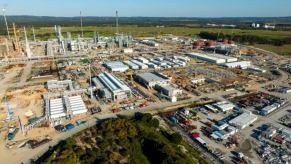
Solvay and the International Union for Conservation of Nature (IUCN) are deepening their biodiversity partnership by launching the new IUCN RHINO (Rapid, High-Integrity, Nature-positive Outcomes) initiative at Solvay's Dombasle facility in France, a science-based program that will also guide conservation strategies at their Rosignano site in Italy.
As the first chemical company to test IUCN's RHINO framework, Solvay partners with the conservation body to measure its operational impact, focus on high-priority nature actions, and advance science-backed global biodiversity targets.
The new program builds on the work carried out at Solvay's Dombasle site in France. Over the past year, Solvay and IUCN completed a comprehensive biodiversity assessment and, using the RHINO methodology, identified priority species and habitats to help the Dombasle team develope a science-based roadmap through 2030.
The roadmap includes biodiversity monitoring, habitat restoration, ecological corridor development, invasive species management, and measures to further reduce impacts on local ecosystems.
Based on these lessons, Solvay and IUCN reviewed five interconnected areas in Rosignano: the industrial site, Santa Luce Lake, the Cecina River basin, the Ponteginori mining area, and the San Carlo limestone quarry. This review has already revealed opportunities to improve biodiversity across the landscape.
Solvay will conduct 18-month ecological assessments to set biodiversity baselines and priority actions with IUCN scientific guidance. By the end of 2027, Solvay aims to define science-based biodiversity targets, indicators, and a long-term action plan extending through 2030.
A particular focus will be placed on Santa Luce Lake, a former industrial reservoir that has evolved into a Natura 2000 protected area and State Nature Reserve. Today, the site hosts around 200 bird species and illustrates how long-term stewardship and collaboration can create opportunities for biodiversity conservation alongside industrial activity.
"As an industrial company, we know our operations interact with nature. Our responsibility is to understand our dependencies, reduce the pressures we exert, and increase our positive impact. That's why our collaboration with IUCN matters. In Dombasle, we developed a science-based roadmap for biodiversity action. In Rosignano, we're building on those lessons in one of our most diverse and complex landscapes. This is about moving from commitment to implementation, and demonstrating that industry can be part of the solution," said Jean-Charles Djelalian, Chief Sustainability Officer at Solvay.
"The biodiversity crisis requires action at scale. Through the IUCN RHINO approach, we are helping companies identify where they can have the greatest positive impact for species and ecosystems. The work in Dombasle and now starting in Rosignano shows that species extinction risk metrics can guide decision making. The ambition now must be to turn assessments into targets for reducing threats to species and thos targets into meaningful outcomes," said Susanne Pedersen, Director of IUCN's Centre for Science and Knowledge.
Subscribe to our newsletter & stay updated.