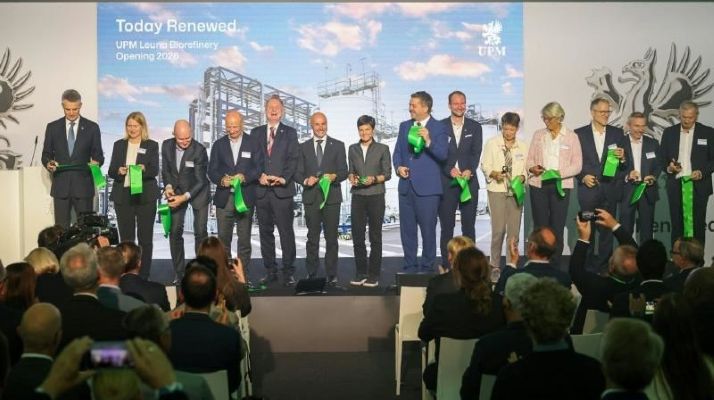
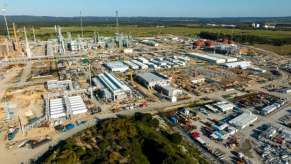
Finnish materials company UPM has inaugurated a €1.37-billion biorefinery in Leuna, Germany, opening a new chapter in the industrial production of renewable chemicals made from wood.
With an annual capacity of 220,000 tonnes, the facility is the world’s largest of its kind, converting sustainably sourced wood and sawmill residues into renewable raw materials designed to replace fossil-based inputs in industrial manufacturing.
The inauguration marks a major step in UPM’s push to commercialise wood-based chemicals at scale, targeting industries ranging from textiles and packaging to cosmetics, construction materials and tyres.
The plant’s operational ramp-up is progressing, with enzymatic hydrolysis and the production of lignin-derived specialty chemicals having reached stable operation. UPM is now ramping up sales of these products.
“The Leuna Biorefinery is a transformative investment for UPM and an important milestone in our growth journey. Our high-performance renewable chemicals open new markets for UPM and new opportunities for our customers. Together with our renewable fuels, the Leuna Biorefinery forms a platform for profitable growth and shows the ambition and energy with which UPM innovates,” said Massimo Reynaudo, President and CEO of UPM.
The Leuna facility is designed to tackle a central challenge facing the chemicals industry: reducing its dependence on fossil-based raw materials without compromising product performance.
Its renewable chemicals can be used in everyday products that are still largely manufactured using fossil-derived inputs. As companies face mounting pressure to cut emissions and consumers increasingly seek renewable materials, UPM is positioning the plant as a commercial-scale alternative for manufacturers seeking to reshape their supply chains.
The facility processes beechwood from forest thinnings and sawmill residues sourced within approximately 200 kilometres of the plant. The feedstock is unsuitable for higher-value applications such as timber and furniture.
Using enzymatic hydrolysis, the refinery breaks down lignocellulosic biomass into industrial sugars and lignin. These renewable building blocks can then be used to manufacture chemicals that would otherwise rely on fossil-based feedstocks.
Beyond its commercial potential, the refinery represents a significant milestone for Europe’s bioeconomy, demonstrating that renewable carbon-based technologies can move beyond pilot projects into large-scale industrial production.
The project also highlights the strategic push to reduce reliance on imported fossil-based supply chains and strengthen the security of raw material supplies.
“Europe’s competitiveness depends on creating new industries and scaling innovation. With Leuna, UPM turns Europe’s strengths in science and engineering into a new growth business,” said Reynaudo.