Tsubame BHB has confirmed successful ammonia production during trial operations of its first small, commercial-scale ammonia synthesis facilities. This marks a major milestone for next-generation energy manufacturing in Japan.
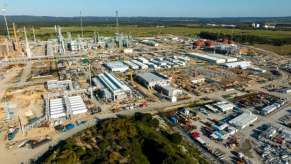
The Yokohama-based company said the low-temperature, low-pressure facilities—powered by its proprietary electride catalyst technology—were installed at INPEX Corporation’s Kashiwazaki Hydrogen Park as part of the “Blue hydrogen and ammonia production and utilization demonstration project.”
The order and implementation were carried out by Daiichi Jitsugyo Co., representing the first commercial order for Tsubame BHB’s ammonia synthesis systems.
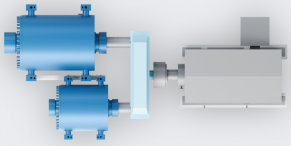
Unlike the conventional Haber–Bosch process, Tsubame BHB’s technology enables ammonia production at significantly lower temperatures and pressures, allowing compact, on-site manufacturing close to end users. The Kashiwazaki facilities have an annual production capacity of 500 tons and are designed for installation directly at demand locations.
The project is also a national first: it is Japan’s inaugural demonstration of next-generation ammonia production using blue hydrogen derived from domestically produced natural gas.
According to INPEX, the demonstration represents the country’s first “local production, local consumption” energy model, integrating the entire value chain—from blue hydrogen and ammonia production to CO₂ capture and underground storage (CCUS), hydrogen-based power generation, and ammonia supply to users.
Tsubame BHB said INPEX has highly evaluated the facilities for their strong process safety and their ability to sharply reduce the energy required to pressurize raw material gases.
Commenting on the achievement, CEO Koji Nakamura said, “It is a great honor to report that we have confirmed trial production of ammonia using Tsubame BHB's first small commercial ammonia facilities on INPEX's blue hydrogen and ammonia production and utilization demonstration project said Tsubame BHB CEO Koji Nakamura.
"This is a very meaningful project, and the first of its kind in Japan. By introducing Tsubame BHB's facilities, I hope that we can gather data that will contribute to further increasing the competitiveness of ammonia production, and advance the introduction of large-scale blue ammonia production facilities for future energy applications.”
Looking ahead, Tsubame BHB plans to expand its lineup beyond the 500-ton-per-year model used in Kashiwazaki, with larger systems capable of producing up to 5,000 tons annually. The company has already secured orders for two such units in Japan and is in discussions on potential deployments in Brazil, Africa, and India.
By scaling up on-site ammonia production, Tsubame BHB aims to cut transportation and storage costs while reducing greenhouse gas emissions—advancing its long-term vision of using proprietary technologies to address global challenges in food, energy, and the environment.