E3 Lithium has strengthened the development case for its Clearwater lithium project in Alberta, reporting progress on its demonstration facility, government funding, strategic partnerships and plans to enter the European battery market.
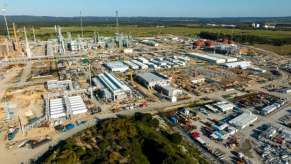
The Canadian lithium developer said its second quarter marked another step towards a final investment decision and commercial production at Clearwater, with Phase 2 of its Demonstration Facility successfully commissioned during the period.
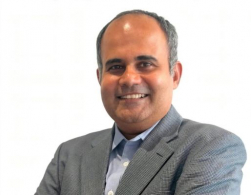
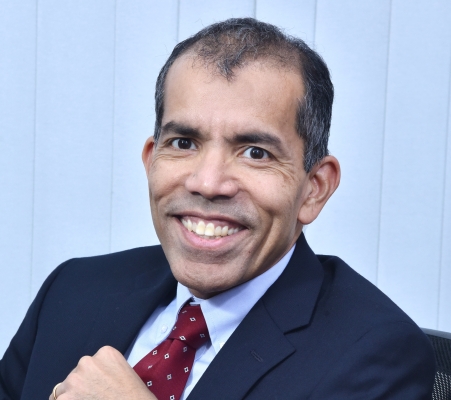
"The second quarter of 2026 built on the momentum established earlier in the year, with continued execution across our technical, strategic, and organizational priorities," said Chris Doornbos, CEO & Chair of E3 Lithium.
"We successfully commissioned Phase 2 of our Demonstration Facility, confirmed funding of up to $36.5 million from Natural Resources Canada, progressed strategic partnership with Germany’s TKMS, advanced our European market access strategy, and further strengthened our leadership team as we move closer to construction.
"Taken together, the quarter reflected disciplined execution across every pillar of our strategy, partnerships, technical de-risking, growth strategy, and leadership, as we advance Clearwater toward commercial production."
The company said its reservoir production test recorded lithium concentrations of 75.8 mg/L and a steady-state flow rate of 1,400 cubic metres per day. E3 said the results were independently validated and were consistent with brine chemistry observed across the Clearwater and wider Bashaw District.
A key milestone during the quarter was E3's June 8 contribution agreement with Natural Resources Canada (NRCan), securing up to $36.5 million in non-repayable funding through the Global Partnerships Initiative.
The funding represents 75% of the approximately $48 million cost of completing Phase 3 of the Demonstration Facility and the Clearwater Project Feasibility Study.
E3 said it had $51.3 million in undrawn government grants as of June 30, providing additional funding support as it advances the project towards a final investment decision and commercialisation.
E3 also deepened its relationship with Germany's TKMS in April through a Teaming Agreement aimed at supporting Canada's Canadian Patrol Submarine Project (CPSP).
The agreement provides a framework for E3 to participate in the project's critical-minerals supply chain, with a potential financial contribution aligned with Canada's Industrial and Technological Benefits policy.
The Canadian Government subsequently confirmed TKMS as the preferred supplier for the CPSP, strengthening the strategic significance of the partnership for E3.
E3 is also positioning Clearwater for European markets.
On July 9, following the quarter, the company signed a non-binding Collaboration Agreement with Tees Valley Lithium (TVL), a wholly owned subsidiary of Alkemy Capital Investments.
Under the proposed arrangement, E3 could use TVL's UK refinery to convert lithium carbonate produced at Clearwater into battery-grade lithium hydroxide. The agreement contemplates processing up to 50,000 tonnes over an initial 10-year term, supporting E3's efforts to establish European offtake relationships.
The move comes as E3 seeks to expand beyond resource development into broader parts of the battery supply chain, including potential cathode partnerships.
E3 reaffirmed in May that Clearwater remains its top strategic priority. The company is targeting Stage 1 production of 12,000 tonnes of lithium carbonate annually, with the potential to scale production to 150,000 tonnes per year.
At the same time, E3 has begun a strategic review of its non-core Garrington District asset, which contains a 5.0-million-tonne lithium carbonate equivalent measured and indicated resource.
The company also appointed Tom Gear as Chief Operating Officer in June. Gear brings nearly three decades of industrial development and operations experience, including senior positions at MEG Energy and Suncor.
E3's immediate priorities are to continue operating and developing the final phase of its Demonstration Facility, advance the Clearwater Feasibility Study and pursue discussions with strategic partners, potential offtake customers and government stakeholders.
The company also plans to evaluate opportunities across the wider battery supply chain as it works to move Clearwater towards commercial production.
E3 Lithium said its Alberta assets contain a combined 21.2 million tonnes of measured and indicated lithium carbonate equivalent resources, plus 0.3 million tonnes inferred.
The Clearwater Pre-Feasibility Study outlined a 1.13-million-tonne proven and probable mineral reserve, with a pre-tax NPV of US$5.2 billion and a 29.2% IRR, alongside an after-tax NPV of US$3.7 billion and a 24.6% IRR.
The company cautioned, however, that its development plans remain subject to financing, regulatory approvals, lithium prices, technology performance and other risks inherent in developing a commercial-scale lithium extraction operation.