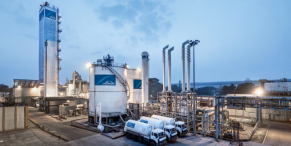
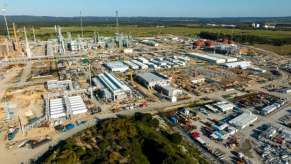
R3 Lithium has begun operations at a 154,000-square-foot facility in Georgia that the company says will produce lithium carbonate entirely from recycled battery materials, marking a major push to bring more critical-mineral processing onto US soil.
The company said it has also secured $15 million in Series A funding from investors including Integral GlobalTech Partners, TDK Ventures and Axial Partners, while holding approximately $1 billion in signed offtake agreements with customers including Trafigura.
R3 Lithium acquired the Covington facility in July 2026 and retained the leadership team that demonstrated commercial-scale recycled lithium production at the site in 2025. The company is now investing to upgrade the plant and move it toward continuous commercial operation.
R3 projects the facility could account for more than 50% of total U.S. lithium carbonate production in 2027, positioning the Georgia plant as a potentially significant source of domestically produced battery material.
"The US has spent years discussing critical mineral independence while the vast majority of lithium processing has remained overseas," said Linh Austin, President and CEO of R3 Lithium. "R3 Lithium is here today, with a proven facility that has already produced the product, the team that made it happen, and the capital needed to upgrade the line and keep it running, at commercial scale. R3 Lithium is setting a new pace for domestic lithium production, starting now.”
The Covington operation is designed to recover lithium from recycled battery materials, eliminating the need for primary mining or overseas refining.
R3 says its process uses calciner-based crystallization and water-based precipitation to extract lithium directly from recycled black mass at a single site. The facility has 30,000 metric tons of annual shredding capacity and a 2,500-metric-ton lithium carbonate production line, with space for another 2,500-metric-ton line.
The company said the existing production line was the first in US history to produce lithium carbonate at production scale with 99% purity from 100% recycled content.
The approach comes as demand for lithium continues to surge across electric vehicles, energy storage, consumer electronics, defense and data-center infrastructure.
Global battery storage demand rose 51% in 2025 to more than 300 gigawatt-hours of installations, according to industry data cited by the company. Global battery energy-storage capacity is projected to increase sixfold between 2025 and 2030.
Every gigawatt-hour of grid-scale battery storage consumes approximately 880 tons of lithium carbonate, according to the company.
R3 Lithium said it has already secured approximately $1 billion in signed offtake contracts, giving the company a commercial foundation as it scales production.
Among its customers is commodities trader Trafigura.
“Battery manufacturers, the Department of Energy, and OEMs are increasingly seeking reliable sources of domestic lithium to support the growing US battery supply chain and improve security of supply. To date, however, domestic supply has remained relatively limited,” said Tim Wood-Dow, Battery Metals Trader at Trafigura. “R3 Lithium’s Covington facility helps address that gap in the physical supply chain by producing lithium carbonate from recycled feedstock on US soil.”
The strategy offers an alternative to the much longer timeline associated with developing new lithium mines.
The US imports most of its lithium, while an estimated 85% to 95% of battery-cell and component production capacity is located outside US and European borders. New domestic lithium mines can take years to permit and develop, making recycling a potentially faster route to additional supply.
R3's Covington facility instead draws on batteries and manufacturing scrap already in circulation.
A previous owner invested approximately $150 million to build the site. R3 said it acquired the facility with no liabilities, allowing it to restart and expand an existing industrial platform rather than build a new plant from the ground up.
R3's model is built around processing battery materials from shredding through finished lithium carbonate production at a single location.
The facility's shredding operations will produce black mass from manufacturing scrap and end-of-life batteries. Lithium is then extracted on-site, while the remaining concentrated metal oxide — containing nickel, cobalt, manganese and graphite — is sold separately.
The company said the additional metal products can generate another revenue stream from the same feedstock and may sell at or above the original purchase price of the material.
R3 plans to replicate the model across North America and Europe through modular facilities based on 5,000-metric-ton-per-year units. The company says new facilities will be deployed only when supported by offtake agreements, allowing it to phase capital spending and generate revenue earlier.
"Every battery already in service in this country is a lithium deposit," said Gratz. "It is above ground, it is concentrated, and nobody has to dig for it. What has been missing is the ability to get lithium back out of it, at commercial scale, in the United States. That is the thing we have now demonstrated — not in a laboratory, and not as a pilot," said Chief Technology Officer Eric Gratz.