Deepak Fertilisers and Petrochemicals Corporation Limited (DFPCL) reported a strong start to FY27, with quarterly profit more than doubling on the back of higher realizations, improved margins and the strength of its integrated value chain spanning LNG, ammonia and downstream chemicals.
The company posted a consolidated net profit of Rs. 490 crore for the quarter ended June 30, 2026, marking a 101% year-on-year increase and a 252% jump sequentially. Operating revenue rose 22% year-on-year to Rs. 3,256 crore, while operating EBITDA surged 65% to a record Rs. 845 crore.
EBITDA margin expanded sharply to 26%, compared with 19.3% in Q1 FY26 and 11.8% in the previous quarter, driven by stronger realizations across ammonia, mining chemicals, nitric acid and isopropyl alcohol (IPA).
Despite volatility and supply chain disruptions caused by the US-Iran conflict, DFPCL said favourable industry pricing helped offset temporary volume disruptions in Technical Ammonium Nitrate (TAN) and IPA businesses.
The company’s balance sheet also strengthened during the quarter, with net debt declining to Rs. 4,719 Cr. Net debt-to-EBITDA improved significantly to 1.4x, reflecting stronger cash generation and financial discipline.
S.C. Mehta, Chairman and Managing Director of DFPCL, said the quarter marked a significant milestone for the company as it delivered its highest-ever EBITDA and profit after tax.
"Q1 FY27 marks an important milestone, with company delivering its highest ever EBITDA and PAT. Despite significant volatility and supply chain disruptions arising from the US-Iran conflict, the doubling of profits during the quarter further validated the three foundational strengths that underpin our strategy and business model."
He highlighted the company’s integrated value chain, alignment with India’s growth sectors and shift towards differentiated solutions as key drivers of resilience.
"First, the strength of our integrated value chain spanning LNG, Ammonia and downstream products. This integration not only mitigates supply and cost risks but also enhances our ability to capture value across the chain and sustain profitability through market cycles."
"Second, the excellent alignment of all our businesses with India Growth Story. Whether in Mining Chemicals, Crop Nutrition or Industrial Chemicals, each business continues to benefit from structural demand drivers linked to mining, infrastructure, manufacturing and agriculture. This has enabled us to sustain strong demand even amidst rising raw material costs and corresponding price increases."
"Third, the growing contribution from our strategic shift away from commoditized products towards differentiated solutions and customer-centric offerings. This transformation is strengthening customer relationships, improving earnings quality and enhancing the resilience of our business model. Our transition from being a product supplier to becoming a solutions provider continues to gain momentum."
Mehta added that the company’s specialty, Croptek and B2C businesses are steadily improving earnings quality and sustainability.
"Adding further momentum to these strengths, our two major growth projects - the Nitric Acid complex at Dahej and the TAN project at Gopalpur are nearing completion and are expected to begin contributing to profitability from Q3 onwards."
"The investments we have made over the last decade from LNG and ammonia integration to specialty products, customer solutions and strategic capacity expansion are now beginning to translate into tangible outcomes. We are confident that DFPCL is entering its next phase of growth from a position of considerable strength."
DFPCL’s Mining Chemicals business reported a mixed quarter, with sales volumes declining 12% year-on-year due to production and dispatch disruptions linked to changes in the PESO portal.
However, revenue from the segment increased 37% year-on-year, supported by higher TAN realizations and favourable industry pricing.
The company’s B2C mining chemicals business continued to gain traction, with revenue rising 42% year-on-year to Rs. 151 crore, contributing 17% of segment revenues.
DFPCL expects elevated FGAN prices, favourable import parity and value-based pricing initiatives to support margins despite near-term moderation in mining activity due to monsoon conditions.
The Industrial and Specialty Chemicals portfolio delivered improved profitability during the quarter.
Nitric Acid volumes remained stable, while stronger realizations supported earnings. IPA operations were impacted by RGP shortages, but higher demand for pharma-grade products and improved realizations strengthened profitability.
The company continued expanding its specialty portfolio across solar chemicals, healthcare sanitation and pharmaceutical applications.
DFPCL expects improved propylene availability to aid IPA recovery, while innovation-led growth is expected to support the specialty chemicals portfolio.
The Crop Nutrition business operated in a challenging environment due to delayed monsoon progression, elevated raw material costs and inadequate subsidy support.
Despite these pressures, NPK manufactured sales increased 4% year-on-year and 11% sequentially to 133 KT.
Specialty and Croptek products accounted for 43% of segment revenues, reinforcing the company’s premiumisation strategy.
DFPCL said demand conditions remain supportive with widespread rainfall across key markets, while policy alignment on nutrient subsidies will remain important for industry stability.
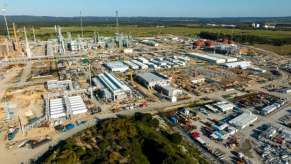
DFPCL said its Gopalpur TAN project has achieved approximately 96% completion, while the Dahej Nitric Acid project is approximately 93% complete.
Commissioning activities are underway, with commercial operations expected towards the end of Q2 FY27.
The projects, which remain within approved capex limits, are expected to strengthen DFPCL’s leadership position in nitric acid and technical ammonium nitrate, improve supply assurance and support future growth.
With operations across Maharashtra, Gujarat, Andhra Pradesh and Haryana, DFPCL is among India’s leading manufacturers of industrial chemicals and fertilisers, serving critical sectors including infrastructure, mining, pharmaceuticals, chemicals and agriculture.