Covestro and puren are stepping up efforts to reduce the environmental footprint of purenit, with puren commissioning a new production line and securing ISCC PLUS certification for its entire purenit production.
The certification clears the way for puren to use Covestro’s Desmodur CQ MS as a binder, based on bio-circular attributed raw materials. The companies said the move will support the development of a new purenit product with an improved environmental footprint, with market launch planned for 2027.
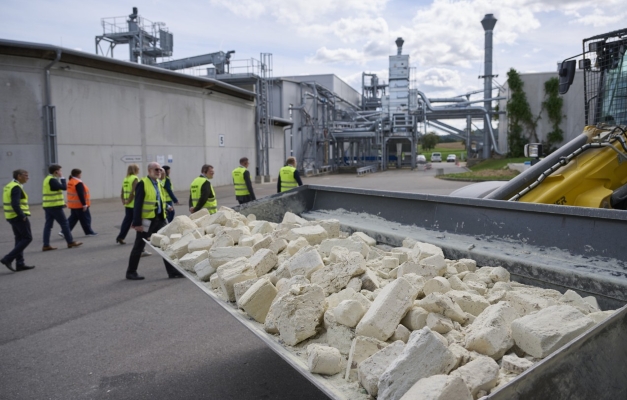
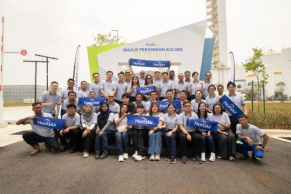
The announcement was made during the inauguration of the new production line at puren’s Obermarchtal site and marks the latest step in a collaboration aimed at bringing circularity further into the polyurethane insulation value chain.
"With ISCC PLUS certification across our entire purenit production we have the basis to use Desmodur CQ MS from Covestro as a binder with bio-circular¹ attributed raw materials." says Andreas Huther, Managing Director of puren gmbh.
“For our customers, this means the same material, the same performance and less CO₂ emissions and thus a material that takes a further step forward towards more sustainability and circularity. Sustainability therefore becomes a key performance indicator.”
Covestro said Desmodur CQ MS is based on climate-neutral² MDI made from bio-circular¹ feedstocks and certified through the mass-balance approach.
"Desmodur CQ MS is based on climate-neutral² MDI made from bio-circular¹ feedstocks and certified through the mass balance approach," says Hermann Dörholt, Head of the Performance Materials business entity at Covestro.
"This gives puren a raw material that delivers a lower carbon footprint while keeping processing unchanged. This kind of collaboration across the value chain is exactly what turns a single innovation into a measurable contribution for the whole industry and its customers."
purenit is a highly compressed functional material based on rigid polyurethane foam (PUR/PIR), with a density of around 550 kg/m³. Despite its relatively low weight, the material is pressure-resistant, moisture-resistant and dimensionally stable. It also provides insulation and can be sawed, milled, drilled and glued using standard woodworking machinery.
The material is used in windows, doors, facades and base areas in construction, as well as bathrooms, wellness areas and outdoor kitchens. It is also used for interior fit-outs in motorhomes, commercial vehicles and ships.
puren produces purenit through an adhesive-press process that converts polyurethane residual materials into homogeneous boards. The company describes the process as an upcycling approach that turns a byproduct of polyurethane production into a standalone material.
The planned use of Desmodur CQ MS relies on the mass-balance approach, under which bio-circular¹ feedstocks are physically blended into production at an earlier stage and mathematically allocated to the final product.
The collaboration combines Covestro’s reduced-carbon-footprint raw material with puren’s process for recovering polyurethane production residues. The companies said the resulting product incorporates circularity at both the raw-material and material-concept levels.