A key focus of the government’s strategy has been expanding domestic urea production and reducing import dependence.
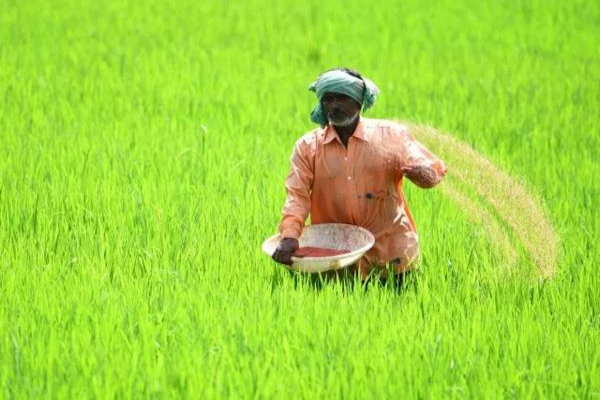
The Government of India has stepped up efforts to secure the country’s fertilizer supply chain by expanding domestic production, diversifying import sources and building resilience against global market disruptions, as per the Ministry of Chemicals and Fertilizers.
The measures come amid volatility in international fertilizer markets, supply uncertainties and challenges linked to raw material availability. According to fertilizer units, fluctuations in production are largely driven by raw material and feedstock availability, global price movements and technical shutdowns.
To tackle these challenges, the government has diversified sources of raw materials and feedstocks to maintain optimum domestic production. It has also expanded fertilizer import channels by engaging Indian Missions abroad to identify additional suppliers.
As part of these efforts, 25 Lakh Metric Tonnes (LMT) of urea was secured through global tenders in April 2026, followed by another 17.7 LMT in June 2026, helping reduce dependence on vulnerable supply routes and ensuring continued fertilizer availability for farmers.
A multi-layered monitoring system is in place to ensure timely and adequate fertilizer distribution across the country, Minister of Chemicals & Fertilizers JP Nadda has said in a written reply to a question in the Lok Sabha.
Before every cropping season, the Department of Agriculture and Farmers Welfare (DA&FW), in consultation with state governments, assesses state-wise and month-wise fertilizer requirements. Based on these projections, the Department of Fertilizers allocates supplies through monthly plans and continuously tracks availability.
The movement of major subsidized fertilizers is monitored through the online Integrated Fertilizer Management System (iFMS). Weekly video conferences between DA&FW, the Department of Fertilizers and state agriculture officials are also held to review supplies and take corrective action wherever required.
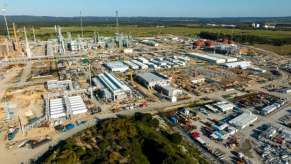
A key focus of the government’s strategy has been expanding domestic urea production and reducing import dependence.
Under the New Investment Policy (NIP)–2012, announced on January 2, 2013, and amended on October 7, 2014, six new urea manufacturing units have been established to increase production capacity and move towards self-sufficiency.
These include the Ramagundam urea unit of Ramagundam Fertilizers and Chemicals Ltd. (RFCL) in Telangana, and three units of Hindustan Urvarak & Rasayan Limited (HURL) at Gorakhpur, Sindri and Barauni. Two private-sector units — Panagarh urea plant of Matix Fertilizers and Chemicals Ltd. in West Bengal and Gadepan-III unit of Chambal Fertilizers and Chemicals Ltd. in Rajasthan — have also been commissioned.
Each of these units has an installed capacity of 12.7 Lakh Metric Tonne per annum (LMTPA) and is based on advanced, energy-efficient technology.
Together, these projects have added 76.2 LMTPA of urea production capacity, increasing India’s reassessed urea production capacity from 207.54 LMTPA in 2014-15 to 269.42 LMTPA in 2026-27.
The government has also approved the revival of the Talcher unit of Fertilizer Corporation of India Limited (FCIL) through Talcher Fertilizers Limited (TFL), with a new 12.7 LMTPA Greenfield urea plant based on coal gasification technology.
Another project, the Assam Valley Fertilizer and Chemical Company Ltd. (AVFCCL), involving a new Brownfield Ammonia-Urea Complex with an annual capacity of 12.7 Lakh Metric Tonne within the existing premises of Brahmaputra Valley Fertilizer Corporation Limited (BVFCL), Assam, has also been approved. Both projects are currently under execution.
Record Urea Output
The government’s New Urea Policy (NUP)–2015, notified on May 25, 2015, for 25 existing gas-based urea units, has further boosted domestic output.
The policy has helped increase annual urea production by 20–25 LMT compared with 2014-15 levels.
As a result, India’s urea production has risen sharply — from 225 LMT in 2014-15 to a record 314.07 LMT in 2023-24. During 2025-26, domestic urea production stood at 293.30 LMT.
Further strengthening the push for self-reliance, the Cabinet Committee on Economic Affairs (CCEA) approved the National Investment Policy for Urea-2026 for Aatmanirbhar Bharat (NIPU-2026) on July 15, 2026, aimed at attracting fresh investments in the urea sector.
Boost for Phosphatic and Potassic Fertilizers
The government has also expanded support for phosphatic and potassic (P&K) fertilizers through the Nutrient Based Subsidy (NBS) Scheme, implemented from April 1, 2010.
Under the scheme, P&K fertilizers are covered under Open General License (OGL), allowing companies to import or manufacture fertilizers based on market conditions.
For Kharif 2026, NBS rates worth Rs. 41,533.81 crore have been approved to ensure adequate availability of P&K fertilizers.
To reduce dependence on imported phosphatic fertilizers, the government has introduced measures to encourage domestic manufacturing. These include guidelines issued on January 18, 2024, regarding reasonable Maximum Retail Price (MRP), allowing reasonable profit margins for importers, manufacturers and integrated manufacturers.
Subscribe to our newsletter & stay updated.