Nano One Materials Corp. and Standard Lithium are advancing efforts to qualify Arkansas-sourced lithium carbonate for use in lithium iron phosphate (LFP) battery cathodes, with Nano One reporting initial test results of approximately 155 mAh/g on first discharge.
Nano One said it used battery-quality lithium carbonate supplied by Standard Lithium from the pilot plant at its South West Arkansas Project to produce LFP cathode active material (CAM) using its patented One-Pot process.
The Vancouver-based company then used the material to manufacture battery coin cells in-house at its Innovation Centre in Burnaby, British Columbia.
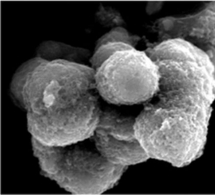
According to Nano One, the resulting LFP material met its target chemical and physical parameters and achieved the intended particle morphology. Initial electrochemical testing indicated performance of approximately 155 mAh/g on first discharge.
The testing is part of Nano One’s broader push to qualify lithium feedstocks from multiple sources and jurisdictions, a strategy aimed at giving prospective licensees and customers more options for sourcing raw materials.
“We continue qualification work with raw material producers across multiple jurisdictions and we are now pleased to have successfully tested lithium feedstock from Standard Lithium.
"As our feedstock supply base continues to grow, we believe this provides our prospective licensees and customers with greater sourcing optionality. Our customers and licensees are asking for cathode production they can build in their own jurisdiction with inputs they can source easily, and every feedstock we pre-qualify shortens the potential path to production,” said Alex Holmes, CEO of Nano One.
Nano One qualifies battery-grade raw materials through a staged testing process that progresses from laboratory-scale A-samples to pilot-scale C-samples before commercial-plant D-sample testing. The company said pre-qualifying feedstock could, depending on customer requirements, accelerate A-to-C sample qualification programs by as much as one year.
The latest work builds on a relationship that began in July 2025, when Nano One joined the inaugural cohort of the Arkansas Lithium Technology Accelerator, supported by Standard Lithium, Arkansas-based producers, academic institutions and government partners.
Nano One is also scaling up its production capacity in Canada. The company plans to expand its Candiac Facility to approximately 800 tonnes per year, with detailed engineering of the expansion 85% complete as of July 2026. Commissioning of the expanded Demonstration Line is targeted for the first half of 2027.