BASF is expanding its commitment to the circular chemicals sector.
The global chemicals giant has signed a strategic collaboration agreement with Encina Development Group that strengthens an existing partnership and advances plans for a major U.S. Gulf Coast manufacturing facility.
The agreement marks a significant step in Encina’s effort to scale commercial production of circular chemicals derived from waste streams, while giving BASF expanded access to sustainable feedstocks for its growing Ccycled product portfolio.
Under the collaboration, BASF will provide strategic advisory support during key development stages of Encina’s first commercial-scale Gulf Coast project, including procurement strategy and project execution planning ahead of a final investment decision.
The deal also creates a framework for BASF to participate in future global project opportunities, including potential equity investments.
The expanded partnership builds on a previously announced long-term supply agreement under which Encina will provide chemically recycled circular benzene produced from waste streams. BASF plans to use the feedstocks across its Ccycled portfolio, serving industries ranging from packaging and textiles to automotive and consumer products.
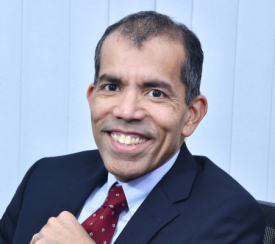
“Advancing circular economy solutions requires strong collaboration across the value chain,” said Thomas Ohlinger, Senior Vice President Traded Products at BASF.
“Through this additional agreement with Encina, BASF continues to support the development of innovative approaches that increase the availability of circular feedstocks for the chemical industry and expand the use of circular raw materials in our production processes and Ccycled product portfolio. This demonstrates our strength as a partner with distinctive capabilities to support and shape early-stage projects beyond what pure off-takers can offer.”
The agreement underscores growing industry demand for scalable alternatives to fossil-based feedstocks as chemical manufacturers seek to meet sustainability and decarbonization goals.
“BASF’s decision to deepen its relationship with Encina reflects the increasing importance of scalable circular feedstock solutions within the chemical industry,” said David Schwedel, Founder of Encina.
“Together, we are helping advance a new generation of circular chemical manufacturing capable of reducing waste while supporting global demand for sustainable products.”
Schwedel added, “This collaboration further validates Encina’s technology, commercial platform, and long-term global development strategy.”
Encina's proprietary catalytic conversion technology transforms waste that would otherwise be sent to landfills or incinerators into circular chemical products that can be integrated directly into existing manufacturing supply chains.
The company says its drop-in feedstocks help manufacturers reduce reliance on fossil resources while advancing circular economy objectives.
Beyond the Gulf Coast project, the new agreement establishes a pathway for BASF and Encina to evaluate additional circular chemicals facilities in international markets, potentially expanding the partnership into a global development platform for next-generation sustainable chemical production.
As pressure mounts on industry to cut emissions and reduce waste, the expanded BASF–Encina alliance signals growing momentum behind circular manufacturing technologies aimed at reshaping the future of the chemicals sector.