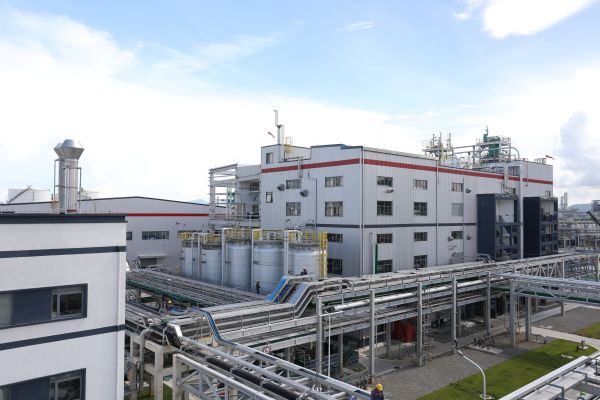
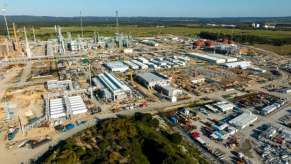
Clariant has completed a CHF 100 million expansion at its state-of-the-art Daya Bay facility in China, with a second production line now fully operational since November.
The move significantly boosts output of flame-retardant solutions as demand surges across Asia and the global e-mobility sector.
"Our continued investment in the Daya Bay facility underscores our commitment to supporting the significant growth of engineering plastics applications in e-mobility and electrical & electronic segments," said Angela Cackovich, Business President Adsorbents & Additives and EMEA and Member of the Executive Steering Committee.
"With this world-class manufacturing plant, we strengthen our leading position in innovative and more sustainable fire safety solutions while improving our ability to serve customers across the Asia Pacific region with reduced delivery times and tailored solutions."
Alongside the capacity expansion, Clariant is widening its Exolit OP flame retardant portfolio with two new halogen-free grades designed specifically for polybutylene terephthalate (PBT) used in e-mobility applications: Exolit OP 1242 (TP) and Exolit OP 1266 (TP).
The new materials target key performance challenges in next-generation electric vehicles. Exolit OP 1242 (TP) delivers high hydrolysis stability, while Exolit OP 1266 (TP) maintains a comparative tracking index (CTI) of 600 V even after extended storage. Both achieve UL 94 V-0 classification at 0.4 mm thickness at dosing levels of 15–20%, meeting stringent safety requirements for high-voltage systems.
As the e-mobility industry accelerates toward 800 V architectures and beyond, demand is rising for materials with stronger electrical insulation and long-term durability under harsher operating conditions.
The company also highlighted growing pressure on traditional antimony trioxide (ATO)-based systems, which have faced significant price volatility and supply chain disruption in recent years. The new halogen-free solutions are positioned as a more stable alternative.
"Our new Exolit OP solutions not only deliver superior technical performance for e-mobility applications but also help manufacturers reduce their exposure to antimony market fluctuations," explained Mariano Suarez, Head of Marketing Additives at Clariant.
"By offering halogen-free and ATO-free alternatives that don't require fluorinated polymers like PTFE, we are enabling our customers to meet growing OEM environmental requirements while maintaining reliable supply chains."
Clariant further expanded its broader Exolit AP range with Exolit AP 422 A, a halogen-free ammonium polyphosphate flame retardant aimed at insulation materials, composites, and intumescent coatings. The product is classified as SVHC-free under EU REACH requirements, containing less than 0.1% melamine.
The company says the material offers an alternative to TCPP and TEP in polyurethane foam applications, improving flame retardancy without plasticizing effects and supporting more sustainable building material formulations.