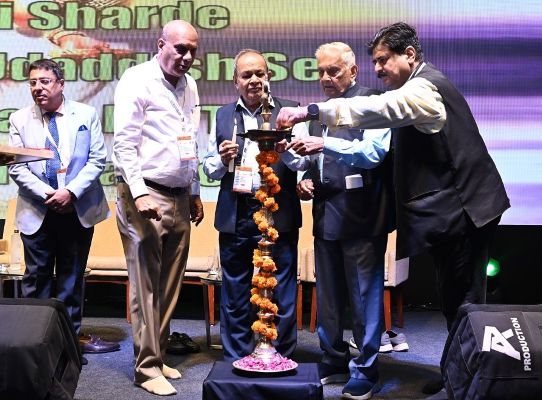
The 24th International Crop Science Conference & Exhibition (ICSCE Delhi 2026), organised by the PMFAI Agribusiness Foundation, concluded on a high note.
This, after bringing together more than 1,500 delegates and 129 leading agri-input companies from across the world in New Delhi on June 25–26.
Recognised as India's largest trade platform for the agricultural inputs value chain, the two-day conference highlighted the sector's resilience amid mounting geopolitical, supply chain and climate-related challenges, while reinforcing its role in advancing global food security.
The event opened with a welcome address by PMFAI President Pradip Dave, who traced the conference's evolution since its launch in Mumbai in 1997 into a premier international platform for business networking, strategic partnerships and cross-border collaboration across the agrochemical, agri-biological and allied industries.
Addressing delegates, Dave highlighted the difficult business environment confronting the agri-input sector. He pointed to the escalation of the Gulf conflict since February 2026, which has significantly disrupted non-oil maritime supply chains, creating uncertainty in the availability of critical raw materials, fertilizers, LNG, sulphur and petrochemical feedstocks.
The resulting volatility, he noted, has placed considerable pressure on domestic manufacturing.
Despite these headwinds, Dave stressed that the agri-input industry remains fundamental to ensuring global food security. With rising populations, shrinking arable land and increasing climate pressures, improving productivity on existing farmland has become essential.
He also noted that pests, weeds and diseases continue to account for an estimated 20% of annual global crop losses, underscoring the importance of modern crop protection technologies in safeguarding food production and helping contain food inflation.
Dave also emphasised the growing impact of climate change on agricultural productivity, warning that increasingly frequent extreme weather events threaten food systems worldwide.
He highlighted the need to strengthen crop resilience against rising temperatures, drought and other climate-related stresses, noting that agrochemicals and biologicals remain critical tools for sustaining yields and protecting crops under changing climatic conditions.
The exhibition reflected the industry's rapid transformation, with 129 exhibitors showcasing innovations spanning chemical crop protection, biologicals, biostimulants and next-generation digital agriculture technologies.