From plant design to supply chains, a new wave of digital technologies is redefining productivity, safety and competitiveness across India’s chemical value chain
The digital technologies are emerging as the true catalysts for change, redefining how chemical companies design plants, manage operations, ensure safety, and deliver value. For India, this transformation carries strategic significance. With ambitions to become a global chemical manufacturing hub, reduce import dependence, and meet stringent environmental norms, the adoption of digital tools is no longer optional, it is foundational to future growth, resilience, and global competitiveness. This shift marks a decisive move from scale-led expansion to intelligence-led performance, setting the stage for a more efficient, sustainable, and innovation-driven Indian chemical industry.
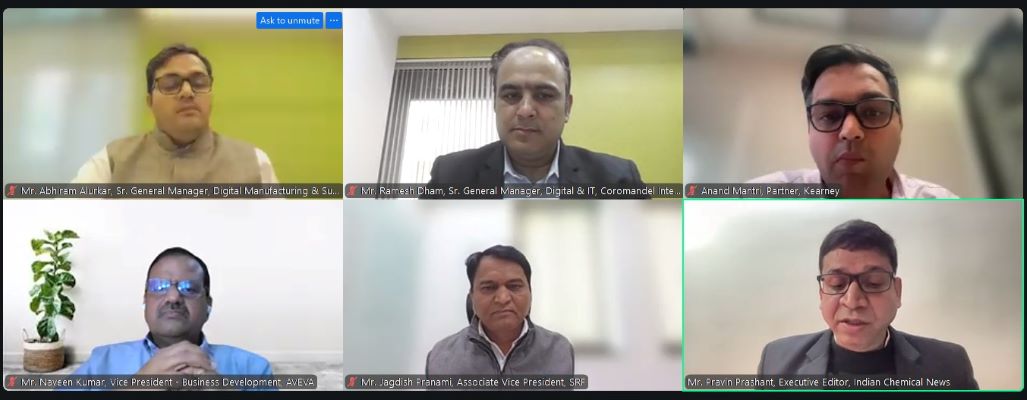
In this context, the Indian Chemical News organised a webinar on “Catalysts for Change: A Digital Revolution for India’s Chemical Industry” in association with AVEVA on January 21, 2026.
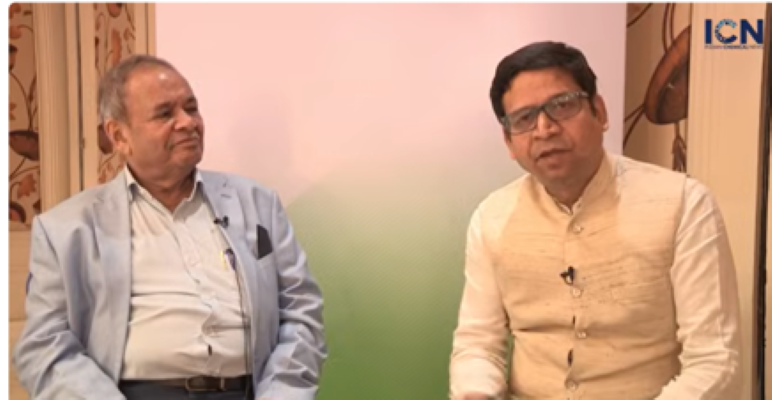
At the session moderated by Pravin Prashant, Executive Editor, Indian Chemical News, leading industry experts discussed growing relevance of digital tools for faster decision-making, safer production, and more sustainable practices.
Abhiram Alurkar, Sr. General Manager, Digital Manufacturing & Supply Chain, DFPCL outlined why digital transformation must follow a phased approach, supported by a clearly laid-out blueprint and roadmap.
“The journey typically starts with connect and contextualize. This means leveraging existing DCS and PLC data, connecting operational systems, and building processes to access and contextualize assets effectively. A critical early step is securing IT-OT integrations. Once this foundation is in place, organizations can move into the next phase, predicting and optimizing through APCs, human-in-the-loop solutions, asset health and performance monitoring, and condition-based monitoring. This enables targeted improvements in energy efficiency, quality, and yield analytics. The final stage is about prescribing and assisting the workforce, scaling solutions across the enterprise, and governing them effectively. Throughout this journey, change management is absolutely essential. Digital transformation is a long-term effort, and each phase must be inclusive, supported by continuous training and hands-on engagement with the workforce. The focus should not be on maximizing digitization for its own sake, but on maximizing business relevance. Digital solutions must solve real business problems,” said Alurkar.
“At Deepak Fertilisers, we are at a digitally enabled stage. Several initiatives are already live, while others are in the rollout phase. Our next focus is on strengthening these foundations through scaling, improving adoption, and enhancing operator engagement. Going forward, we will further build on real-time data foundations, condition-based monitoring solutions, and AIML-driven predictive and prescriptive analytics. We have structured our digital roadmap into three layers: core applications, enablers, and point solutions. Core applications focus on data connectivity and fundamentals. In parallel, we deploy point solutions such as advanced analytics, generative AI use cases, and agent-based systems that bridge enterprise applications, streamline processes, and reduce fragmented tools,” added Alurkar.
Jagdish Pranami, Associate Vice President, SRF spoke on achieving maximum productivity from existing assets, and use of data analytics and predictive modeling at his company.
“Before investing heavily in new assets, we must ask what more we can achieve from what we already have. In our plants, utilities account for nearly 60% of process requirements. We use AI and ML extensively for monitoring these systems. A specific example is steam trap monitoring. We have more than 3,500 steam traps across our plants, many operating at 6-bar pressure. Traditionally, these were manually inspected, which was inefficient and error-prone. With predictive analytics, we now monitor steam traps 24×7. This has significantly reduced steam losses, hammering issues, and unplanned downtime. Similarly, for rotating equipment, of which we have more than 200 critical units, predictive maintenance helps us identify failures before they occur, reducing breakdowns by nearly 50%. We have also applied analytics to chillers, heat exchangers, and other utilities,” said Jagdish Pranami.
“For FY 2026–27, our focus will be on early detection of bearing failures, motor current signature analysis, and deeper condition monitoring across continuous processes. Digitization enables us to improve yields, reduce waste, lower raw material consumption, and ultimately reduce our environmental footprint. By improving asset utilization, we avoid unnecessary capex and reduce energy consumption, directly impacting carbon emissions,” added Pranami.
Ramesh Dham, Sr. General Manager, Digital & IT, Coromandel International emphasised on the need for right infrastructure in place for the importance of ROI of any digital initiative.
“With technology evolving so rapidly, the discussion today is no longer only about how much you are investing, but also about how quickly you are able to realize benefits from that investment. This brings me to introduce another concept alongside ROI, or Return on Investment. I believe we should also talk about ROT—Return on Time. In other words, if you are investing your time and effort, how quickly are you able to generate value from that time? Agentic AI is going to fundamentally transform the industry. Let me give a few practical examples of how agents will help us in day-to-day operations. The most immediate impact of agents in manufacturing will be in maintenance. Today, most plants operate with multiple systems—IoT-based vibration monitoring, CMMS platforms, and reliability systems,” said Ramesh Dham.
“When a person logs in with an AI maintenance agent, and simply asks, “What is my task today?”, the system will immediately identify who that person is, which department they belong to, and what area they are responsible for. The agent will then pull data from CMMS and IoT systems, check preventive maintenance schedules, and also detect if there is any urgent breakdown in that area. The system will clearly tell the person: today you have a scheduled preventive maintenance task, or there is an urgent breakdown that needs immediate attention. The person doesn’t need to go through logbooks, shift handovers, or multiple systems. The same maintenance agent can also help with spare parts planning, and during annual shutdowns or turnarounds, also assisting in shutdown planning and sequencing. Agents will play a role in production planning, safety, and operations,” added Dham.
Anand Mantri, Senior Principal, Kearney explained the evolving global trends in connected chemical plants, and growing impact of digital technologies on Indian chemical companies.
“Based on the work we have done globally, particularly at the intersection of technology and process industries, I see five major trends shaping connected chemical plants today. First, organizations are moving beyond pilots toward scale. The era of isolated pilots is largely over. Companies are now investing in platforms that support multiple digital twins, predictive maintenance models, and scalable deployments. Second, we are seeing the rise of Chief Digital and Information Officers (CDIOs). Over the last three years, there has been nearly a 35% increase globally in CDIO roles. Digital is no longer separate as it is being reintegrated with core IT and business strategy,” said Anand Mantri.
“Third trend is that digital and IT are no longer just enablers; they now have a seat at the leadership table. In many organizations, CDIOs report directly to the CEO, reflecting the strategic importance of digital transformation. Fourth, companies recognize that digital transformation cannot be done alone. There has been a significant rise in ecosystem partnerships over the last five years. Collaboration is now essential. Finally, and most importantly, leaders are shifting their mindset, from viewing digital as a cost center to seeing it as a revenue generator. Mature digital capabilities are increasingly being monetized and offered as services to others. These are the key trends we see globally, and several Indian companies have already begun adopting them,” added Mantri.
Naveen Kumar, Vice President - Business Development, AVEVA shared his thoughts on how the digital divide between large enterprises and SMEs affect equitable adoption of digital tools in the chemical industry.
“At AVEVA, we provide industrial intelligence across three key stages to enable a better future. The first is design and build, where our engineering design software and digital twins help customers design and commission assets faster. Once assets are built, we connect them through a digital thread that spans operations and maintenance. This allows continuous monitoring of KPIs and ongoing optimisation of production. Customers can engage with us at any point in this lifecycle such as design, build, operate, or optimise, and we help maximise asset performance across all stages. Going forward, we are working on generative dashboards, predictive user interfaces, and industry-specific AI models. A key principle for us is integrated AI not AI in isolation, but AI embedded across applications to deliver maximum value quickly. AVEVA’s focus is on continuous innovation. We do not stop at proofs of concept,” said Naveen Kumar.
“Today, digital transformation is no longer optional but inevitable. Just as smartphones have become ubiquitous, digital tools will follow a similar trajectory. For SMEs, the challenge lies in cost justification and access to skilled resources. Large organizations can afford dedicated digital teams, but SMEs often cannot. This is where platform-based and “as-a-service” models become critical. Instead of building everything in-house, SMEs can leverage shared platforms, ecosystem partnerships, and analytics services. They don’t need to invest in everything themselves. This collaborative approach makes digital adoption both practical and scalable,” added Kumar.
Subscribe to our newsletter & stay updated.