India’s demand for critical minerals is projected to rise sharply by FY30
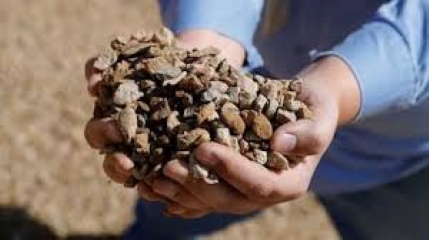
Without secure access to critical minerals and rare earth elements, India’s race towards clean energy, electric mobility and industrial self-reliance could stall.
A new report released by the Federation of Indian Chambers of Commerce and Industry (FICCI) in collaboration with Deloitte underscores the strategic importance of lithium, nickel, cobalt, graphite, copper and rare earth elements (REEs) in powering India’s clean energy ambitions, boosting industrial competitiveness and securing long-term economic resilience.
As India pushes toward 500 GW of renewable energy capacity, 30 percent EV penetration by 2030, and net-zero emissions by 2070, these minerals are no longer optional inputs — they are the backbone of the transition.
India’s demand for critical minerals is projected to rise sharply by FY30, driven by rapid expansion in electric vehicles, energy storage systems, renewable power, electronics and defence manufacturing.
But the supply picture is stark: 100% import dependence for lithium, cobalt and nickel; Over 90% import dependence for copper; 60% import dependence for natural graphite; Limited availability of heavy rare earth elements; Constrained downstream processing capacity.
Despite geological potential across multiple minerals, domestic production and processing remain far below what future demand will require.
India’s economic transformation is becoming increasingly mineral-heavy. Decarbonisation, battery storage, electric mobility and advanced manufacturing are dramatically increasing the mineral intensity of growth.
Globally, lithium, graphite and nickel are witnessing the fastest demand acceleration, fuelled by EV adoption and grid-scale storage expansion — trends that India is rapidly joining.
The report highlights a major structural vulnerability: global mining is concentrated in a handful of countries, while refining and midstream processing are even more geographically skewed.
This imbalance exposes countries like India to export controls, geopolitical disruptions and sharp price volatility.
For India, the most significant bottleneck lies in midstream processing — particularly battery-grade chemicals, magnet materials and high-purity rare earth separation. Limited commercial-scale refining leads to value leakage and sustained external dependence.
Rare earth elements such as neodymium and praseodymium are indispensable for permanent magnets used in EV motors and wind turbines. Nearly 80 percent of REE consumption is tied to permanent magnets.
Although India possesses rare earth deposits, large-scale separation, refining and magnet manufacturing capacities remain limited — reinforcing heavy reliance on imports.
The report calls for urgent action: accelerated exploration, expansion of domestic processing hubs, strategic overseas asset acquisition, scaling up recycling and embedding strong ESG standards across the value chain.
Focused execution under the National Critical Mineral Mission, it argues, could reposition India from an import-dependent consumer to a resilient, value-added participant in global clean technology supply chains.
The message is clear: India’s clean energy ambitions will ultimately be shaped not just by solar panels and EVs — but by the minerals that make them possible.
Subscribe to our newsletter & stay updated.