India imports over 50% of its Liquefied Natural Gas (LNG), 20% of its urea, and 80–90% of its methanol
MP Sukumaran Nair*
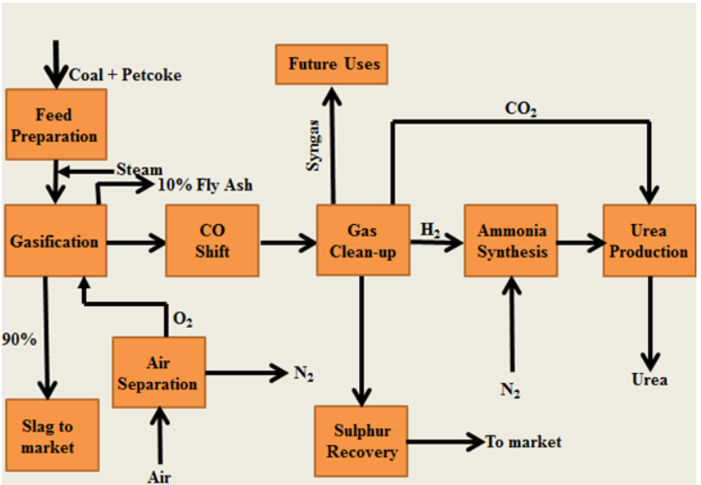
India, imports nearly 88 per cent of the crude oil it needs, over 90 per cent of its methanol and large quantities of liquefied natural gas (LNG) and ammonia, used in fertiliser production. Proven technology is available, now-a-days to chemically convert coal into synthesis gas (syngas), which is used to produce methanol, ammonia, urea, synthetic natural gas, and hydrogen. Thus, coal becomes industrial feedstock rather than merely a combustion fuel. As India’s import vulnerability extends beyond crude oil, coal gasification offers a domestic alternative in sectors where import dependence remains structurally high. The recent Government decision to incentivize coal gasification is going to be a game changer in the national energy and chemical security scene.
Introduction
India's energy sector is experiencing a monumental transformation termed a new awakening for coal gasification. In May 2026, the Union Cabinet approved a Rs.37,500 crore incentive package to accelerate the National Coal Gasification Mission. The goal is to gasify 100 million tonnes (MT) of coal by 2030. This shifts India's strategy from burning coal directly for power to converting its vast 401 billion tonnes of domestic coal reserves into syngas. This syngas is a cleaner feedstock for downstream chemicals, fertilizers and fuel for power generation.
The ongoing gasification boom, driven by the recent Arab Gulf crisis following the Middle East war is one of our earnest efforts to attain economic sovereignty through sustainable utilization of abundantly available coal.
India imports over 50% of its Liquefied Natural Gas (LNG), 20% of its urea, and 80–90% of its methanol. Scaling up domestic syngas is estimated to save the country Rs. 60,000 to Rs. 90,000 crore annually in import substitution. Ongoing geopolitical disruptions in the Middle East have directly impacted global supply chains. This makes local resource optimization a matter of urgent national security. Transitioning coal into a chemical powerhouse aligns with India's long-term environmental targets. It offers a lower-carbon pathway compared to conventional coal combustion.
Historical context and early initiatives
India, in the 1980s, has explored coal-based routes for fertilizer production, particularly ammonia and urea, to reduce dependence on imported natural gas and naphtha. Early efforts included coal gasification-based ammonia/urea plants at Talcher (Odisha) and Ramagundam (Telangana), operated under the Fertilizer Corporation of India Limited (FCIL). These plants utilized indigenous coal as feedstock to produce syngas for ammonia synthesis, which is then converted to urea.
Technical challenges and reasons for failures
The performance of these plants was hampered on account of several persistent issues:
Coal Quality: Indian coal typically features high ash content (often 30-50%), low calorific value, and abrasive characteristics. High ash leads to operational inefficiencies in gasification processes. Pollution abatement and waste disposal was also a major hurdle.
Corrosion and Erosion: High ash content caused severe erosion of equipment, pipelines, and reactors, along with corrosion problems due to the mineral matter in the coal.
Technology and Equipment Limitations: Older gasification technologies struggled with the variable quality and high ash of Indian coal, resulting in frequent breakdown of process equipment, low reliability, and high maintenance costs.
Consequently, most coal-based units faced repeated shutdowns and were eventually closed down. The Ramagundam and Talcher plants remained non-operational since around 2002.
Transition to natural gas
In the wake of increasing demand for urea and imports soaring, the Government in 2018 decided to revive these units making use of the already built infrastructure around these plants with natural gas as feedstock. Subsequently natural gas connectivity was established to Ramagundam plant and the unit was commissioned in 2022 to produce 1.27 million metric tonnes per annum (MMTPA) of urea. This shift aligned with the broader policy favoring natural gas as a cleaner and more reliable feedstock for ammonia production offered higher efficiency, lower emissions, and more stable operations.
Revival of Talcher plant with advanced coal technology
The Talcher unit is being revived through Talcher Fertilizers Limited (TFL), a joint venture involving GAIL (India) Limited, Coal India Limited, Rashtriya Chemicals & Fertilisers Limited, and FCIL. The project employs state-of-the-art coal gasification technology (originally from Shell, now with Air Products) to handle high-ash Indian coal blended with petcoke. This project intends to manufacture 2,200 MTPD ammonia and 3,850 MTPD urea (1.27 MMTPA urea). As of early 2026, the project has achieved significant progress (around 71% completion) but faces delays, with commissioning now targeted for December 2027. Bottlenecks have included issues with the original Chinese contractor (Wuhan Engineering), COVID-19 impacts, and supply chain challenges. This project represents India's first modern coal gasification-based fertilizer plant.
Current geopolitical reawakening
In light of recent disruptions in the Arab Gulf region, including conflicts involving the US/Israel-Iran tensions and potential closure of the Strait of Hormuz, global fertilizer supply chains have been affected. These events have disrupted flows of natural gas (LNG) and fertilizer inputs, prompting countries to seek alternative feedstocks.
India is re-evaluating coal gasification technology for ammonia and urea production. China operates numerous modern coal-to-ammonia/urea plants equipped with advanced environmental controls, including carbon capture and storage (CCS) and robust solid waste management systems. These facilities demonstrate the viability of coal gasification when paired with reliable equipment and contemporary pollution control technologies.
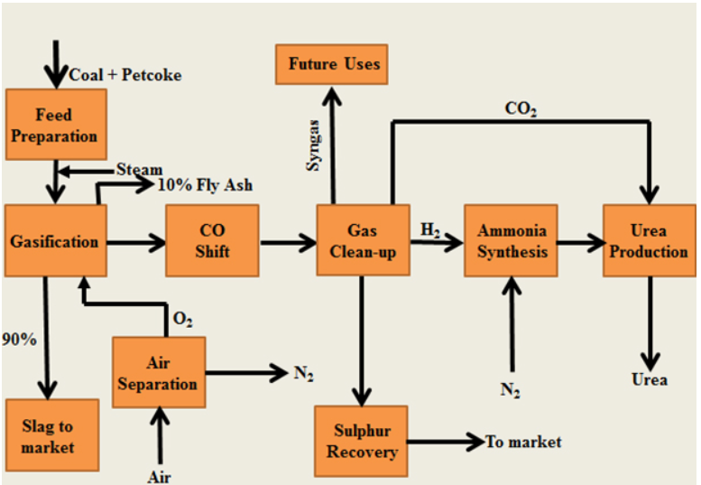
Fig 1: Schematic diagram of a coal gasification plant.
Policies and structural reforms
The government has rolled out multiple financial and policy frameworks to guarantee long-term investment certainty. It includes capital subsidies, unified incentive schemes, viability gap funding and revenue rebates. In a massive structural reform, the government extended coal linkage tenures up to 30 years for the gasification sector. This removes long-term feedstock risks for industrial plants. The government offers financial assistance covering up to 20% of the cost of plant and machinery with a cap at ₹5,000 crore on individual project incentives. The Ministry of Coal provides a 50% rebate in revenue share on coal blocks and it applies as long as at least 10% of the production is directed to gasification. All these initiatives aim to transition India from a traditional coal miner into an integrated clean energy producer, substituting ₹2.77 lakh crore worth of imports like LNG, methanol, and urea.
Way Forward
Utilizing advances in coal gasification—such as improved gasifiers designed for high-ash coals, better materials for erosion resistance, and integrated environmental facilities—offers India a pathway toward greater self-reliance in the production of syngas to manufacture chemicals, fertilizers and power. Successful implementation at Talcher could pave the way for additional projects, balancing energy security, agricultural needs, and environmental considerations. This development underscores the strategic importance of diversifying feedstock options amid global uncertainties while leveraging India's abundant coal resources responsibly.
Upcoming projects
Already projects worth over ₹64,000 crore are listed in the pipeline. Major projects are listed below:
|
Industrial Entity |
Primary Project Location |
Technology Focus & Target Products |
Key Milestones & Financial Outlay |
|
BCGCL* (BHEL** & CIL***) |
Lakhanpur, Odisha |
Surface Coal Gasification; Ammonium Nitrate |
BHEL awarded ₹5,400 crore contract. First major indigenous chemical hub. |
|
Jindal Steel & Power |
Angul, Odisha |
Direct Reduced Iron (DRI) production via syngas; CCUS infrastructure. |
Active operations; secured ₹569 crore in incentives for a 30 tonnes of CC daily for downstream utilization. |
|
New Era Cleantech |
Bhadravati, Maharashtra |
Hydrogen & Ammonium Nitrate production |
Received ₹1,000 crore in incentives; building a 3,000 TPD methanol conversion plant. |
|
Reliance Industries |
Chintalpudi & Recherla |
In-situ Underground Coal Gasification (UCG) |
Secured mining blocks via commercial auctions with first-ever embedded UCG mandates.
|
NLC India Neyveli, TN lignite-to-methanol project Expected completion by 2027. Rs. 4,394 Cr investment (?)
*Bharat Coal Gasification & Chemicals Limited, ** Bharat Heavy Electricals Ltd, *** Coal India Ltd
Table 1: List of upcoming Coal gasification projects
The success of China in utilizing coal technology serves as a lodestar for India. By converting solid coal into synthetic gas (syngas), China produces the raw materials usually derived from oil, effectively bypassing the "petroleum bottleneck" that constrains other nations. This ensures that domestic food production remains stable even when global natural gas markets are volatile or supply chains are severed. As of May 2026, this strategy is being credited with insulating China's industrial sectors from the ongoing Hormuz Strait crisis, allowing it to maintain production of critical fertilizers and plastics while other Asian economies face shortages due to disrupted oil.
(Disclaimer: The views expressed in the articles are strictly those of the author and do not necessarily reflect the views of the Indian Chemical News.)
*Director, Centre for Green Technology & Management & formerly Secretary to Chief Minister and Chairperson, Public Sector Restructuring & Audit Board, Government of Kerala
Subscribe to our newsletter & stay updated.