Technologies such as nanoencapsulation, nanoemulsions, and controlled-release delivery systems can protect sensitive bioactive compounds, improve their stability, and ensure their gradual release over time

India is poised to lead global nano-enabled crop protection by leveraging its rich botanical resources, robust scientific infrastructure, and growing innovation ecosystem
India faces formidable challenge of ensuring food and nutritional security for a population exceeding 1.4 billion people while relying on approximately 170 million hectares of cultivated land. Advances in crop protection technologies have played a significant role in enhancing agricultural productivity; however, pests, weeds, and plant diseases continue to cause substantial yield losses globally, estimated at 20–50% of potential crop production.
Of these losses, weeds account for nearly 45%, followed by insect pests (35%) and plant diseases (20%). Therefore, effective and sustainable crop protection remains a critical prerequisite for achieving food security, enhancing farm productivity, and supporting agricultural growth.
However, the continued reliance on conventional pesticide-intensive crop protection strategies, often characterized by repeated applications to maintain effective pest control, has contributed to several emerging challenges. These include the development of resistant pest populations, increasing pressure on agro-ecosystems, and growing expectations for improved environmental stewardship.
In parallel, evolving domestic and international regulatory requirements are placing greater emphasis on sustainable pesticide use, residue management, and environmentally responsible agricultural practices. These developments highlight the need for crop protection solutions that combine efficacy, safety, and sustainability. Consequently, there is an increasing focus on precision agriculture, integrated pest management (IPM), biologicals, and next-generation bio-inputs that can support agricultural productivity while promoting environmental sustainability and long-term resilience of farming systems.
India’s annual chemical pesticide consumption is estimated around 67,826 metric tonnes in 2024-25. While these products have played an important role in supporting agricultural productivity, there is increasing recognition of the need to improve pesticide-use efficiency, manage resistance development, minimize off-target losses, and promote compatibility with sustainable agricultural systems. These considerations are receiving growing attention from researchers, industry, policymakers, regulators, and consumers worldwide, driving interest in innovative crop protection technologies that can deliver effective pest management while supporting environmental and economic sustainability.
Limitations of conventional crop protection
For more than fifty years, conventional pesticide formulations such as dusts, wettable powders (WP), and emulsifiable concentrates (EC) have played a central role in crop protection in India. These products helped farmers improve crop productivity and manage pests on a large scale. However, over time, several limitations of these formulations have become evident. One of the biggest challenges is poor delivery efficiency. Only a very small proportion of the pesticide applied in the field actually reaches the target pest. Most of the active ingredient is lost through spray drift, evaporation, sunlight-induced degradation, runoff, leaching, or binding to soil particles.
As a result, farmers often need to spray more frequently or use higher doses, increasing production costs as well as environmental risks. To overcome these challenges, the agrochemical researchers from academia and industry developed new generation of formulations, including suspension concentrates (SC), emulsion systems (EW and SE), capsule suspensions (CS), and microemulsions (ME).
These technologies improved product stability, reduced the use of organic solvents, enhanced safety for users, and provided better dispersion and performance of active ingredients. Controlled-release formulations such as capsule suspensions also helped to reduce operator exposure and extended the effectiveness of pesticides in the field.
While these innovations represented a significant advance, they did not completely solve the problem of inefficient pesticide delivery. A large portion of the applied active ingredient is still lost before reaching the target pest or pathogen. Challenges such as degradation under field conditions, poor rain fastness, repeated spray requirements, resistance development, and unintended environmental exposure continue to affect crop protection efficiency. In many cases, formulation improvements have made products easier and safer to use, but have not fundamentally changed how effectively pesticides are delivered to their biological targets. These continuing challenges have led to growing interest in nanotechnology-based crop protection systems.
By designing carriers and delivery systems at the nanoscale, nano-formulations can improve adhesion to plant surfaces, enhance penetration, provide controlled release, and deliver active ingredients more precisely to their targets. This can increase pesticide use efficiency while reducing losses and environmental impact. As a result, nanotechnology is increasingly being viewed not just as another formulation improvement, but as a transformative approach for the future of sustainable crop protection.
What is nanotechnology in agriculture?
In crop protection, nanotechnology refers to the use of extremely small particles and delivery systems to improve the performance of pesticides and other crop protection products. These particles are typically ranging from one to several hundred nanometres. At this scale, materials can behave differently from their conventional forms, often offering improved solubility, greater surface area, better stability, and controlled-release properties. Several types of nano-enabled delivery systems are being developed for agriculture. These include nanoemulsions, polymeric nanocapsules, solid lipid nanoparticles (SLNs), nanoclay-based carriers, and biopolymer-based nanoparticles made from materials such as chitosan, starch, and cellulose. These carriers can encapsulate active ingredients, protect them from environmental degradation, and release them gradually over time.
The benefits of nanoformulations are considerable. Their small particle size allows better spreading and adhesion on plant surfaces and can improve penetration into target pests or pathogens. Controlled-release properties help maintain effectiveness for longer periods, reducing the need for repeated applications. Improved rainfastness reduces losses caused by rainfall, while more efficient delivery can lower the amount of pesticide needed to achieve effective control.
By improving performance while reducing wastage and environmental impact, nanotechnology has the potential to make crop protection products safer, more efficient, and more sustainable. As agriculture moves toward precision and sustainability, nano-enabled formulations are expected to play an increasingly important role in the future of crop protection.
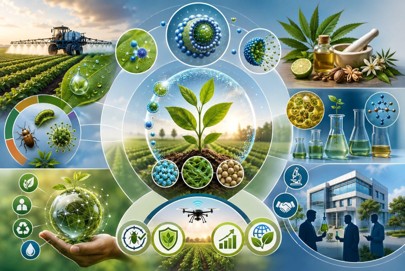
Figure 1. Nanoformulation driven sustainable crop protection ecosystem
IPFT leading India's bio-botanical nanoformulations revolution
While nanotechnology is reshaping crop protection around the world, one of its most promising applications in India combines traditional botanical knowledge with modern formulation science. Plant-based pesticides derived from neem, karanja, pyrethrum, citronella, eucalyptus, and other natural sources are well known for their environmental safety and low residue concerns. However, their wider adoption has often been limited by poor stability, rapid degradation in the field, and short residual activity.
Nanotechnology is helping overcome these challenges. Technologies such as nanoencapsulation, nanoemulsions, and controlled-release delivery systems can protect sensitive bioactive compounds, improve their stability, and ensure their gradual release over time. As a result, botanical pesticides can provide more consistent and effective pest control while retaining their eco-friendly nature.
At the forefront of this work is the Institute of Pesticide Formulation Technology (IPFT), an autonomous institute under the Department of Chemicals & Petrochemicals, Ministry of Chemicals & Fertilizers, Government of India. As India's only institute dedicated exclusively to pesticide formulation technology, IPFT has been supporting the country's agrochemical sector for over three decades through the development, standardization, and transfer of advanced formulation technologies.
Recognizing the growing need for sustainable crop protection solutions, IPFT has expanded its research beyond conventional pesticide formulations to include nanoformulations, bio-pesticides, botanical pesticides, smart delivery systems, and other environmentally responsible technologies. This aligns closely with national priorities aimed at reducing chemical inputs and promoting sustainable agriculture.
Among its recent innovations are advanced oil dispersion (OD) formulations based on botanical extracts, which offer improved stability and field performance compared to traditional formulations. The institute is also developing nanoencapsulation technologies designed to enhance UV stability, reduce degradation losses, and provide controlled release of botanical active ingredients.
Another promising area of research is the development of combination formulations that integrate botanical and synthetic active ingredients. By utilizing advanced delivery systems and nano-carriers, these formulations have the potential to improve the efficiency of active ingredient delivery, optimize input requirements, and support effective resistance management strategies.
A major boost to these efforts is expected through the upcoming DBT-supported Biofoundry facility at IPFT which is currently under development. The Biofoundry is envisioned as a translational platform for accelerating development, scale-up, and commercialization of bio-based technologies, including bio-pesticides, botanical products, microbial formulations, and nano-enabled agricultural solutions. By bringing together formulation research, process optimization, pilot-scale manufacturing, analytical and bio-evaluation studies and technology transfer capabilities under one roof, the facility is expected to bridge the gap between laboratory innovation and industrial deployment. Once operational, it will strengthen India's capacity to develop indigenous, scalable, and sustainable crop protection technologies and facilitate their transfer to industry.
IPFT is also embracing the principles of the circular bioeconomy through a "waste-to-wealth" approach. Researchers are exploring agro-industrial by-products and underutilized biomass as sources of valuable bioactive compounds and formulation ingredients. Examples include cashew nutshell liquid (CNSL), citrus peel waste rich in essential oils, and grape-pomace processing residues containing bioactive molecules with pesticidal properties. These renewable resources can serve as environmentally friendly carriers, adjuvants, and active ingredients while helping address agricultural waste management challenges.
Such innovations are particularly important for high-value horticultural crops and export-oriented agriculture, where residue limits and sustainability requirements are becoming increasingly stringent. By integrating nanotechnology, botanical crop protection, green chemistry, and circular bio-economy principles, IPFT is emerging as a national leader in next-generation pesticide formulation technologies that deliver effectiveness, safety, sustainability, and commercial scalability.
Environmental Safety, Regulatory Preparedness, and India's Opportunity in Nano-Enabled Crop Protection
While nanotechnology offers exciting possibilities for improving crop protection its long-term success will depend on ensuring environmental safety, developing appropriate regulatory frameworks, and supporting responsible innovation. The unique properties that make nanoparticles effective, such as their small size, large surface area, and enhanced interactions with biological systems, can also influence their behaviour in soil, water, plants, and non-target organisms. Therefore, environmental safety cannot be assumed and must be established through rigorous scientific evaluation.
Modern research is increasingly focused on biodegradable and environmentally benign nano-carriers, particularly those based on natural materials such as chitosan, alginate, lipids, and clay minerals. When combined with botanical active ingredients such as azadirachtin, thymol, citronellal, and other plant-derived compounds, these systems can improve efficacy while minimizing environmental persistence and reducing the risk of long-term accumulation. Controlled- and stimuli-responsive delivery systems further enhance sustainability by releasing active ingredients only under specific conditions, thereby reducing off-target exposure and improving pesticide-use efficiency.
At the same time, the rapid emergence of nano-enabled crop protection technologies presents new regulatory challenges. India's existing pesticide regulatory framework was developed primarily for conventional formulations and currently lacks specific provisions for nano-scale crop protection products.
Although efforts have been initiated to develop evaluation guidelines for nano-based agricultural products, a comprehensive framework addressing nanoparticle characterization, efficacy, environmental fate, and safety assessment for nanopesticides is still evolving. Interestingly, the fertilizer sector has moved ahead more rapidly in this area.
Nano-fertilizers such as Nano Urea and Nano DAP have already been notified under the Fertilizer Control Order (FCO) and are being used commercially across the country. In addition, nano-based micronutrient products, including nano-zinc and other nano-enabled micronutrient formulations, have demonstrated the growing acceptance of nanotechnology in plant nutrition.
These developments show that India has already established experience in evaluating and commercializing nano-enabled agricultural inputs. However, a comparable regulatory pathway for nanopesticides is yet to fully emerge. As commercialization accelerates, India will require a science-based and risk-proportionate regulatory approach that encourages innovation while safeguarding environmental and human health. Particular attention should be given to distinguishing biodegradable nano-carriers from engineered inorganic nanomaterials that may present greater environmental concerns.
Despite these challenges, India is uniquely positioned to become a global leader in nano-enabled crop protection. The country possesses abundant botanical resources, a strong scientific base, and a growing innovation ecosystem. Natural resources such as neem, citronella, eucalyptus, chitosan, citrus peel waste, pomegranate waste, and cashew nutshell liquid provide a strong foundation for developing sustainable bio-botanical nanoformulations. Institutions such as IPFT, supported by initiatives including the upcoming DBT Biofoundry, the BioE3 Policy, BIRAC, and the ICAR research network, can help to create an integrated ecosystem for research, scale-up, validation, and technology transfer. As agriculture faces the dual challenge of increasing productivity while reducing environmental impact, nano-enabled crop protection offers a pathway toward enhanced delivery efficiency, improved environmental compatibility, optimized use of crop protection inputs, and greater sustainability. If supported by continued investment, science-based regulation, and industry adoption, India has the opportunity not only to meet its own agricultural needs but also to emerge as a global leader in sustainable nano-enabled crop protection technologies.
(Dr. Amit Kumar, Formulation Scientist (Specialist), IPFT is the co-author of this column)
Subscribe to our newsletter & stay updated.