
India’s efforts towards Global carbon neutrality
India’s production of grey hydrogen amounts to 7 million tonnes per year.
Factors contributing for the structural growth of the sector in India is the increase in outsourcing opportunities due to global consolidation and domestic demand, fueled by burgeoning consumption, creating R&D ecosystem and rolling out sector specific PLI schemes
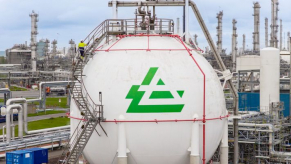
We see tremendous opportunities to use our technology and expertise in carbon capture and storage, hydrogen, and biofuels to support meaningful reductions in global emissions.
Most of the stakeholders including producers, buyers, technology providers, and farmers have to work in tandem to create a win-win situation
In nearly 26 years of process engineering work at Toray Plastics (America), with almost 20 of those years in direct support of manufacturing, working on rotating 12-hour shifts, my team and I have faced and have overcome many challenges.
India should assess the competitive advantage that it offers global H2 players and investors that would encourage them to bring technology and investments to India
Continuous investment in innovation and R&D will drive agricultural productivity and yield enhancement, and offer an entire suite of agri-inputs to the farmer community
Creating end-to-end crop value chains and strong linkages to farmers and farmer collectives will expand its global competitiveness
Chemical companies have passed the proof-of-concept stage and are now running pilots or beginning to partially scale up digital efforts
Combination of digitization, automation, sustainability and data will be the key differentiator
Indian chemical industry will require between US$75bn and US$100bn in capital investment to create new manufacturing facilities
India’s dependency on China for pharma intermediates can change if there is a proper coordination between educational institutes, research institutes and pharma manufacturers
As per draft order, Indian Govt has proposed to limit sale of glyphosate herbicide to only those who are involved in pest control operations.
According to a study, the global drone market within agriculture would grow at 35.9% CAGR (2020-25) to reach $5.7 billion by 2025.
Equipped with adaptive controls and state-of-the-art technology, digital dosing solutions can provide any alterations in stroke speed and ensure optimum accuracy.
The imbalances will take time but one has to change their behaviour and also ways of working to get the desired result
Dependence on automation in warehousing and manufacturing is likely to increase and global MNCs will relook at current supply chain dependency on China, may diversify their sourcing benefiting Indian chemical industry.
India needs to fast-track its plans to be a self-sufficient nation with regard to chemicals, as it is important to bridge the gap to cut down foreign dependence for essential raw materials
Organisations need to develop capabilities to automate operations as much as possible and enable remote experts to address production plans, needs and interruptions
The company can foresee challenging days ahead with steel and aluminium sector having tough times however it has the advantage of being integrated with steel plant for sustenance of its resources
Subscribe to our newsletter & stay updated.