Legal clarity, data-driven claims, integrated pest resistance strategies, and rising consumer demand are pushing biologicals into the spotlight but the road to scale remains steep
As chemical discovery pipelines shrink and pest resistance accelerates, India is reshaping its regulatory and innovation landscape to fast-track biologicals.
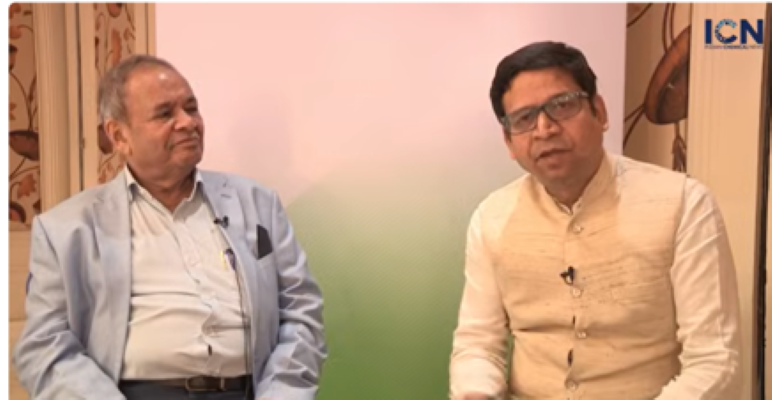
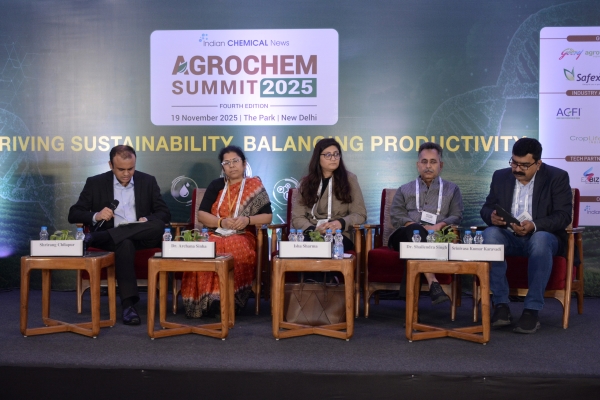
The leading experts who gathered to discuss the latest scenario at the AgroChem Summit 2025 organised by the Indian Chemical News (ICN) on November 17, 2025, in New Delhi, stressed that due to shelf-life issues and high data costs, the collaboration and clearer regulation remain crucial for scaling biologicals.
The fourth session of the event titled “Growth of Biologicals and Biopesticides as Sustainable Alternatives” was moderated by Shrirang Chilapur, Principal, Chemicals Practice, Kearney India who outlined the market scenario.
“The agricultural ecosystem is facing growing pressure from all sides: global standards are tightening, pest resistance is escalating, climate-related stress is disrupting production, and there is an increasing demand for safer and more sustainable chemistry. In this context, biologicals offer a promising path forward. They can play a vital role in addressing these challenges, but their success will depend on several enabling factors such as clear and supportive regulation, strong and consistent manufacturing practices, reliable product performance in the field, and, most importantly, widespread farmer awareness and adoption,” noted Chilapur.
Srinivasa Kumar Karavadi, President, INERA highlighted that the biologicals market, though still small, is expanding rapidly with strong interest from both MNCs and Indian companies.
“If we look closely at horticulture and export-oriented crops, especially basmati and grapes, we have seen many consignments rejected due to MRL issues. This alone is opening space for biologicals to step in. There is also a broader perception challenge with synthetic chemistry. Consumer perception is shifting, pushing demand toward organic or safe food. Even beyond crop protection, the need for biological inputs such as biofertilizers is huge. India spends Rs 20,000–Rs 25,000 crore on fertiliser subsidies, yet globally, soils are locked with phosphorus for the next 100 years. Even without applying DAP, phosphorus could still be made available through the right biological tools. These triggers are accelerating adoption. Today the biologicals market is still small, around Rs 6,000–7,000 crore but growing fast. With MNCs and local companies investing heavily, I see high double-digit growth ahead,” said Karavadi.
“We must all acknowledge a fundamental reality that the innovation pipeline in chemistry is drying up. Globally, around 6,700 molecules exist, but India has access to only 270–280. R&D investments in chemistry are shrinking, and resistance is emerging much faster, for example, diamides have already seen resistance develop, and neonicotinoids have faced this issue for years. This is where biologicals become essential. Traditionally, chemical and biological industries worked separately, sometimes competitively. But that is changing. Many leading companies are now investing heavily in biologicals. Formulation technologies are evolving, and although there are still constraints in mixing products, co-use and sequential use strategies are becoming more common. We often talk only about pest control, but if nutrition is well-managed, your crop protection requirement can easily come down by 20–30%. So, I strongly recommend robust crop nutrition and pest management, where resistance management becomes a central component in framing integrated nutrition–pest management practices,” Karavadi added further.
Dr. Shailendra Singh, Chief Operating Officer - Agribusiness, Zydex Industries emphasized that shelf life and consistency of performance remain major challenges for biopesticides and biofertilizers.
“Over the last five years, we have seen extremely strong and consistent growth. Most biological companies have grown significantly, and this momentum is expected to continue—estimates range from 12% to 18% annual growth, depending on the source. Five years ago, when we approached farmers with biological solutions, many wouldn’t even entertain the conversation. That has changed dramatically. A big reason is increased awareness through social media and digital platforms. Farmers are now recognising gaps in their current practices and once a farmer acknowledges a gap, he becomes open to alternatives. The same applies to nutrients. India is a major importer of potash, yet our soils already contain large reserves of potassium. I am not saying chemical fertilisers will disappear overnight, but over the next 15–20 years, the potential for biologicals to grow is undeniable,” said Dr Singh.
“One major limitation we see with biopesticides and biofertilizers is consistency of performance. A lot of work is ongoing. For example, during my recent visit to IPFT, I saw new efforts underway on formulation development. While the chemical discovery pipeline is drying up; similarly, even in biologicals the products we currently have are traditional and come from limited sources. A few institutions hold the maximum number of strains available to everyone, but far more work is needed in formulation science—to ensure not just shelf life of living microbes but also a conducive working environment for them. For instance, when microbial biofertilizers are added to soil, they need air. But if the soil is too compact, aeration is low and activity drops. Similarly, when applying biopesticides on leaf surfaces, can we create a micro-environment that prolongs microbial longevity? Micro-encapsulation and other advanced formulation technologies are being explored. Many are working on these fronts, but collaboration is essential. One company alone cannot drive these innovations,” Dr Singh added further.
Dr. Archana Sinha, Joint Director (Chem), Directorate of Plant Protection, Quarantine & Storage, Ministry of Agriculture & Farmers Welfare explained that with lower GST and relaxed guidelines, the government is encouraging wider use of biopesticides.
“The government has introduced a range of measures to promote the adoption of biopesticides, including reducing GST rates and simplifying registration guidelines, signaling a strong push towards sustainable crop protection. Against this backdrop, what is the regulator’s guidance on integrating biologics into the broader agricultural ecosystem? One universally accepted principle guides this approach: swasthya swasth ranam and arastu vikar praman which underscores that biologicals are designed to maintain plant health while reducing the incidence of diseases. Regulators are actively moving in this direction. Committees are developing frameworks that emphasize coexistence—integrating chemical pesticides with biological solutions rather than replacing one with the other entirely. New consortium guidelines now explicitly allow the combination of different biopesticides to create novel formulations, as well as the strategic use of biopesticides alongside chemical pesticides. In the context of Integrated Pest Management (IPM), chemical interventions are recommended only as a last resort, yet they continue to coexist with biological practices to achieve optimal results,” said Dr Sinha.
“Even in the registration process, there is a clear push to encourage biological innovation. Provisional registrations are now being granted to introduce new strains and products derived from local ecosystems, helping accelerate the availability of next-generation biological solutions. Regulators are also expanding the scope of the regulatory schedule to include a broader range of organisms—bacteria, fungi, and botanicals—demonstrating their readiness to adopt new technologies and prioritize products that are target-specific and deliver measurable benefits.
These developments resonate with farmers, who increasingly value innovations that improve crop health sustainably. The government is aligned with this vision, actively facilitating the inclusion of new molecules and substances into regulatory frameworks. Together, these steps are laying the foundation for a more integrated, sustainable, and science-driven approach to crop protection in India,” Dr Sinha added further.
Isha Sharma, Founder, Viadroit (AOR) and Trayambak stressed that product claims for biologicals must be fully data-backed, with efficacy proven through multi-location field trials and no absolute claims permitted.
“Product caims should accurately reflect efficacy results, and in India, absolute statements like “100% control” are not permitted. Products must demonstrate their performance through multi-location field trials, ensuring that results are reliable under diverse agronomic conditions. Labeling is another critical aspect where compliance cannot be compromised. Companies are required to include the strain ID and other technical details of the product, along with safety instructions, first-aid guidance, precautionary statements, and mandatory disclaimers. Nothing can be written casually, every claim, instruction, or warning is closely scrutinized before appearing on the label. However, while regulatory compliance is critical, there is a gap in comprehension on the ground. From a farmer’s perspective, literacy levels and understanding of technical text remain significant challenges. Many farmers make purchase decisions based on brand familiarity, color, or logo rather than the detailed information provided on the label. This makes training and capacity-building essential, not just for farmers, but also for retailers, who often play a pivotal role in guiding purchasing decisions,” opined Sharma.
“From a legal risk perspective, companies must strengthen their contracts and internal control mechanisms. This includes clauses related to proper storage—which is particularly critical for biologicals, anti-counterfeiting measures, handling of expired products, and clear penalties for non-compliance by distributors. Shelf-life claims are another area that requires careful attention. Any statement about shelf life must be backed by stability data generated through rigorous field trials. For products intended for export, this becomes even more challenging, as shelf life is a major consideration in harmonizing Indian products with global standards. Looking ahead, I am particularly optimistic about the Pesticide Management Bill. Although the 2022 draft has already been prepared, its enactment will streamline several regulatory aspects, with a special focus on biologicals. This legislation is expected to provide clarity on their legal implications, enhance regulatory certainty, and support the responsible growth of the biologicals sector in India,” Sharma added further.
The AgroChem Summit 2025 themed ‘Driving Sustainability, Balancing Productivity’ was supported as Gold Partners by Humane World for Animals, Godrej Agrovet, Safex, and SML.
The industry association partners included BASAI, PMFAI, ACFI, CCFI, and Croplife India.
Subscribe to our newsletter & stay updated.