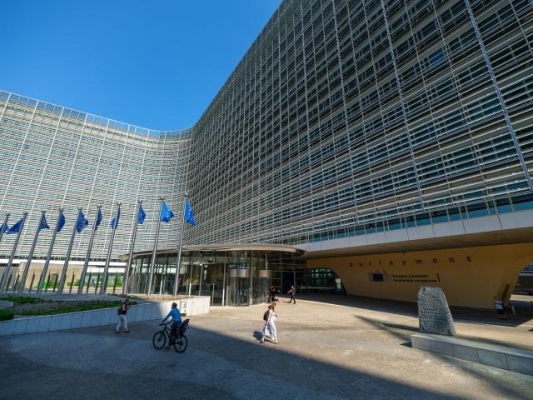
The European Commission has adopted new rules governing the recycling of single-use plastic beverage bottles made primarily of polyethylene terephthalate (PET), marking a significant step in the EU’s plastics strategy under its December 2025 package.
For the first time, the rules establish a standardized methodology to calculate, verify, and report chemically recycled content in PET bottles. Officials say the move is designed to increase transparency in how recycled material is measured and used in new products, strengthening confidence across the recycling market.
The Commission said the framework will “ensure transparency in calculating recycled content in new single-use PET bottles,” calling it essential for creating “a level playing field and providing investment security for the plastic recycling sector.”
The methodology applies across recycling technologies, including both chemical and mechanical processes, and is intended to help EU member states meet recycled-content targets set under the Single-Use Plastics Directive.
Mechanical recycling remains the dominant method in Europe, involving the sorting, cleaning, shredding, and remolding of plastic waste into new products. However, the Commission noted that not all waste streams can be effectively processed this way.
Contaminated or complex plastics—such as materials containing food residues, additives, or mixed polymers—often cannot be efficiently recycled mechanically.
In these cases, chemical recycling is positioned as a complementary solution. Unlike mechanical recycling, chemical processes break plastics down into smaller molecular components that can be reused as feedstocks for new plastics or other chemicals.
The Commission argues this approach could help bring a broader range of plastic waste back into the circular economy, including materials required to meet strict quality standards such as food-contact packaging.
The new framework also sets phased rules on what counts as “recycled” material. Initially, only plastics from EU and European Economic Area countries will qualify, where compliance with environmental standards can be fully verified. From 21 November 2027, recycled plastics from OECD countries will also be eligible, unless excluded under the Waste Shipment Regulation.
Material from non-OECD countries may also be included if covered by agreements ensuring equivalent environmental and human health protections, including those under the Waste Framework Directive and the Packaging and Packaging Waste Regulation.








,_Aditya_A__Shriram_(President).JPG)