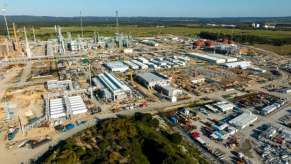
The companies have signed an agreement to jointly develop the infrastructure, largely using existing natural gas pipelines

Image: Gasunie
Gasunie in the Netherlands and Thyssengas H2 and Gasunie Deutschland in Germany are moving forward with plans for a major cross-border hydrogen transport network. The companies have signed an agreement to jointly develop the infrastructure, largely using existing natural gas pipelines.
The key border points at Oude Statenzijl (Groningen) and Vlieghuis (Drenthe) will link Dutch industrial hubs, import routes, and storage and production facilities with Germany’s industrial regions and the wider north-western European market.
The agreements outline critical technical and organizational details—schedule, location, capacity, pressure, and more—ensuring hydrogen can be transported safely and reliably across the border. Officials describe the signing as a vital first step toward multiple cross-border hydrogen connections between the Netherlands and Germany.
“Cross-border hydrogen trade and transport is crucial for a properly functioning hydrogen market in north-western Europe,” said Gasunie’s Director of Hydrogen Transport Helmie Botter.
"The agreements we’ve made not only enable transport via our infrastructure between the Netherlands and Germany (Ruhr region), but also to and from Denmark. We’re striving to create an integrated hydrogen market and working together closely with our fellow TSOs to make cross-border transport as easy as possible.”
Subscribe to our newsletter & stay updated.