According to Crisil Ratings, paints and specialty chemicals sector could feel some pressure on profit margin as ~30% of the production cost is linked to crude oil prices
If the ongoing geopolitical uncertainties in the Middle East1 persist or escalate, there could be adverse impact on sectors such as basmati rice, fertilisers, diamond polishing, travel operators and airlines, given their direct exposure to the region, says Crisil Ratings.
Additionally, sectors such as ceramics and fertilisers, with high dependence on imported liquefied natural gas (LNG), could see near-term production impact, so will require close monitoring. Crude-linked sectors, such as downstream oil refiners, tyres, paints, specialty chemicals, flexible packaging and synthetic textiles could also be affected.
Countries in the Middle East account for ~30% of global crude oil and ~20% of global LNG production. A majority of this is transported through the Strait of Hormuz. India imports ~85% of its crude oil and half of its LNG requirement. Of this, 40-50% of crude oil and 50-60% of LNG are shipped through the Strait of Hormuz. Most shipping vessels have stopped sailing on this route since March 1, 2026, due to increased risk of passage and any prolonged disruption of this trade route will have a bearing on global crude oil and LNG availability, and their prices.
The price of Brent crude has already surged to around $82-84 per barrel (bbl) from an average $66-67 during January-February 2026. For Asian spot LNG, price has flared up from ~$10/MMBtu to $24–25/MMBtu. A further surge would widen India’s current account deficit and stoke inflation. It will also impact India Inc’s profits, given the critical role of energy across sectors.
Additionally, India also imports about two-third of its liquefied petroleum gas (LPG) with majority of it from the Middle East. LPG is primarily used towards household consumption with only ~10% used as fuel in industries, limiting the impact on India Inc.
Furthermore, the ongoing uncertainties have increased air/sea freight costs and insurance premiums for export/import-based sectors, which could impact the profitability of those with significant trade exposure globally. This will bear watching.
India’s direct trade with the Middle East is moderate, accounting for ~15% of total exports and ~20% of total imports in the first nine months of this fiscal (see table in annexure). In addition to crude oil and petroleum products, merchandise trade with the Middle East consists primarily of basmati rice, fertilisers and rough/polished diamonds, as well as some capital goods and spices. Furthermore, various services sectors, including airlines and travel operators, also have significant direct and indirect exposure to the region.
The detailed impact assessment on the sectors which are expected to see a greater disruption from the developments in the Middle East is presented below:
Fertiliser: India imports ~30% of its fertiliser requirement and the Middle East supplies ~40% of it. The country also depends on this region for ~30% of its imports of key raw materials and intermediates, such as rock phosphate, phosphoric acid and muriate of potash. The ongoing uncertainties can lead to supply-chain disruption with possible impact on imports to India. Since the region also plays a key role in the global supply chain, there is a likelihood of an increase in the international prices for urea and di-ammonium phosphate. Additionally, LNG is a feedstock for manufacturing urea. Its reduced availability, or increased prices, will impact production or raise input costs. All of these, in turn, can result in a higher subsidy requirement than budgeted by the government.
City gas distribution: LNG imports account for ~40% of sector’s total demand and ongoing uncertainties can affect LNG supplies in the near term. The impact, however, would be primarily on the industrial segment, which is heavily reliant on imported gas and may experience a drop in sales volume because of supply constraints. Nevertheless, margins in this segment will be cushioned to some extent, as prices for most alternatives for customers are also linked to crude, which are also expected to see an uptick.
Downstream oil refiners: A prolonged rise in oil prices would pressure gross refining margins as higher input costs may not be fully or immediately passed through an increase in retail fuel prices.
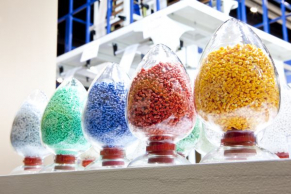
Paints and specialty chemicals sector: There could be some pressure on profit margin as ~30% of the production cost is linked to crude oil prices, where competitive intensity and suppressed demand could limit ability to pass on elevated input prices to customers and thereby impact profitability to some extent.
Tyre sector: About half of the operating cost for the sector is linked to crude prices. While tyre producers may be able to pass on part of the increase in cost via higher product prices, there can be a lag in pass-through, especially for original equipment manufacturer (OEM) sales (contributing to ~35% of revenue), compared with the replacement tyre market.
Flexible packaging and synthetic textiles: While 70-80% of production cost for these sectors is linked to crude prices, the impact of an increase in the latter could be moderate due to the improved demand-supply scenario and firms’ ability to pass on costs to customers, albeit with a slight lag.
The repercussions of further rise in crude oil prices from current levels would vary across sectors that are directly or indirectly exposed, and impact on profitability will depend on the ability to pass on the cost increases.
On the other hand, the rise in crude oil price will benefit upstream oil companies because they translate to more revenue, while costs are fixed. Additionally, despite a rise in insurance costs, shipping companies are likely to benefit from a spike in charter rates because of the predicament at the Strait of Hormuz, with reduced supply of active vessels and an expected increase in the tonne-mile demand.
Besides the Strait of Hormuz, the Red Sea route via the Suez Canal is another critical shipping lane in the Middle East, extensively used for global merchandise and crude oil trade connecting Asia with Europe, North America and North Africa. Although trade through the Suez Canal has declined significantly over the past 15-18 months following the Houthi rebel attacks, it remains substantial. Any major disruption to this shipping route, as a potential domino effect of the conflict, could further impact crude oil prices and shipping time and cost and will warrant close monitoring.
Notwithstanding the potential risks, the near-term impact on most Indian companies is expected to be limited, given their robust balance sheets, which provide a cushion against vulnerabilities.
However, prolonged geopolitical uncertainties in the Middle East could exacerbate the impact, primarily due to stickily elevated oil and gas prices and disruption of supply chains that could, in turn, stoke inflationary pressures.
Subscribe to our newsletter & stay updated.