Reju, the France-based textile-to-textile regeneration company, has chosen Lacq in the Pyrénées-Atlantiques as the site for its first industrial-scale Regeneration Hub, on the Induslacq platform. A Technip Energies-owned company, Reju is doubling down on its commitment to circular textile solutions and French industrial innovation.
Every year, 121 million tonnes of textiles are discarded worldwide, yet only 1% are recycled into new garments. The rest ends up in landfills or is incinerated. Reju is tackling this environmental crisis head-on, transforming textile waste into regenerated raw materials for new fabrics.
The Lacq hub will harness Reju’s proprietary depolymerization technology to convert post-consumer textiles into rBHET, a regenerated material that can be repolymerized into Reju PET for new polyester production. Backed by Technip Energies’ engineering expertise, the hub is expected to create 80 direct jobs and over 300 indirect positions.
“This French Regeneration Hub builds on our strategy to industrialize a circular post-consumer textile-to-textile model,” said Patrik Frisk, CEO of Reju. “By leveraging France’s ambitious circular-economy agenda and advancing our technology to new markets, we are reinforcing our mission to transform textile waste into valuable, circular resources.”
The project, pending final board approval from Technip Energies, positions France as a pioneer in circular, low-carbon industrial innovation while building a new local industry. The hub aligns with Reju’s broader expansion, including Regeneration Hub Zero in Frankfurt, the Chemelot site in the Netherlands, and a U.S. hub planned for Eastman Business Park in Rochester, New York.
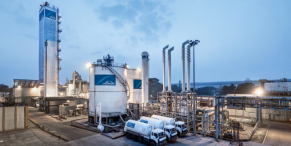
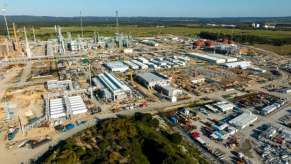
The Induslacq platform, owned by TotalEnergies, will host the new facility.
“Chemparc, a development agency supported by the State, local authorities (Region Nouvelle-Aquitaine, Community Lacq-Orthez), and industry, is pleased to announce the selection of Lacq as the site for Reju's first Regeneration Hub in France. This decision underscores the attractiveness of our industrial basin and illustrates the role of our Public Interest Group as a catalyst for this attractiveness.
"In line with our industrial strategy, this decision marks a new step in the development of a low-carbon circular economy. CHEMPARC is committed to continuing its support with diligence and energy for the success of this industrial project in the Lacq Basin,” said Audrey Le-Bars, Chief Executive Officer of Chemparc.
With this move, Reju aims to create a scalable circular infrastructure in France and Europe, enabling textile-to-textile traceability and closing the loop on fiber use.