SAMSUNG E&A has officially launched construction of its Wabash Low-Carbon Ammonia Plant, marking a major milestone in Korea–US energy cooperation and the global push to cut industrial emissions.
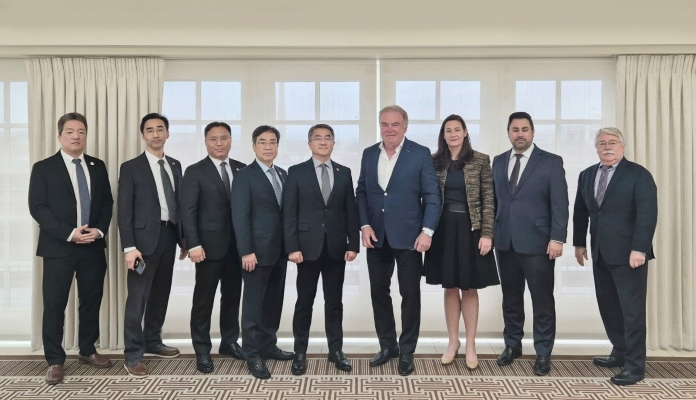
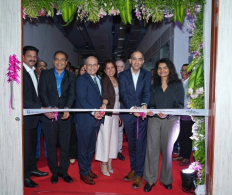
The company announced it held a groundbreaking ceremony on January 5 at the Hay-Adams Hotel in Washington, D.C., drawing around 70 senior government and industry figures. Attendees included South Korea’s Minister of Land, Infrastructure and Transport Kim Yoon-duk; SAMSUNG E&A President and CEO Hong Namkoong; US Deputy Secretary of Energy James P Danly; and Wabash Valley Resources Chairman Simon Greenshields.
The project will be built in Terre Haute, Indiana, and is designed to produce up to 500,000 tons of ammonia annually while capturing 1.67 million tons of carbon dioxide each year. Backed by funding from the U.S. Department of Energy, South Korea’s Ministry of Land, Infrastructure and Transport, and the Ministry of Climate, Energy, and Environment, the facility is being positioned as a flagship national low-carbon initiative.
SAMSUNG E&A secured an Engineering, Procurement, and Fabrication (EPF) contract worth approximately KRW 680 billion (about US$ 475 million) with Wabash Valley Resources in October last year. The company is now executing the project with a targeted completion date of 2029.
The firm plans to deploy its extensive ammonia plant expertise alongside advanced digital transformation technologies, including AI, automation, and modular construction. SAMSUNG E&A will also work closely with Wabash Valley Resources and technology partner Honeywell UOP to deliver the project.
The groundbreaking comes as SAMSUNG E&A accelerates its expansion into next-generation energy solutions. The company has been investing in and developing technologies across ammonia, sustainable aviation fuel (SAF), LNG, carbon capture, and hydrogen, recently winning a string of high-profile contracts in Malaysia, the UAE, Indonesia, North America, and the United States.
Hong Namkoong, President and CEO of SAMSUNG E&A, said, “We are delighted to be carrying out this meaningful project between Korea and the US,” and added, “We will continue to expand new business models for future additive and diversified energy solutions.”