BASF is bolstering its position in the rapidly evolving electric vehicle battery market.
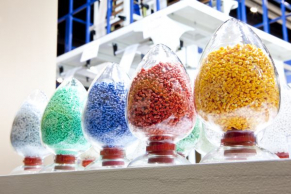
The global chemicals giant has launched Oppanol N PLUS, a high-performance binder designed to meet the demanding requirements of next-generation battery technologies, including solid-state batteries.
The new product will make its debut at The Battery Show Europe 2026 in Stuttgart, where battery manufacturers and automotive suppliers are increasingly focused on improving performance, safety, and production efficiency as the industry moves beyond conventional lithium-ion technology.
As battery developers race to deliver longer driving ranges, faster charging times, and greater reliability, material performance has become a critical differentiator. BASF says Oppanol N PLUS has been engineered specifically to address those challenges.
Built on the company's long-established polyisobutene (PIB) technology platform, the binder plays a vital role inside battery cells by holding cathode, anode, and electrolyte components together while maintaining separation where required.
Its high elasticity helps absorb mechanical stress generated during repeated charging and discharging cycles, supporting longer battery life and improved operational stability.
The launch comes as manufacturers seek greater consistency and efficiency in battery production. BASF highlighted Oppanol N PLUS's exceptionally tight product specifications, which can help reduce process variability, minimize reformulation requirements, lower quality-control burdens, and accelerate production adjustments.
The company is also introducing customer-focused supply improvements, including smaller packaging options beginning at 20 kilograms and faster delivery from stock, providing battery producers and OEMs with greater flexibility as they scale advanced battery manufacturing.
“With Oppanol N PLUS, BASF combines decades of expertise with the requirements of tomorrow’s e-mobility. The new product exemplifies the company’s commitment to continuously advancing proven materials and actively shaping the transition to sustainable technologies,” said Madeleine Jordan, Global Business Management, Oppanol at BASF.
The introduction of Oppanol N PLUS arrives during a landmark year for BASF, marking 95 years since the company pioneered polyisobutene technology.
The breakthrough dates back to 1931, when scientist Michael Otto demonstrated the polymerization of isobutene under suitable conditions, laying the groundwork for what would become the Oppanol product family.
BASF filed its patent for polyisobutene production that same year and later named the product after the Ludwigshafen district of Oppau, where the technology was first developed.
After seven years of research and development, industrial-scale production began in 1938, launching a product line that would find applications across numerous industries worldwide.
Today, Oppanol is used in products ranging from chewing gum and adhesive bandages to insulating glass, cable insulation, roofing membranes, pipeline coatings, and advanced battery systems. Its durability, chemical resistance, gas impermeability, and long-term performance have made it a staple material across multiple sectors.
With Oppanol N PLUS, BASF is now positioning the nearly century-old technology at the center of the next wave of battery innovation, as automakers and suppliers accelerate the transition toward high-performance electric mobility.